
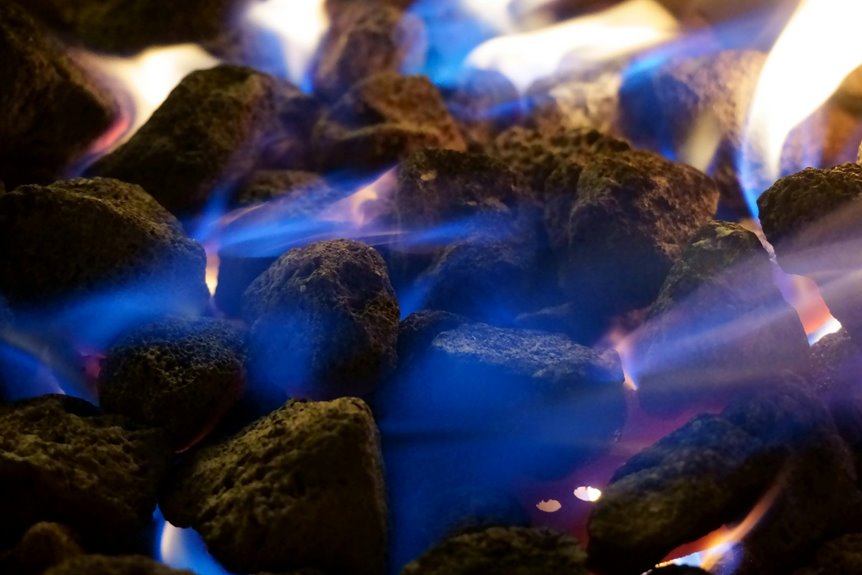
Gas fireplaces first emerged around 1895 as standalone units with real flames. They offered a cleaner, more efficient heating option than wood burning. Early gas burners operated independently and provided homeowners with convenience—you could switch them on instantly without messy cleanup.
By the 1950s, they became symbols of modern comfort through savvy advertising campaigns. Want to discover how direct vent technology affects installation and safety, or explore the specific styles available today?
Early Gas Burners: The 1895 Origins
When did people stop relying entirely on wood to heat their homes?
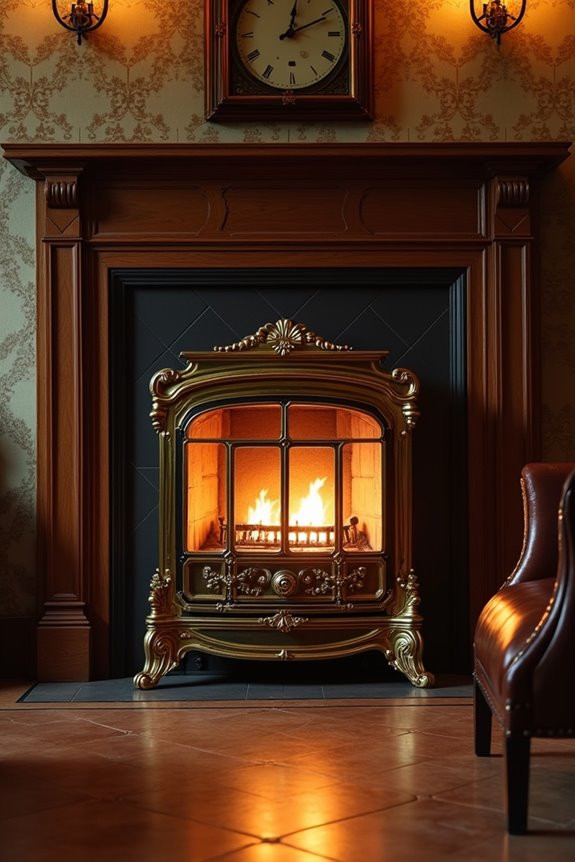
Gas fireplaces emerged around 1895. These early gas burners were simple standalone units that produced real flames without needing solid fuel.
This invention had clear advantages: it freed users from constantly chopping and storing wood. Early gas burners worked independently from existing fireplaces. They proved that heating your home could be cleaner and easier.
During this period, people gradually discovered gas ignition and burner technology. Interest in these innovations grew steadily. These early designs focused on creating realistic flames and improving efficiency, ultimately leading to the direct vent systems you see today.
The 1895 breakthrough laid the foundation for modern gas heating appliances.
Why Electric Fireplaces Emerged First (And Why Gas Became the Preferred Choice)
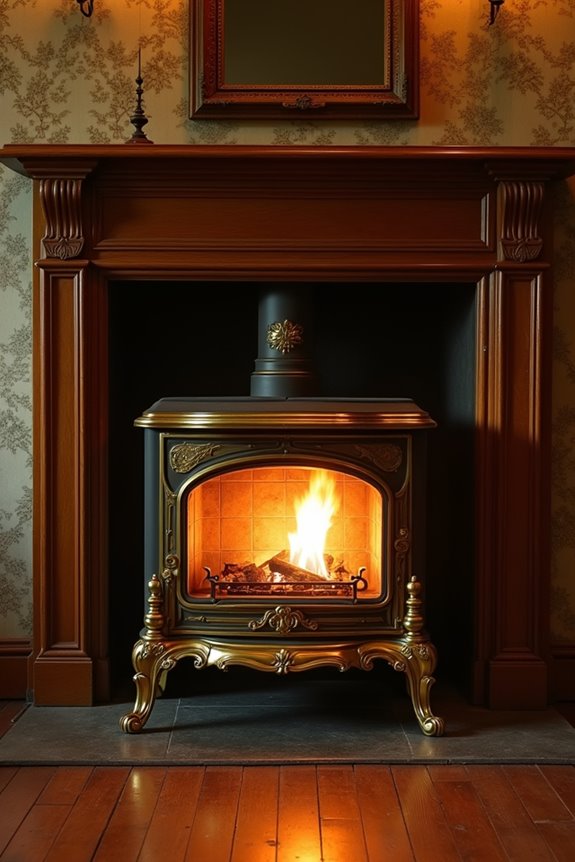
Did you realize that electric fireplaces actually came before gas became popular? Back in 1912, inventors created electric fireplaces as theater props! They looked realistic but produced no actual flame, which slowed people from buying them.
Here’s the thing: gas fireplaces won the popularity contest for good reasons. Gas combustion creates real flames that feel more authentic and provide warmth. You’ll appreciate the efficient heating and easier operation that gas provides. Plus, as natural gas infrastructure expanded throughout the 20th century, venting options became standardized and convenient.
Marketing the Future: Gas Fireplaces Peak in the 1950s
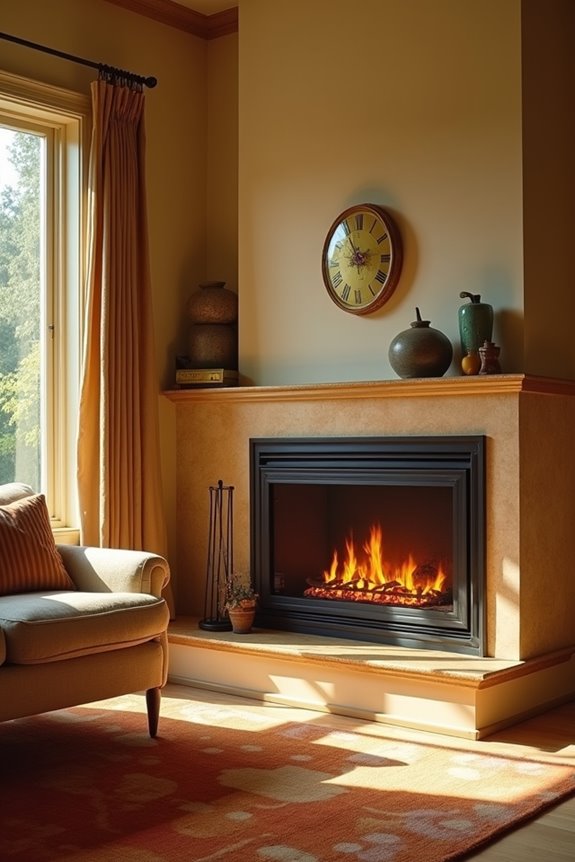
After World War II, you’d have noticed Americans craving comfort and convenience in their homes! Manufacturers jumped at this golden opportunity, flooding magazines and television with ads showing gas fireplaces as the modern, cleaner choice compared to messy wood-burning alternatives. This marketing campaign successfully positioned gas fireplaces from a neat invention into a must-have feature that families across the country wanted installed in their new homes.
Post-War Consumer Demand
What made gas fireplaces suddenly so appealing to American families after World War II? You were moving to brand-new suburbs, wanting modern conveniences! Post-war consumer demand skyrocketed as families sought easier heating solutions. Gas fireplaces offered safety and simplicity compared to traditional wood burning. You didn’t need to chop wood or clean ash constantly. Companies marketed mid-century heating as the future of home comfort. Direct-vent development came later, but early gas models already impressed homeowners. Families embraced these fireplaces as stylish focal points, not just heat sources. Your neighbors had them—shouldn’t you? This consumer enthusiasm made gas fireplaces into must-have features. You wanted modern, reliable, low-maintenance hearths. That’s exactly what post-war demand delivered to expanding neighborhoods everywhere!
Advertising And Market Expansion
How’d Madison Avenue convince millions of Americans that gas fireplaces were the ultimate symbol of modern living?
During the mid-20th century, advertising reshaped how Americans viewed gas fireplaces as home features. You’d see them everywhere—magazines, billboards, television commercials. Key brands marketed these units effectively, emphasizing what you truly wanted:
- Clean, effortless operation without messy ash or constant wood hauling
- Safety and reliability for your growing suburban family
- Environmental benefits compared to coal or wood burning
The market expansion happened fast! Advertisers linked gas fireplaces directly to modern living and successful homeownership. They promised you’d join the future while keeping your family warm. By the 1950s, new construction practically demanded them. You’d feel behind without one! This smart advertising strategy made gas fireplaces not just popular—they became essential symbols of contemporary comfort and progress!
Benjamin Franklin’s Stove: The 1740s Innovation That Shaped Gas Fireplace Design
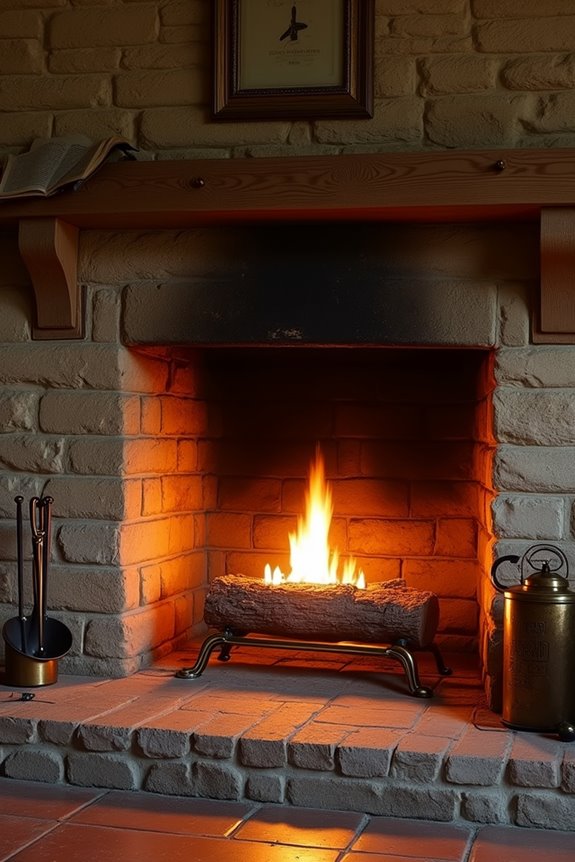
You might be surprised to learn that Benjamin Franklin’s metal-lined stove from the 1740s actually laid the groundwork for today’s gas fireplaces! His clever design used a hollow baffle and upside-down siphon flue to radiate heat efficiently while reducing smoke—innovations that help explain how modern fireplaces work. Franklin’s focus on better heat output and smart airflow didn’t just warm Colonial homes; it shaped the principles engineers still use when designing the gas fireplaces you see today.
Franklin’s Metal-Lined Design
- Metal-lined construction that trapped and radiated heat into your living space
- Enclosed combustion chamber that contained flames safely while maximizing warmth
- Hollow baffle system directing smoke upward for better draft improvement
Franklin’s stove improved heating because you got more warmth using less wood. The upside-down siphon in the flue? That design choice improved airflow dramatically. You weren’t stuck with smoky, inefficient open fireplaces anymore. This Franklin stove proved that thoughtful design beats brute force every time, setting the stage for modern gas fireplace efficiency you enjoy today.
Efficiency Improvements And Innovation
This innovation directly influenced modern gas fireplaces and direct vent systems you see today. Franklin and David Rittenhouse proved that smarter design beats brute force every time. You’re literally using their 1740s wisdom whenever you enjoy today’s efficient heating!
Legacy Shaping Modern Fireplaces
How’d a simple metal box from the 1700s end up shaping how we heat our homes today?
Benjamin Franklin’s stove wasn’t just clever—it changed heating fundamentals! You’re looking at the blueprint for modern fireplace inserts and direct vent gas technology. Here’s what made it effective:
- Metal-lined efficiency – Heat radiated directly into your room instead of escaping up the chimney
- Smart airflow design – The upside-down siphon reduced smoke while pulling warm air circulation throughout your space
- Compact heating power – Concentrated warmth in a small footprint beat traditional open fireplaces
David Rittenhouse later added an L-shaped stovepipe, boosting performance even further. You’re actually living with Franklin’s legacy every time you enjoy a modern gas fireplace! His focused approach to capturing and distributing heat directly inspired today’s direct vent gas technology and efficient fireplace inserts. That’s innovation you can feel!
How Direct Vent Gas Technology Changed Everything in 1987
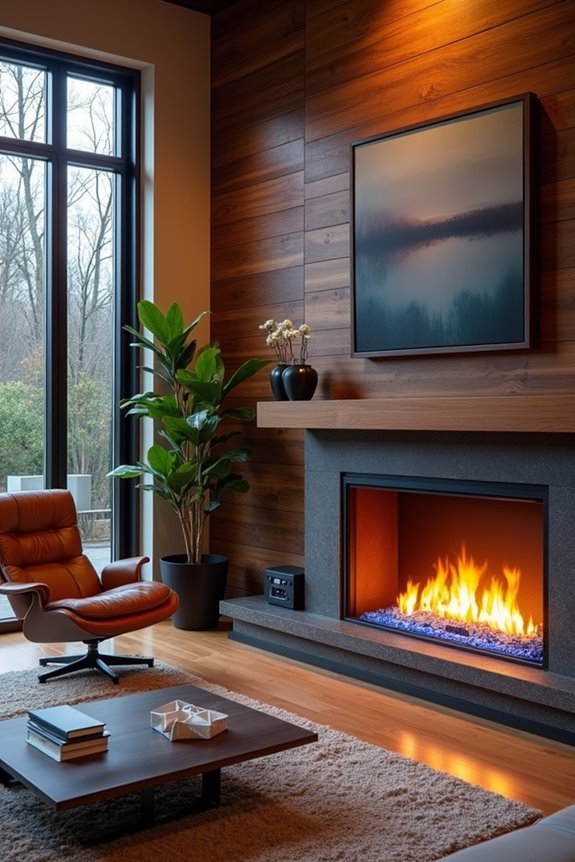
Direct Vent Gas Technology Changed Everything in 1987
This invention significantly improved gas fireplaces. Before this, you couldn’t separate combustion air from your living space. The new sealed systems addressed this by venting directly outdoors.
Safety and efficiency improved considerably. You no longer faced dangerous indoor emissions or lost heat through drafts. Your home stayed warmer while staying safer.
This innovation meant you could install gas fireplaces almost anywhere. No more worrying about air quality or complicated ventilation systems. Today’s direct vent technology remains standard because it works better.
You’re now part of a legacy built on smarter, cleaner home heating. Millions use fireplaces with modern direct vent systems today.
Why Homeowners Switched From Wood to Gas
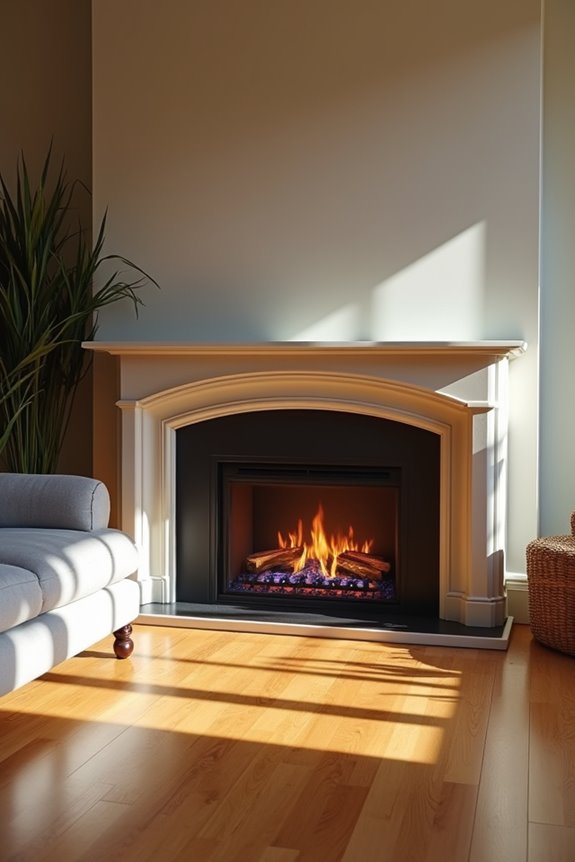
You’ll find that switching to gas fireplaces meant you could enjoy warmth without the messy cleanup, chopping, and constant feeding of wood logs! Gas fireplaces gave you instant heat at the flip of a switch, plus they burned cleaner with way fewer particles floating through your home—a significant benefit for your family’s health and your lungs. Why deal with ash, soot, and dangerous chimney fires when you could have safe, efficient heating that provides better value for your money?
Convenience And Safety Benefits
- No more messy cleanup – You’d flip a switch instead of hauling wood and scrubbing ash daily
- Better air quality – Gas produces less pollution and indoor particulates than smoky wood fires
- Sealed safety – Direct vent technology (introduced in 1987) vented exhaust outside while keeping your heated space secure
You didn’t need a chimney sweep or worry about dangerous creosote buildup. Factory-built designs made installation easier too! By the 1950s, builders recognized what you already knew: gas heating meant less work, cleaner air, and genuine peace of mind. That’s why gas fireplaces became your go-to choice for modern home comfort.
Efficiency Over Traditional Wood
When gas fireplaces hit the market around 1895, homeowners finally had a real alternative to wood burning—and they didn’t waste time making the switch! You’d abandon those dirty ash piles and constant restocking instantly.
Gas fireplaces deliver efficiency that wood simply can’t match. Check out these key differences:
| Feature | Wood Fireplaces | Gas Fireplaces |
|---|---|---|
| Heat Output | 10-15% | 70-90% |
| Maintenance | Heavy cleaning | Minimal upkeep |
| Air Quality | Particulate pollution | Clean burning |
When Heat & Glo introduced direct vent gas technology in 1987, everything changed! You’d finally get consistent warmth without the hassle. No more chopping wood or scrubbing chimneys. Gas fireplaces gave you reliable comfort, cleaner air, and lower maintenance—exactly what modern homeowners wanted!
The Safety and Efficiency Breakthroughs That Made Gas Popular
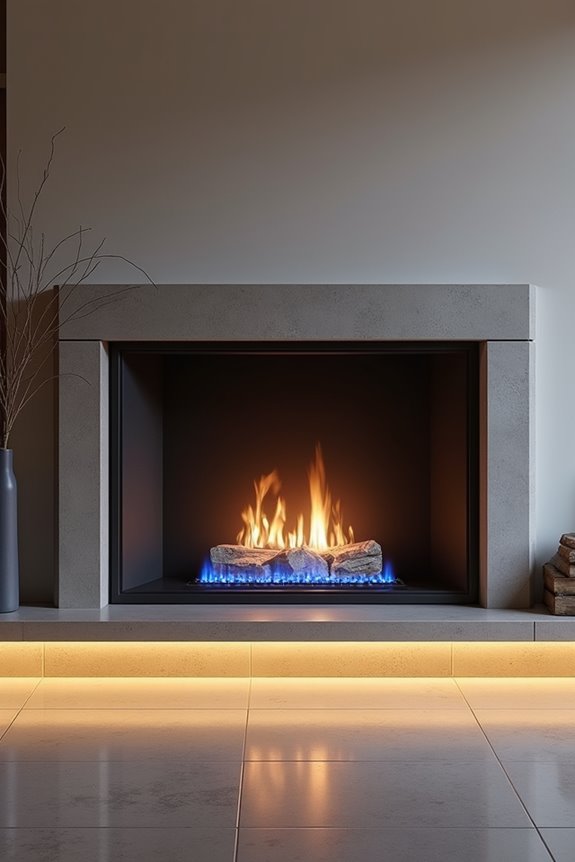
In 1987, Heat & Glo invented direct vent technology, significantly advancing gas fireplace design. Here’s what made the difference:
- Sealed combustion systems that kept dangerous gases outside your home
- Efficient venting that sent exhaust safely outdoors
- Reduced emissions that protected your family’s health
You’re now heating your home without worrying about indoor air quality. This innovation meant you could install gas fireplaces almost anywhere. The direct vent system sealed the fire from your living area while venting safely outdoors.
How Gas Fireplaces Outpaced Electric Models: A Technology Comparison
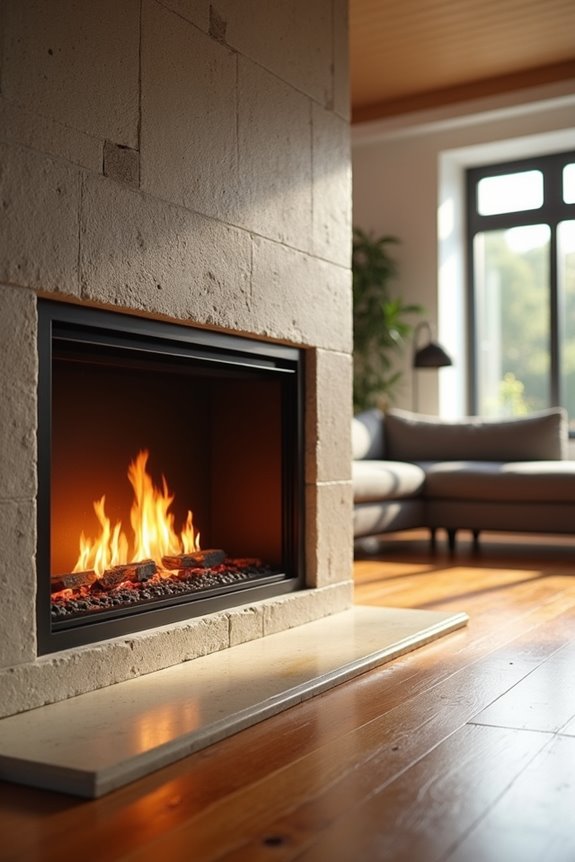
What gave gas fireplaces such a huge advantage over electric models? You’re looking at real flame technology versus artificial light shows!
Early electric fireplaces were basically theater props in 1912. They couldn’t produce actual heat or create authentic fire. Gas fireplaces, however, delivered immediate flames and genuine heat convection that warmed your entire room!
By the 1950s, gas dominated the market. Then came the 1980s innovator: direct vent systems. Heat & Glo’s 1987 breakthrough let you install gas fireplaces almost anywhere safely. Electric models simply couldn’t compete with that flexibility!
You get superior heating efficiency with gas heat convection. The flames circulate warm air naturally throughout your space. Electric units eventually improved, but gas had already won over homeowners like you who wanted real fire and reliable warmth!
What Gas Fireplace Styles Are Available Now?
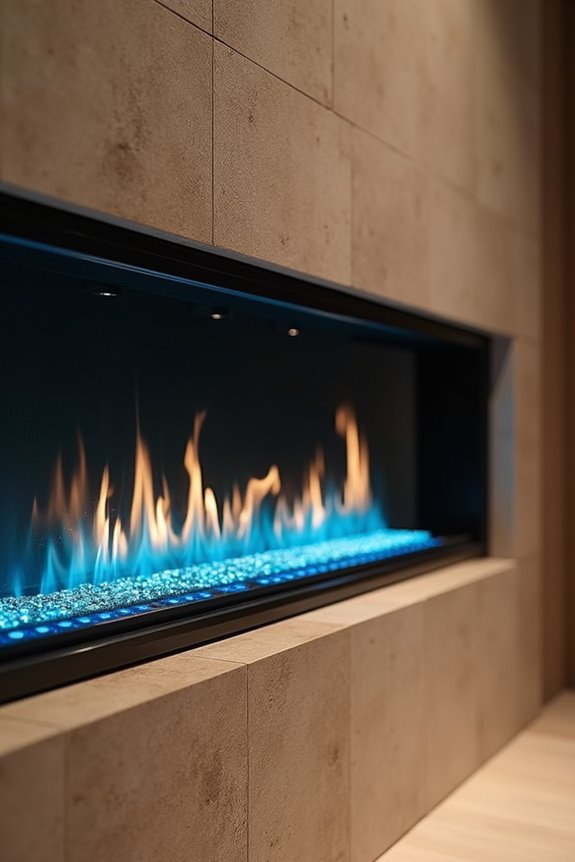
Today’s gas fireplaces come in so many styles that you’ll definitely find one matching your home! You have real choices now.
Here’s what you can explore:
- Traditional vented models that use your existing chimney, perfect if you’ve already got one
- Direct vent fireplaces that safely pull air from outside, giving you efficiency without losing indoor heat
- Contemporary inserts with realistic flame effects and glass media that update your space instantly
You can also choose between vented vs vent-free options depending on your setup. Want a built-in fireplace? An insert? Maybe freestanding? All are available!
Modern gas fireplace styles prioritize realism and efficiency. Multi-sightline burning means you enjoy flames from multiple angles. These fireplaces deliver warmth and ambiance without the wood-burning hassle. Find your perfect match today!
Choose Your Gas Fireplace: Size, Vent Type, and Fuel Options
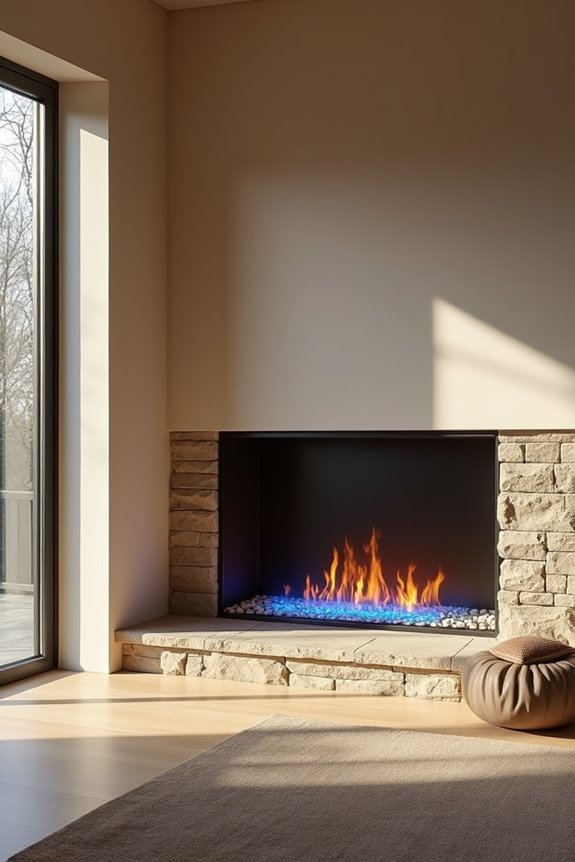
Once you’ve decided a gas fireplace is right for you, it’s time to pick the one that fits your home perfectly!
You’ll need to consider three main things: size, vent type, and fuel options. First, measure your space carefully. Do you want a compact insert or a larger standalone unit?
Next, think about vent type. A direct vent system pulls air from outside and vents exhaust outdoors—perfect for safety and efficiency! Ventless models work too, but check your local codes first.
Finally, choose your fuel. Gas fireplaces run on natural gas or propane. Natural gas connects to your home’s line, while propane gives you flexibility with standalone tanks.
Ready to get started? Pick what works best for you, and you’ll have cozy warmth in no time!