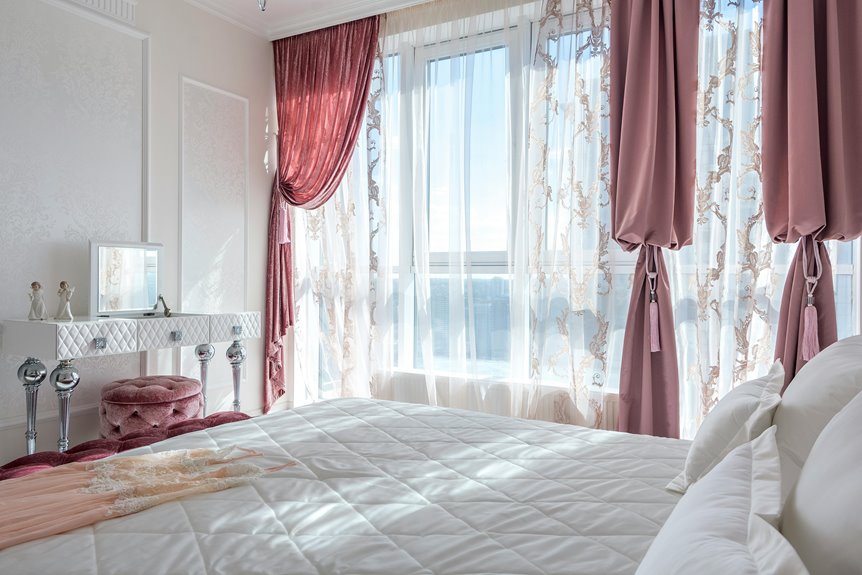
You’ve got drapes and curtains, but they’re not interchangeable! Drapes use heavy fabrics like velvet with structured pleats and lining for formal spaces. Curtains? They’re lighter, gathered, and casual—perfect for kitchens. Drapes block light and insulate; curtains let brightness filter through. Need sturdy hardware? Drapes demand it. Want easy maintenance? Curtains are machine washable. Length matters too—floor-length drapes look sophisticated, while shorter curtains feel breezy. Pick wrong, and your windows won’t function right. Explore each difference to get the results you want.
What Makes a Drape Different From a Curtain?

drapes need special care—often dry cleaning. Curtains? You can toss those in your washing machine! Ready to choose the right window treatment for your space?
How Weight and Fabric Separate the Two
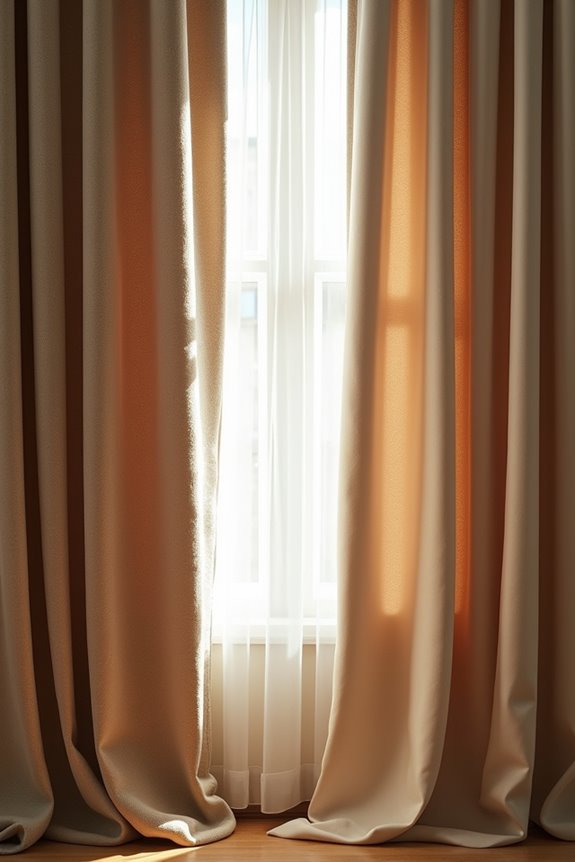
You’ll quickly notice that weight and fabric choice are what separate these two window treatments! Drapes use heavy, luxurious materials like velvet and brocade with added lining for insulation and a polished look, while curtains feature lighter fabrics such as cotton and linen that you can easily toss in the wash. Once you understand how fabric weight affects everything from how the material hangs to how well it blocks light, you’ll know exactly which option works best for your space!
Fabric Weight and Drape
Drapes use thicker, lined materials that hang beautifully and block light effectively. Curtains, by contrast, use lighter fabrics that move more easily and feel breezy. The heavier fabric weight in drapes creates those elegant folds you see falling to the floor. Lighter curtain fabrics gather softly instead, giving you that relaxed, casual vibe.
Think of it this way: heavy fabric equals formal elegance, while lightweight fabric means laid-back comfort. You’re choosing more than just material—you’re selecting your room’s personality.
Material Composition Differences
| Fabric Type | Best For | Weight Level | Lining Needed |
|---|---|---|---|
| Velvet, Brocade, Silk | Drapes | Heavy | Yes |
| Linen, Cotton, Blends | Curtains | Light | Optional |
| Lace, Sheer Materials | Casual Curtains | Very Light | No |
| Heavyweight Blends | Transitional | Medium-Heavy | Sometimes |
Drapery fabrics handle differently than curtain materials. Heavier drapery fabrics need support from sturdy hardware and lining. That lining blocks light, insulates your space, and adds fullness. Lighter curtain fabrics work great without lining because their fabric weight does the job. Choose fabrics matching your style and your room’s needs.
Pleats vs. Gathers: Why the Top Matters
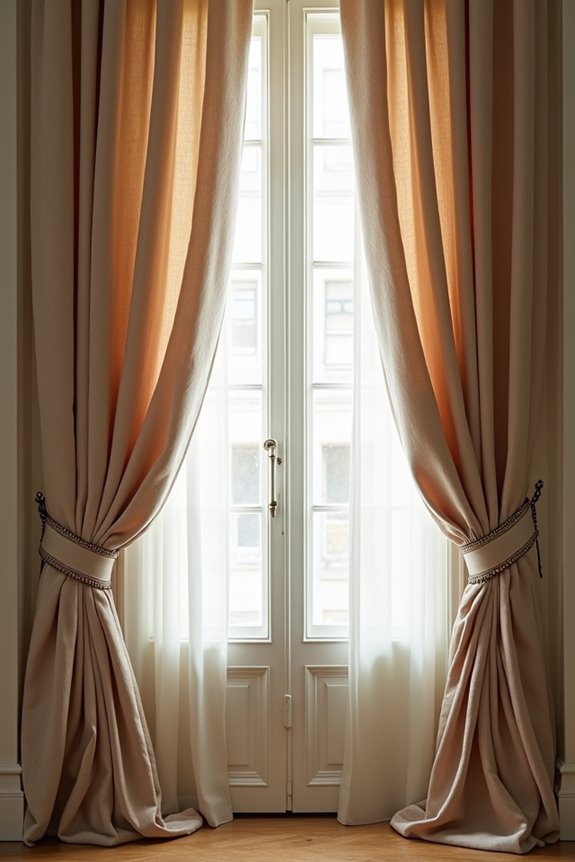
When you look at the tops of your window treatments, you’ll notice a key difference that affects how they hang and move! Pleated drapes feature structured folds that create a formal, tailored look, while gathered curtains bunch up loosely for a casual, relaxed appearance. Understanding whether you’re choosing pleats or gathers matters because it determines your hardware needs, how smoothly your panels glide open and closed, and the overall style you’re creating in your room!
Pleated Drapery Construction
- Structured vertical folds create a polished, sophisticated look
- Heavy, lined fabric blocks light and insulates your space effectively
- Substantial brackets and track systems support your investment with durability
- Professional appearance creates a refined backdrop for any room
Unlike gathered curtains, pleated drapery demands quality construction. You’re investing in panels that control light effectively and drape beautifully. The weight and lining work together, giving you formal elegance. You’re not just hanging fabric—you’re creating intentional style with purpose and precision.
Gathered Curtain Style
You’ll create gathered curtains by sewing fabric into soft fullness using simple headings or loops. This technique produces that relaxed, casual look suitable for bedrooms or living rooms. The gathers increase fabric volume, creating billowed appearances that feel welcoming and informal.
Gathered curtains work well with basic rods and rings, so you won’t need fancy hardware. They’re also forgiving—you can easily adjust lengths and hide slight fabric irregularities. When you want a comfortable, approachable style, gathered curtains deliver what you need.
Hardware And Operation Differences
Why does the top of your window treatment matter so much? It’s where function meets style! Your choice between pleats and gathers changes everything about your windows.
Here’s what you’ll notice:
- Pleated drapes demand decorative curtain rods and heavier hardware that showcases elegance
- Gathered curtains work beautifully with simple, lightweight rods for a relaxed appearance
- Operation differences mean drapes glide smoothly on quality tracks, while curtains pull easily by hand
- Hardware choices directly affect the overall look and performance of your window treatments
Pleats create a polished, formal look. Gathers give you cozy, casual vibes instead. Your curtain rod supports this difference perfectly! Choose pleats for structured sophistication or gathers for relaxed comfort.
Why Drapes Get Lined: And Curtains Don’t
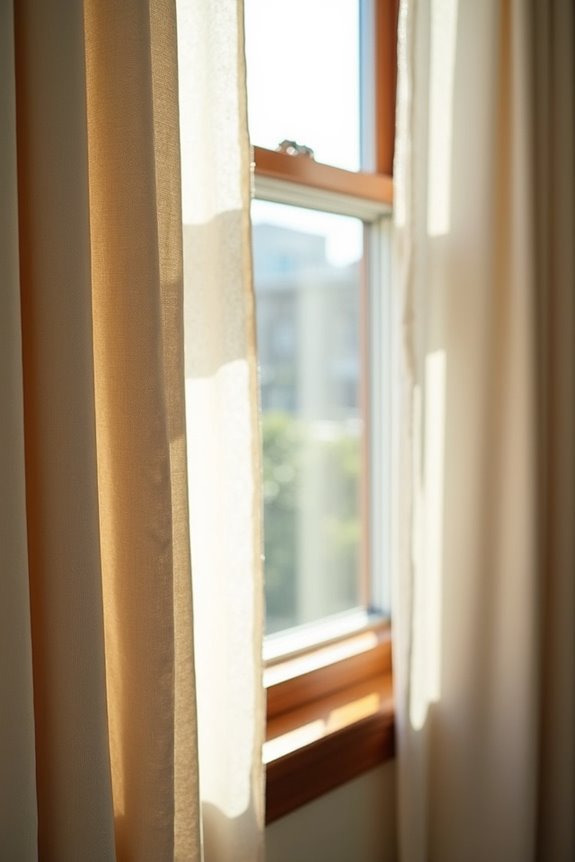
Have you ever wondered what makes drapes look so elegant and formal compared to curtains? The difference is lining! Drapes get lined, and curtains typically don’t—and that’s a key distinction.
When you add lining to drapes, you’re creating fullness and structure that makes them hang beautifully. Lining also blocks light better, keeps heat in during winter, and gives you privacy. That’s why drapes feel more luxurious and formal!
Curtains skip the lining because they’re meant to be lighter and more casual. You can toss them in the washing machine without worry. Drapes, though? Their lining requires dry cleaning to stay pristine.
Think of it this way: lining gives drapes a polished appearance that works as a strong room statement. You’re investing in elegance and performance when you choose lined drapes for your space!
Length, Fullness, and the Floor-to-Top Question
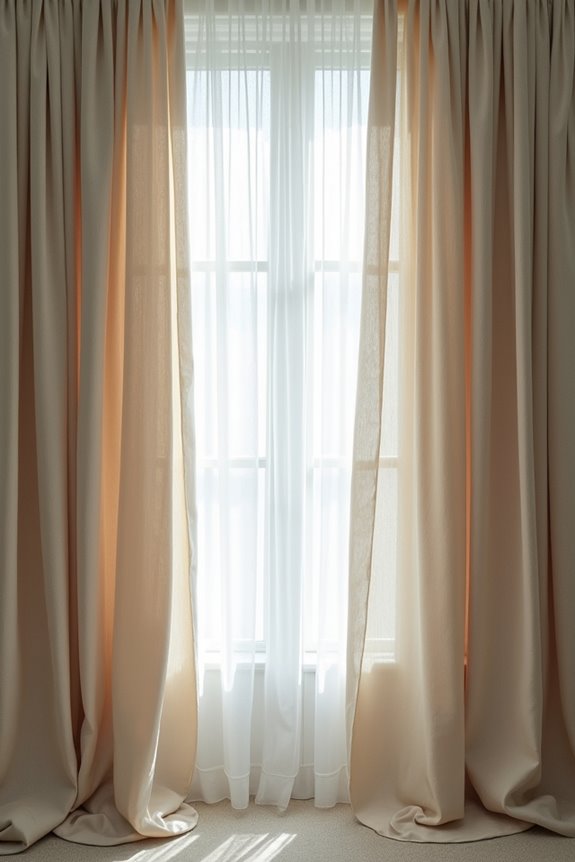
When it comes to making your room look polished, length matters—a lot! You’re not just picking random fabric here. Here’s what separates these two window treatments:
- Drapes touch or puddle on your floor, creating that formal, luxurious vibe
- Curtains can stop at the sill or frame, giving you flexibility and a casual feel
- Floor-length drapes block light and insulate better, protecting your space from drafts
- Shorter curtains let more light filter through, keeping your room bright and airy
The fullness difference matters too! Drapes use thicker fabrics and lining for substantial, elegant folds. Curtains? They’re lighter and airier. Think about what your space needs. Do you want that polished, formal look? Choose drapes. Need something relaxed and casual? Curtains work perfectly.
Rods, Tracks, and Cords: Hardware Differences
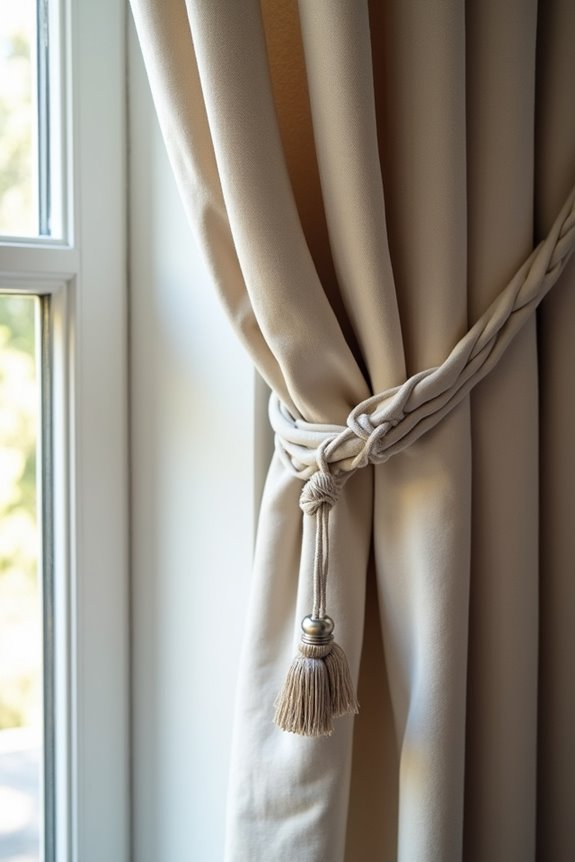
When you’re choosing between curtains and drapes, you’ll quickly discover that their hardware tells a completely different story! Drapes demand sturdy rods and decorative brackets that can handle heavier fabrics, while curtains work beautifully with simpler tracks and lighter-duty hardware. Understanding these differences will help you pick the right setup—whether you’re going for casual elegance or formal sophistication—and keep your window treatment securely in place!
Decorative vs. Functional Hardware
Why does your window treatment hardware matter so much? Your hardware choice determines both style and function! Decorative hardware showcases your design personality, while functional hardware handles the heavy lifting.
Consider these key differences:
- Drapery hardware features ornate finials and substantial brackets that become focal points.
- Curtain hardware stays simple and understated, letting fabrics shine.
- Traverse tracks support heavy drapes with motorized precision.
- Tension rods work well for lightweight curtains you can easily adjust.
Here’s what matters: heavier drapes need reinforced rods and sturdy brackets. Lightweight curtains work fine with simple tug closures. Your hardware investment directly affects how your window treatments perform daily. Choose hardware that matches both your style preferences and fabric weight.
Operating Mechanisms and Cords
Your curtains typically use simpler rods and rings or lightweight tension rods. You’ll appreciate how easy they are to pull by hand! Drapes, however, demand more sophisticated systems. They often feature elaborate tracks designed to support heavy fabric fullness.
Here’s where motorized systems come in: they make drapes glide smoothly! You simply press a button, and your drapery panels move across that sturdy track. Meanwhile, curtains frequently rely on manual pulls or light cord systems—practical for renters and budget-conscious decorators.
Both options work well! Choose based on your lifestyle. Want convenience? Consider motorized drapes. Prefer simplicity? Stick with traditional curtains and their straightforward rods!
Installation and Weight Capacity
- Drapes demand deeper brackets anchored securely into wall studs for stability.
- Curtains use lighter hardware that’s easier to install—perfect for renters and quick updates.
- Lined drapery requires higher-load tracks that glide smoothly without sagging or shifting.
- Standard curtains work with basic rods supporting minimal weight.
Install your drapes at the correct height with proper wall support. Measure twice, mount once. Choose hardware matching your fabric’s weight, and your windows will look polished for years.
Formality: When to Choose Each for Your Space
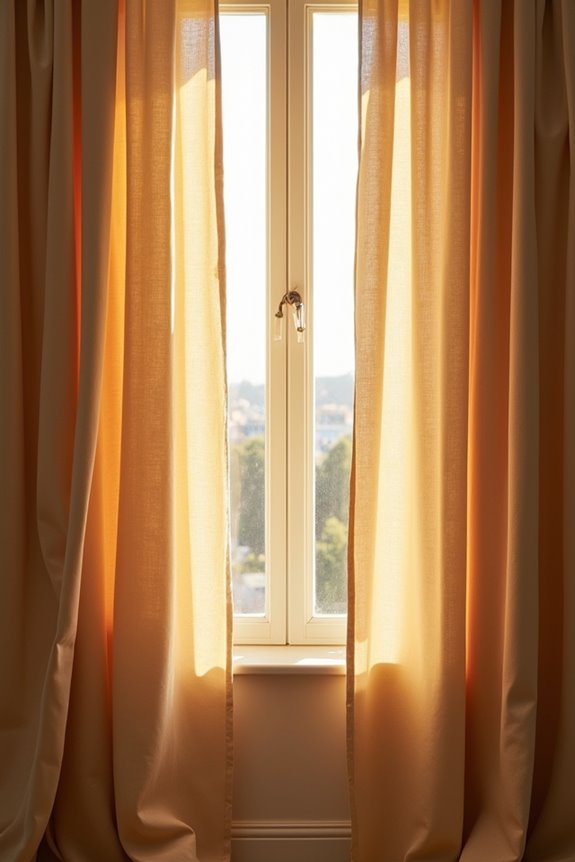
When you’re decorating a room, think about the mood you want to create—that’s your first clue about choosing between curtains and drapes! Drapes are your go-to for formal spaces like dining rooms and bedrooms. Their heavy fabrics and floor-length design bring sophistication to any room. Drapes create elegant and deliberate spaces.
Curtains work perfectly for casual areas like kitchens and bathrooms. They’re lighter, simpler, and better suited for relaxed settings. Think about your lifestyle too. Do you want that polished, put-together feeling? Choose drapes. Prefer something low-maintenance and breezy? Curtains are your answer.
The beautiful part? You’re not locked into one choice. Many people combine both—drapes for drama, curtains for function. Consider what works best for your needs and create the space where you belong.
Maintenance: What You’ll Actually Do Each Season
Because drapes and curtains need different care, picking the right one saves you time and effort!
Picking the right window treatment saves you time and effort—drapes demand professional care, curtains fit your regular routine.
Drapes require professional maintenance, while curtains fit into your regular laundry routine. Here’s what you’re actually signing up for:
- Drapes demand dry cleaning – Plan on professional care once or twice yearly to protect those heavy fabrics and linings
- Curtains? Toss them in the washer – Most handle machine washing beautifully, saving you money and hassle
- Dust buildup happens faster – Drapes collect more debris, requiring gentle vacuuming between cleanings
- You’ll notice the difference immediately – Clean window treatments improve your whole room’s appearance
Here’s the real talk: You’re joining thousands who’ve discovered that curtains mean less maintenance stress. Drapes demand commitment. Curtains work with your busy lifestyle. Choose what matches your actual routine, not what looks perfect in magazines.
Light Control and Privacy: Which Performs Better
If you’ve ever struggled to block out morning sunlight or keep nosy neighbors from peering into your home, you’ll appreciate what the right window treatment can do! Drapes win the light control battle. Their heavier fabric and lining create superior darkness compared to lightweight curtains. Want flexibility? Layer sheer curtains under drapes for daytime privacy without total blackout. For maximum performance, blackout drapery delivers strict privacy and complete light blocking—perfect for bedrooms or media rooms. Curtains offer softer light filtration, ideal if you’re seeking gentle brightness. Floor-length, full drapes with quality lining trap more insulating benefits too. Consider your actual needs. Bedrooms demand blackout solutions, while living areas might celebrate layered options. You have choices that match your lifestyle!
Choosing Curtains or Drapes for Your Home
So, how do you pick between curtains and drapes? You’ll want to consider your lifestyle, space, and what you’re trying to achieve!
Here’s what’ll help you decide:
- Your room’s vibe – Want casual comfort or formal elegance? Drapes bring sophistication!
- Light control needs – Do you need serious darkness? Lined drapes block way more light.
- Temperature comfort – Drapes keep heat in during winter and out during summer.
- Installation style – Simple tension rods work for curtains; drapes need sturdier hardware.
Start by asking yourself: What matters most in this space? Choose drapes if you’re seeking insulation and a polished look. Pick curtains for lighter, breezy vibes. Both options work—you just need what fits your home best!