Yes, your curtain wrinkles will disappear!
Most wrinkles vanish with the right method for your fabric type. Cotton and linen curtains respond well to washing and low-heat drying, while delicate fabrics need gentle steaming instead. Quick dryer refreshes work great for minor creases—just use a damp towel on low heat for 10–15 minutes. The key? Check your care label first, then pick your approach. Stick around to discover exactly which method works best for your specific curtains!
Will Curtain Wrinkles Go Away? A Quick Answer
Different fabrics need different approaches. Cotton and synthetic drapes? Try a cold-water wash with low-heat drying. Delicate fabrics like velvet or satin? Steam or professional cleaning works best. Polyester drapes respond nicely to medium ironing or steaming from a safe distance.
The catch: dry-clean-only fabrics might need professional help. Don’t risk damaging your investment!
Ready to tackle those wrinkles? Start by checking your curtain’s care label, then pick your method. With the right approach, your curtains will look smooth and well-maintained.
Identify Your Fabric Type First
You’ll want to check your curtain’s care label first—it’s your roadmap to success! Test how your fabric handles heat by applying steam or iron to a hidden corner, and always verify that colors won’t fade before you treat the whole curtain. Once you know your fabric’s characteristics, you can pick the safest wrinkle-removal method and avoid costly damage!
Reading Care Labels Carefully
Look for key words like “dry clean only,” “steam only,” or “iron on medium.” Silk needs gentleness. Cotton handles more heat. Polyester’s forgiving. Velvet? Never iron it directly—you’ll crush the pile!
Read every word carefully. Conflicting instructions mean you should visit a professional cleaner instead. Don’t guess! One wrong move damages your curtains permanently.
Take thirty seconds now. Grab your curtains and flip that tag over. Understanding your fabric prevents costly mistakes and keeps your curtains looking fresh and beautiful for years ahead.
Fabric Heat Tolerance Levels
Now that you’ve read your care label, it’s time to figure out what you’re actually working with. Different fabrics demand different heat levels—and that’s the key to success!
Cotton and linen are heat-loving champions. You can iron these fabrics confidently without worry. Silk, sheer fabrics, and velvet, though? They’re delicate and require gentler treatment. Steam is your best option here, not direct heat.
Here’s where it gets tricky: nylon and polyester blends resist wrinkling beautifully but melt easily. Use low to medium heat, and keep your iron moving. Never leave it sitting!
Velvet deserves special mention—never iron it! A steamer held safely away works perfectly.
Ready to tackle those wrinkles? Match your fabric to the right heat level, and you’re already on the right path.
Testing Colorfastness Before Treatment
Find a hidden corner—somewhere nobody’ll notice. Apply a tiny bit of water or cleaning solution there. Now here’s the key: blot gently, don’t rub! Rubbing spreads color around and ruins your test.
Check a white cloth. Did any color transfer onto it? If yes, treat your curtains as non-colorfast. That means skip the moisture and heat methods!
Velvet, silk, and vintage fabrics deserve extra caution. They’re trickier than regular materials. When in doubt, check your care label first—it’s your best friend! This simple test takes two minutes and saves you from potential disasters.
Odors, Stains, or Dust: When to Skip DIY Methods
Professional cleaners have specialized equipment and expertise you don’t. They’ll handle delicate fabrics safely while addressing those tricky issues. Think of it this way—some problems need professional hands!
When should you call the experts? Deep creases combined with stains, pet odors, or years of dust buildup signal professional cleaning time. You’re not giving up; you’re making the smart choice! Your curtains deserve proper care, and sometimes that means letting trained professionals take over.
Method 1: Washing Machine and Dryer for Deep-Set Wrinkles
Ready to tackle those stubborn deep-set wrinkles? This method works well on cotton, linen, and synthetic blends.
Start by washing your curtains using cold water on a gentle cycle. Why cold? It prevents fiber damage and keeps wrinkles from getting worse. Here’s the key: toss a couple of clean, dry towels into the dryer with your curtains. They’ll create friction that helps relax those stubborn creases.
Dry everything on low heat—this is important. Remove your curtains promptly while they’re still slightly damp. Hang them straight away and let gravity do the work. Avoid over-drying; slightly damp curtains hang well and smooth out naturally.
Method 2: Quick Dryer Refresh Without Washing
- Toss your curtains in the dryer with a damp towel
- Set the heat to low
- Run for 10–15 minutes only
- Remove immediately and hang them up
The moisture from the towel releases wrinkles without stressing your fabrics. Remove your curtains right away—this prevents new wrinkles from forming while they hang. Slightly damp curtains actually straighten nicely on their own!
Skip this method for dry-clean-only fabrics though. Your curtains will look refreshed and ready to display!
Method 3: Steaming for Delicate and Heavy Fabrics
You’re ready to tackle those stubborn wrinkles with steaming, and here’s the good news—you’ll use a fabric steamer with distilled water, holding it 4–6 inches away while working slow downward strokes through your hanging curtains! This method works well on velvet, heavy fabrics, and delicate materials that’d get damaged by a hot iron. Steam from top to bottom on both sides, let your curtains air-dry for 10–15 minutes, and the wrinkles will disappear.
Steamer Setup and Technique
Why wrestle with an iron when you’ve got a gentler option? Steaming delivers wrinkle-removal benefits without harsh contact! You’re joining smart homeowners who’ve discovered this effective method for fabric care.
Here’s your winning setup:
- Fill your steamer with distilled water to prevent mineral buildup
- Hold the steamer 4–6 inches from your hanging curtains
- Use slow, downward strokes for smooth results
- Work from top to bottom gradually
Start at the top edge and move down steadily. Smooth the fabric with one hand while you steam with the other. This technique works well on heavier fabrics and delicate materials alike!
Stubborn wrinkles giving you trouble? Apply extra pressure near the bottom or repeat the process. Your curtains will look professionally pressed without the fuss.
Fabric-Specific Steaming Guidance
Different fabrics need different steaming care, and that’s where your technique really matters!
| Fabric Type | Steaming Distance | Motion | Result |
|---|---|---|---|
| Velvet | 4–6 inches | Gentle, slow downward | Prevents crushing and damage |
| Heavy fabrics | 4–6 inches | Steady downward strokes | Relaxes fibers effectively |
| Delicate materials | 4–6 inches | Top to bottom, light | Avoids new creases forming |
| Curtains on rod | 4–6 inches | Slow, controlled passes | No removal needed! |
Never iron velvet—steaming is your best option here! Hang delicate curtains while steaming and work downward from top to bottom. This prevents fresh wrinkles from forming. For heavier fabrics, use slow, steady strokes with distilled water. If stubborn wrinkles remain, make a second pass with slightly more steam concentration. Your curtains will benefit from this personalized treatment. Master this technique, and you’ll achieve professional-quality results.
Distilled Water and Prevention
distilled water is an effective choice for steaming curtains without damaging them. You’re protecting your fabrics from unwanted damage by making one simple switch.
Why distilled water matters:
- Prevents mineral buildup that tap water leaves behind
- Stops watermarking and stubborn residue on delicate fabrics
- Keeps your curtains looking fresh and pristine
- Eliminates the worry of discoloration from mineral deposits
Tap water contains minerals that stick around after steaming. Distilled water is pure and clean, leaving zero traces. You’ll notice the difference when your curtains stay stain-free and beautiful.
This small change has a meaningful impact on your curtain care routine. You’re investing in your home’s appearance while protecting those fabrics you value. Use distilled water for every steaming session.
Method 4: Ironing With Fabric-Specific Heat Settings
Before you plug in that iron, here’s the truth: not all fabrics play by the same rules!
Not all fabrics play by the same rules—matching heat to fabric prevents damage and keeps curtains wrinkle-free.
Cotton and polyester? They’re your friends—they handle gentle heat beautifully. Linen’s similar too. Start with the lowest effective temperature and work up if needed. Always check those care labels first!
Here’s your ironing with fabric-specific heat settings approach: place a thin pressing cloth between your iron and curtains. This protective barrier prevents direct damage. Iron small sections methodically, then hang your curtains immediately. That weight does effective work removing wrinkles!
Velvet needs special treatment—never iron it directly. Use a steamer held away from the surface instead. Silk or vintage curtains? Consider professional cleaning rather than risking damage at home.
Matching heat to fabric means clean, wrinkle-free curtains!
How to Store Curtains to Prevent Wrinkles From Returning
After you’ve worked hard to remove those wrinkles, you’ll want to store your curtains the right way so they don’t come back! Try rolling your curtains loosely around a cardboard tube, or hang them in a garment bag that allows air flow freely. These methods keep your curtains wrinkle-free and ready to look great whenever you need them!
Rolling Curtains on Tubes
Want to keep your curtains wrinkle-free for months? Rolling them on cardboard tubes is an effective storage method. This approach prevents sharp folds from becoming permanent creases that damage your fabric.
Here’s why this method works:
- Loose rolling avoids tight creases that set deep into fibers
- Cardboard tubes provide gentle support without crushing your curtains
- Breathable storage lets air circulate around the rolled fabric
- No heavy stacking means your drapes stay smooth and fresh
Start by rolling your curtains loosely around the tube. Don’t pack them tight—that defeats the purpose! Store your rolls in a cool, dry place away from humidity. This simple technique keeps them looking professionally pressed without any actual ironing. Your curtains will maintain their quality with minimal effort.
Hanging in Breathable Bags
Breathable garment bags are an effective option for keeping curtains wrinkle-free during storage. Unlike plastic bags that trap moisture and create wrinkles, these specially designed bags let air flow freely around your fabric. You’ll prevent those stubborn creases that seem impossible to remove later.
Here’s what makes this method work: hang your curtains loosely inside the bag without cramming them together. Gentle wrinkle release happens naturally when fabric hangs freely without pressure or folds. Avoid heavy items pressing down on top, which defeats the purpose entirely.
Store your bagged curtains in a cool, dry location. This combination keeps moisture at bay and maintains smooth surfaces. Choosing this storage solution is a practical approach.
Should You Call a Pro? Silk, Vintage, and Luxury Fabrics
When should you skip the DIY approach and bring in a professional? Here’s when professional-cleaning makes sense:
- Silk and vintage fabrics need expert hands—they’re delicate and damage easily
- Dry-clean-only labels mean professionals handle them, not you
- Persistent odors and visible stains require deep extraction methods you can’t do at home
- High-value drapes deserve protection from costly mistakes
Professional cleaners use enzyme-based treatments that tackle allergens and odors your vacuum can’t reach. Plus, they’ll remove heavy wrinkles that hanging won’t fix.
Professional services often cost less than replacing your curtains. Many offer same-day or quick turnaround options too. Don’t risk damaging fabrics you care about. When in doubt, call the pros!
Professional Fabric Restoration in Los Angeles
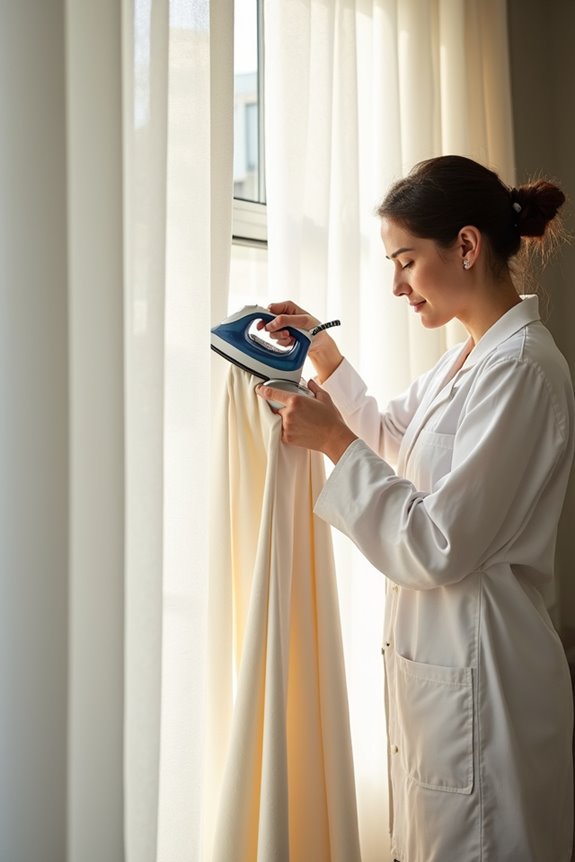
How can you bring your beloved curtains and upholstery back to life? Professional fabric restoration in Los Angeles uses deep extraction and enzyme-based treatments that work effectively. You’ll find IICRC-certified cleaners who complete most projects in just 2–4 hours with same-day drying.
Here’s what makes professionals different: they know exactly when to skip the ironing board and use specialized techniques instead. Velvet and luxury fabrics? They handle those with low-moisture or steam methods that protect your investment.
Your home will look and feel better. Musty odors, stubborn stains, and dust buildup don’t stand a chance against expert care. Quick Clean Carpet Care offers free estimates and convenient 24/6 booking. Call 310-691-9750 or email [email protected] today!
When to Contact a Professional Cleaner
Sometimes your curtains need more help than a steamer or iron can provide! You’ll know it’s time to call a professional when you encounter these situations:
Sometimes your curtains need more help than a steamer or iron can provide—that’s when it’s time to call a professional.
- Dry clean only labels mean you shouldn’t risk home methods
- Persistent odors or stains require specialist expertise
- Delicate fabrics like satin need careful professional handling
- Deep creases won’t budge with standard equipment
Professional cleaners understand fabrics you might damage accidentally. They have specialized tools and experience that deliver results. Think of them as your curtain’s best friend when things get tricky.
Don’t feel discouraged if home methods don’t work perfectly. Reaching out to a delicate-fabric specialist shows you’re taking proper care of your investment. You’re making the smart choice!