
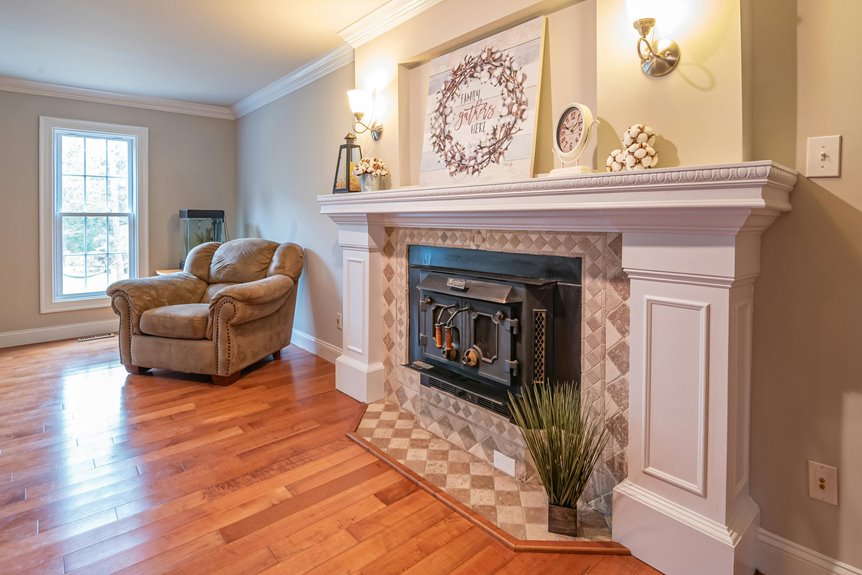
You should coordinate your mantel with your flooring! When they work together, your fireplace becomes a notable focal point that makes your whole room feel deliberate and larger. Match warm floors with warm mantels, or pair cool tones together for harmony. Don’t guess—pull samples and test them under your home’s natural and artificial light first.
Whether you match exactly, blend undertones, or create contrast depends on your room’s layout and style. The right finish makes a real difference, so stick around to discover which approach works best for your space.
Why Your Mantel Should Match or Complement Your Flooring
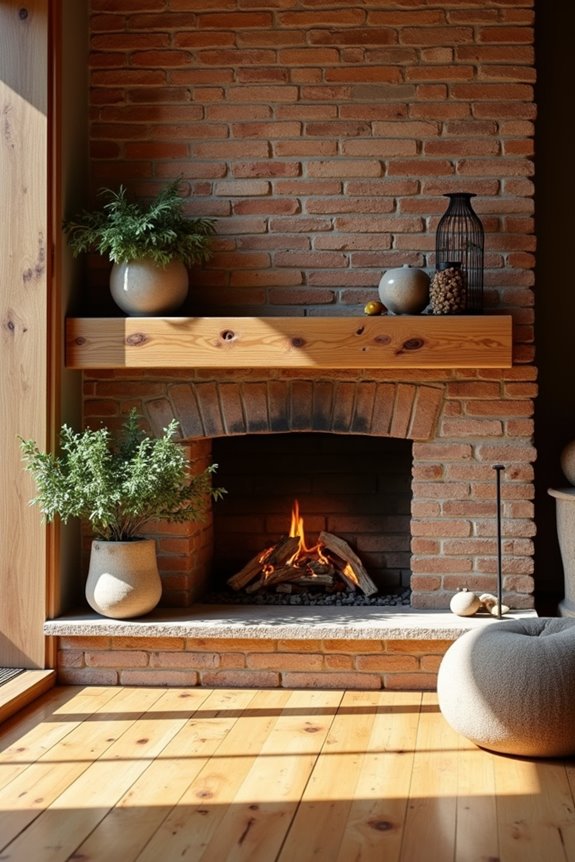
Why does your fireplace mantel feel disconnected from the rest of your room?
When your mantel and flooring don’t coordinate, they work against each other! Your eyes bounce around uncertainly instead of settling into a unified space. Matching or complementing these two elements brings your room together.
Here’s why it matters: a well-coordinated mantel anchors your fireplace while your flooring grounds the entire space. Together, they create visual flow that makes rooms feel larger and more deliberate.
Consider warm wood tones on your mantel paired with warm-toned flooring—they’ll feel like they belong together! Cool grays work similarly. When undertones align, your space achieves harmony.
You don’t need exact matches. Complementary shades work beautifully too. Paint your mantel to echo your floor’s warmth, and watch your room become the coordinated sanctuary you’re seeking!
Start With Undertones: Warm or Cool?
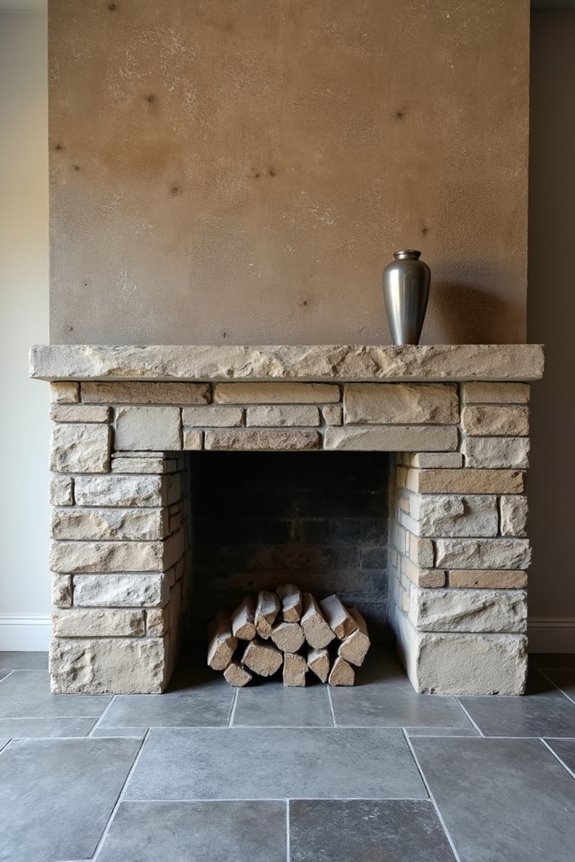
Warm-toned floors like golden oak or walnut pair well with warm mantels. Think honey, espresso, or warm white. Cool-toned floors such as gray-washed wood work best with dove gray, true white, or charcoal mantels.
Here’s your action step: grab your flooring sample and hold it next to potential mantel colors under natural light. Natural light reveals the truth! You’ll instantly spot whether undertones clash or complement each other.
When undertones align, your fireplace becomes a cohesive focal point—not a visual clash.
Pull Samples Before You Decide: Here’s Why
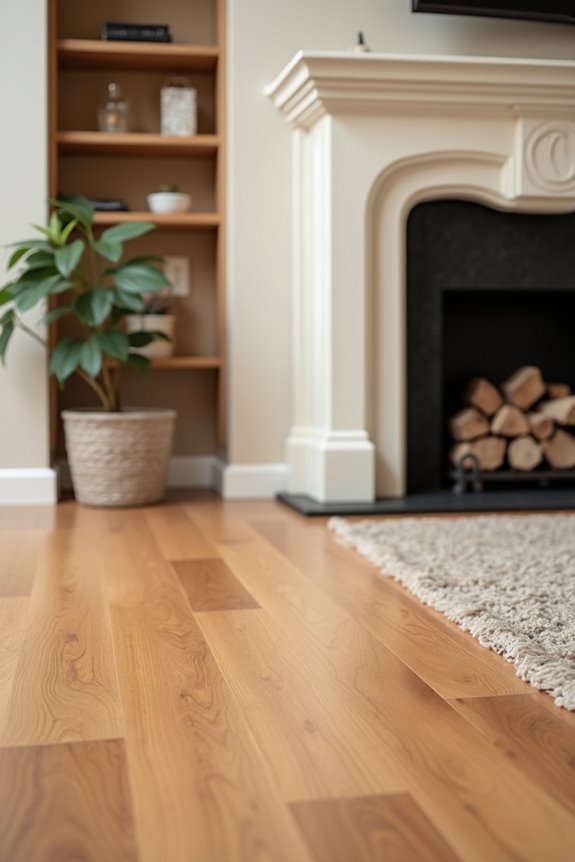
You’d be shocked at how differently wood stains look under your kitchen’s bright overhead lights versus the soft glow of evening lamps! Pull those flooring and mantel samples into your actual room and watch them throughout the day—what looks like a perfect match at noon might feel totally different at sunset. Don’t miss this step; you’ll save yourself from expensive regrets and custom staining fixes down the road!
Lighting Changes Everything
- Check samples in morning light – natural rays reveal true undertones before afternoon shifts
- Test in evening conditions – artificial lighting can hide clashing tones you’ll notice later
- Compare multiple times daily – you’ll spot problem undertones that shift with the sun
Don’t rely on one lighting moment! Your mantel and flooring might clash under certain conditions. Hold those physical samples next to your actual floors under different lighting. You’re making smart choices when you see how colors truly interact. This simple step prevents expensive regrets later!
Avoid Costly Mistakes
Pull actual mantel and flooring samples into your room. Compare them under natural light during different times of day. Then check them under your artificial lighting too. Light shifts can completely change how colors appear!
Examine the undertones carefully. Are they warm or cool? Do your mantel matches blend well together, or clash awkwardly?
Test multiple finishes against several flooring swatches. This quick, iterative approach reveals what actually works in your space. Small differences look massive once installed. Confirming samples work together now saves you thousands later.
Match, Blend, or Contrast: When to Use Each Strategy
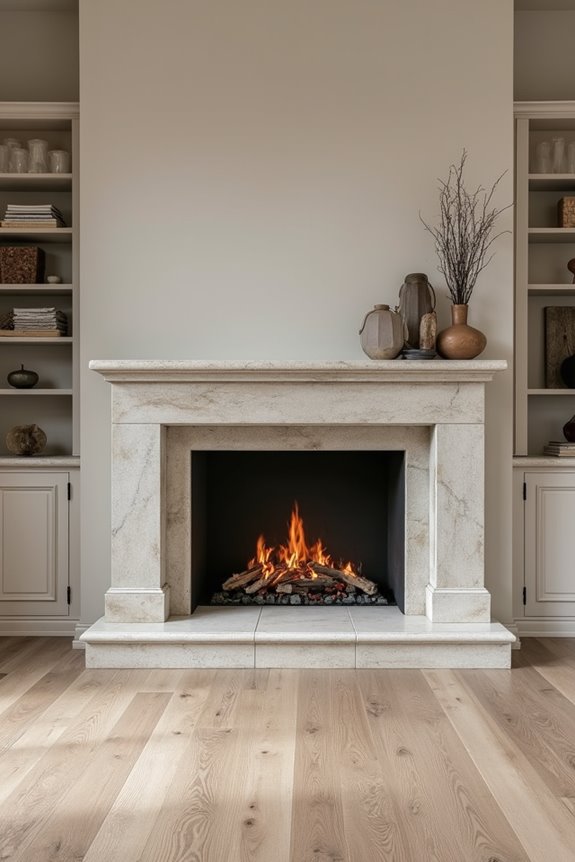
You have three powerful strategies to choose from when designing your fireplace. Match exactly when you want a seamless, continuous flow—think a white mantel with white trim and light floors that create one unified look. Blend undertones to add depth without boring sameness, or use contrast like a dark mantel against light floors to create real drama and draw everyone’s eyes right to your fireplace!
Match Exactly For Continuity
Why does a perfectly matched mantel feel so satisfying? When your mantel and flooring share the same color, you create an unbroken visual line that works well together!
Here’s when exact matching works beautifully:
- White-painted mantels with white trim – You achieve a clean, continuous look that feels sophisticated.
- Mantels mirroring your floor’s undertone – This creates a unified transition that draws the eye smoothly through your space.
- Dark wood mantels matching dark hardwood floors – You establish grounded design that anchors your entire room.
Test your color samples under natural light first. You’ll spot how matched tones read in your actual space. This strategy works best when you want your fireplace to recede gracefully rather than command attention. You’re building harmony, not drama!
Blend Undertones For Warmth
When does your fireplace feel warm and inviting rather than perfectly polished?
When you blend undertones instead of matching exactly, you create that cozy feeling! Your mantel and flooring don’t need identical shades. Instead, they should share the same undertone—like both having warm, golden notes.
Here’s why this works: A warm beige mantel paired with honey-toned hardwood floors feels connected without looking too matchy. You’ll notice the visual warmth flowing throughout your space naturally.
Try this approach: Choose your mantel color first, then find flooring that echoes similar undertones. Test samples together under natural light to confirm they harmonize well.
The result? Your fireplace becomes a gathering place that feels genuinely welcoming. You’ve created harmony without sacrificing personality. That’s the sweet spot between polish and comfort!
Use Contrast For Drama
Ever noticed how a bold statement catches your eye immediately? That’s the power of mantel contrast! You can create drama by choosing opposite colors for your mantel and floors.
Here’s how to make it work:
- Dark mantel + light floors creates striking visual drama
- Light mantel + dark floors draws attention upward
- Opposite undertones (warm mantel, cool floors) add personality and depth
This bold approach makes your fireplace the room’s centerpiece. You’re not blending—you’re creating intentional tension that engages the eye. Dark wood mantels pop against pale hardwood, while crisp white mantels command attention above charcoal tile.
Ready to be brave? Choose contrast when you want your fireplace to dominate the conversation. This dramatic pairing strategy rewards the bold decorator.
5 Proven Color Combinations for Fireplace and Floor
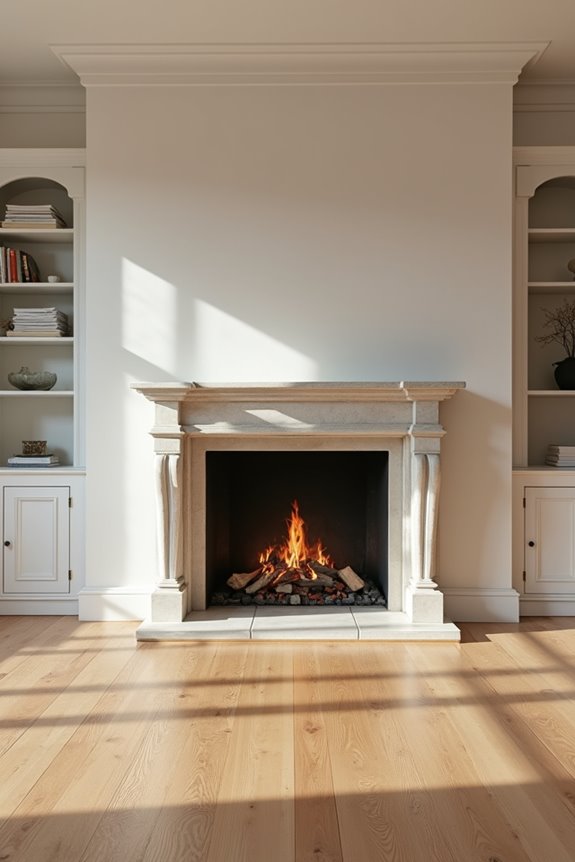
How do you know which colors will actually work together? You’ve got proven combinations that designers trust! These pairings create rooms that work well for living in.
| Flooring | Mantel & Trim | Vibe |
|---|---|---|
| Dark wood | White with espresso mantel | Classic drama |
| Light wood | Neutral taupe or beige | Airy and calm |
| Gray | White trim, light gray mantel | Cool serenity |
Honey oak floors? Pair them with cream mantels for warmth that flows beautifully. The key is matching undertones, not necessarily exact shades. A deep mantel works when it shares the same warmth or coolness as your flooring.
You’re building a space with purpose. These combinations prove that thoughtful pairing creates harmony. Pick the style that appeals to you, then watch your fireplace become the room’s focal point!
Why Fireplace Texture and Finish Matter More Than Color
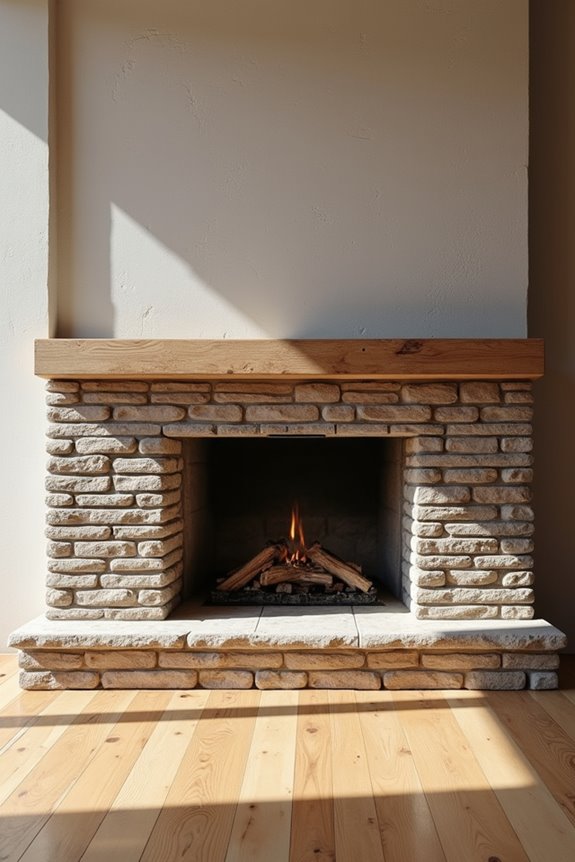
- They create visual conversation – Smooth mantels paired with heavily grained floors clash. Instead, echo finishes together for harmony!
- They communicate your style – Matte, rustic floors work well with wire-brushed mantels, while polished floors suit sleek painted ones.
- They shape perceived warmth – Texture influences how cool or cozy your fireplace reads, affecting overall cohesion.
The material finish actually guides your flooring choices. Rustic brick pairs beautifully with antique wood, for example. You should test samples under both natural and artificial light to catch mismatches color comparisons miss. Ready to match your fireplace and floors?
How Your Room Layout Affects Mantel-to-Floor Coordination
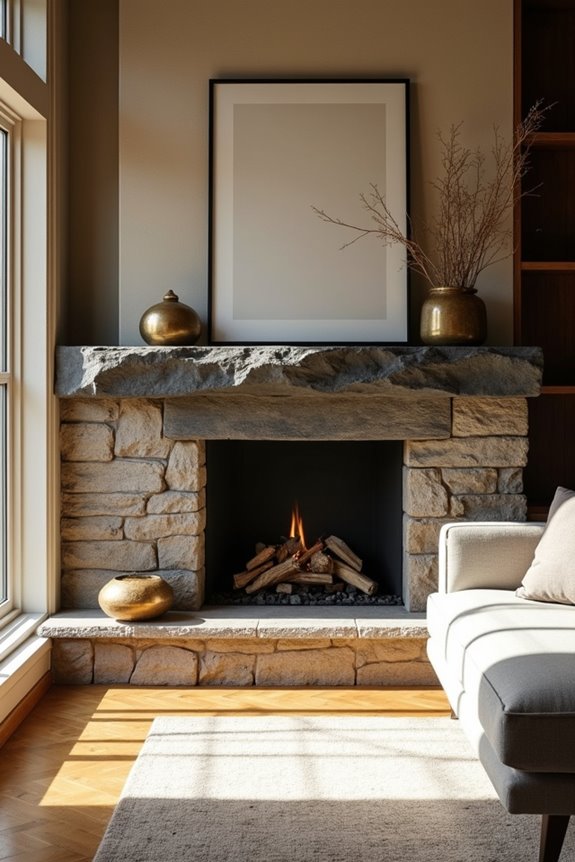
Your room’s layout is an important factor you’ve been missing! Here’s why: your mantel-to-floor coordination works well when you consider sightlines and surrounding elements. Open-concept spaces require balance between your mantel and nearby wood finishes, cabinets, or stairs.
You’ve got choices! Your mantel can recede into the background, echo your flooring’s undertones, or contrast sharply to connect with cabinetry. Staining your mantel to match flooring creates continuous visual lines—ideal for unified spaces. Conversely, contrasting finishes direct attention strategically.
Don’t overlook how drop wall dimensions and ceiling height influence how prominent your fireplace appears. They shape your entire room layout’s character.
Ready to decide? Map your sightlines, note adjacent materials, then select your mantel-to-floor strategy. Professional guidance helps your choices work well with everything around you.
From Sample to Installation: Getting the Finish Right
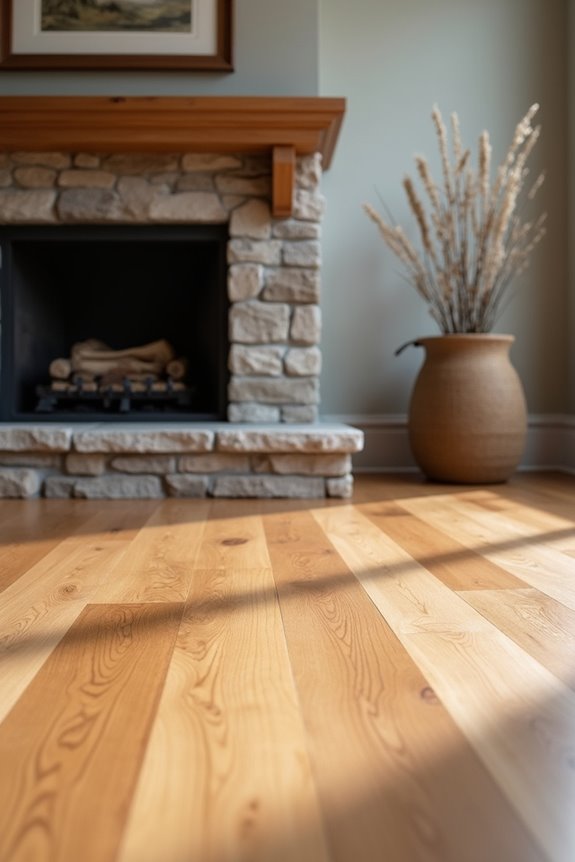
Why does testing samples matter so much? You’re making a decision that’ll shape your room for years to come, so getting it right matters!
Here’s your action plan:
- Compare samples in natural and artificial light – Colors shift dramatically, so you’ll see the true match
- Hold millwork samples directly against your actual flooring – This beats guessing and prevents costly mistakes
- Decide your mantel’s role first – Should it disappear, echo, or contrast with your floor?
Once you’ve chosen your direction, pick the right finish. Want a coordinated look? Paint your mantel to match trim or stain it to coordinate with flooring. Consider your hearth material too—matte rustic finishes suit rugged floors beautifully, while high-gloss complements polished marble fireplaces perfectly.