Wall anchors grip the drywall behind your wall to hold weight, but here’s the thing—not all anchors are created equal!
Plastic anchors work for light items, while toggle bolts and self-drilling anchors handle heavier loads better.
Your drywall thickness matters too; thicker walls hold more weight.
Studs deliver the best holding power.
Installation counts—skip the pilot hole or over-tighten, and you’ll damage everything.
Want to know which anchor type fits your project and how to install it correctly?
How Much Weight Can Wall Anchors Actually Hold
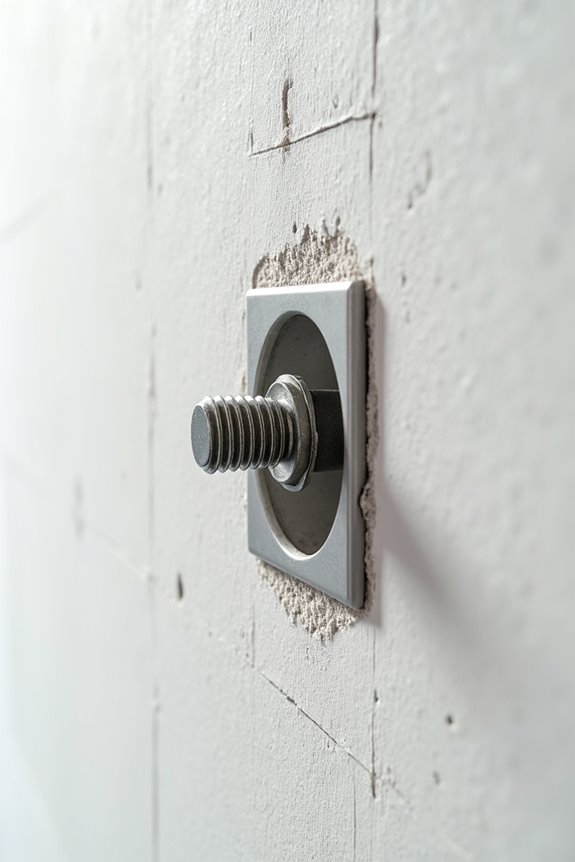
Ever wondered why some wall anchors hold up perfectly while others fail? Here’s the truth: wall anchors vary wildly in their strength! Tested anchors show holding power ranging from about 22 to 90 pounds on their labels, but real-world tests often reveal they perform better—sometimes reaching 80 to 180 pounds depending on the design. The SNAPTOGGLE, for example, claims 80 pounds but actually holds 180! When you’re hanging something heavy on drywall anchors, you’ll want to choose designs like toggle bolts or winged anchors rather than basic expansion types. They outperform simpler options significantly. For heavier loads, skip the drywall altogether and anchor directly into studs. Your weight rating should have adequate margin above your actual load. Multiple anchors distribute stress better than relying on one alone!
What Determines Anchor Capacity: Drywall Thickness, Type, and Load Distribution
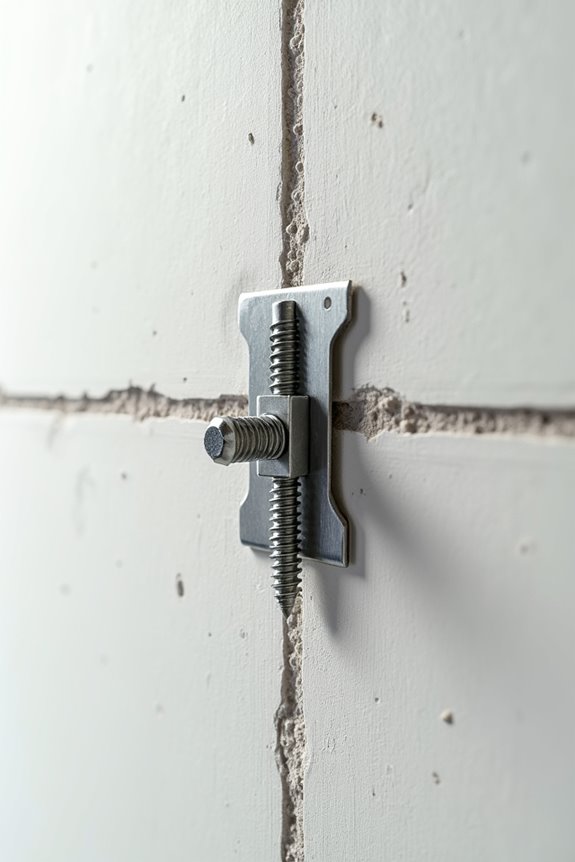
What determines whether an anchor will work for your application? Understanding what affects your anchor’s strength is essential.
Drywall thickness plays a significant role. Thicker drywall (15 mm) holds about 7 kg per anchor, while thinner drywall (12 mm) manages around 5 kg. This difference is measurable.
Your anchor type changes performance substantially. Toggle bolts and self-drilling metal anchors handle heavy loads effectively, while plastic sleeves work better with lighter applications.
Load distribution spreads the weight across multiple anchors. Five anchors together handle significantly more than one alone—multiple attachment points increase capacity.
Stud engagement provides maximum weight capacity. Hitting studs behind drywall dramatically increases your weight capacity.
Finally, consider your static vs dynamic load. Downward static weight performs best, but pushing or pulling forces require stronger solutions. Select based on your specific requirements.
Why Studs Beat Drywall Anchors for Heavy Loads
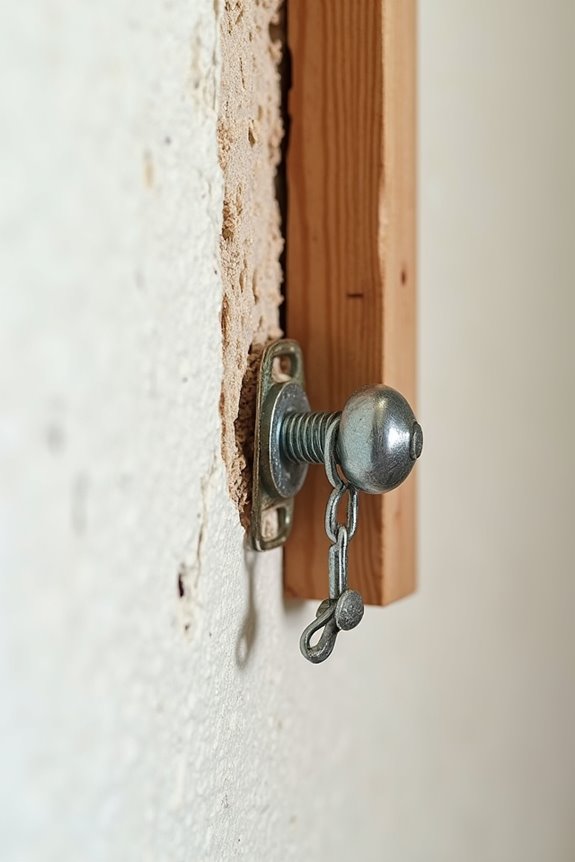
- Maximum security—Screws driven into studs behind walls eliminate reliance on drywall anchors, giving you unmatched holding power for heavy items.
- Higher load capacity—You’ll support significantly more weight than even top-performing toggle bolts or snap toggles ever could.
- Zero failure risk—Studs won’t slip, tear, or pull through like anchors sometimes do under stress.
When you locate a stud behind your wall, you’re improving your mounting approach entirely. Skip the guesswork and anchor into solid wood!
Anchor Types Compared: Plastic, Toggle, and Self-Drilling
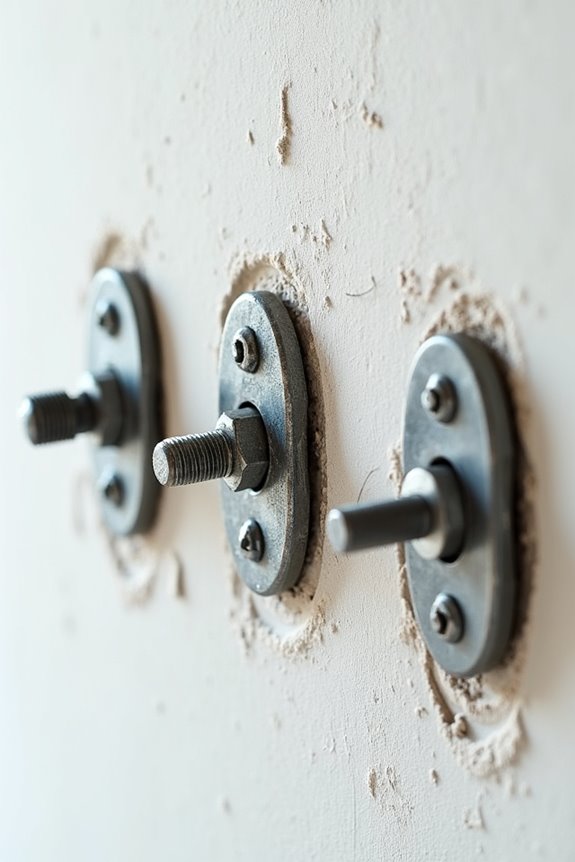
Plastic drywall anchors are your most affordable option. They expand inside the wall and work well for lightweight items like picture frames and mirrors.
Toggle bolts handle heavy loads effectively. Their spring-loaded metal wings spread behind your drywall, distributing weight across a larger surface area. Follow installation instructions carefully for best results.
Self-drilling anchors bite directly into plaster or drywall without requiring pilot holes. They grip securely in plaster conditions.
Match your anchor type to your load requirements and wall material. Consider whether your wall is plaster or drywall, and whether you’re hanging light or heavy items. Select the appropriate anchor, install it properly, and your project will succeed.
Installation Mistakes That Kill Weight Capacity
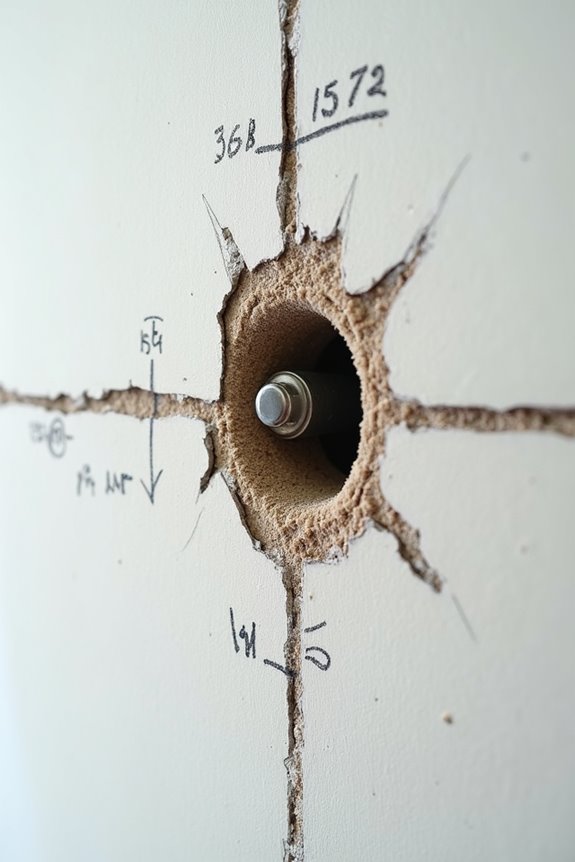
You’ve picked the right anchor for your wall and load—but here’s where most people stumble! Installation mistakes can completely wreck your drywall anchors’ weight capacity. Let’s address them.
- Skip the pilot hole? You’re asking for trouble. Not drilling one causes the anchor to spin or prevents proper seating flush against the wall, destroying load transfer.
- Over-tighten that screw. Yes, you want it snug, but twisting too hard splits the anchor and wall material. Stop when you feel resistance!
- Miss the drywall entirely. Hitting a stud or the wrong area means expansion anchors can’t bite properly. They’ll crumble under load.
Slow down during installation. Use the correct drill size, create that pilot hole, seat everything flush, and tighten reasonably. Your anchors will perform as intended.