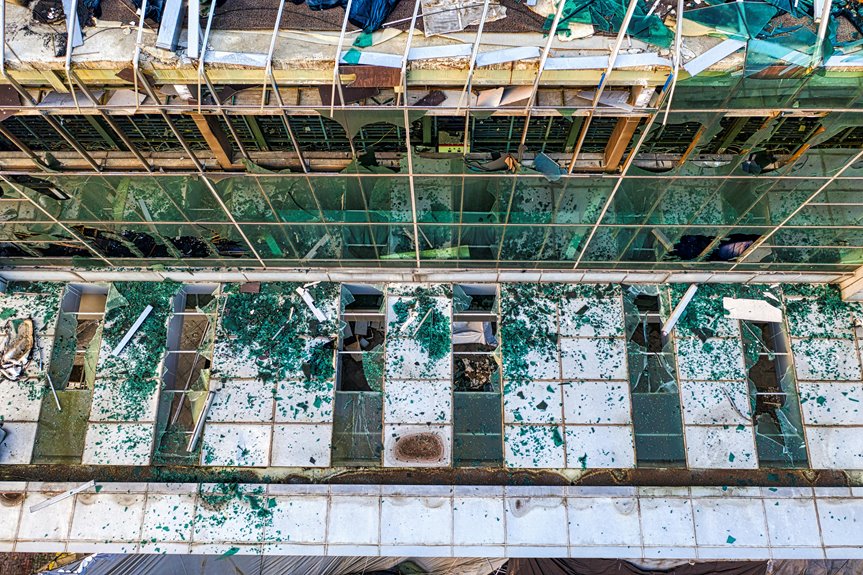
Your fireplace glass breaks because uneven heat creates internal stress your glass can’t handle. One side heats up while the other stays cool, causing different expansion rates. Add rapid temperature swings, and you’ve got a recipe for cracks!
Loose gaskets let hot air sneak past edges, making the problem worse. Keep doors open during roaring fires to reduce heat buildup.
Want to know exactly how to prevent this and choose the right replacement glass?
Thermal Shock: Why Rapid Temperature Changes Crack Glass

Think of it like this: one part of the pane expands while another stays put. That opposing movement builds dangerous internal stress. Eventually, crack—the glass surrenders!
You’re especially vulnerable if your glass isn’t properly tempered or has tiny edge defects. Each heating and cooling cycle weakens the glass further, making sudden failure more likely during bright, high-heat events.
Want to protect your fireplace glass? Keep doors open initially, allow gradual warming, and avoid shocking temperature swings. Your glass will last longer!
Keep Doors Open During Strong Fires: Here’s Why
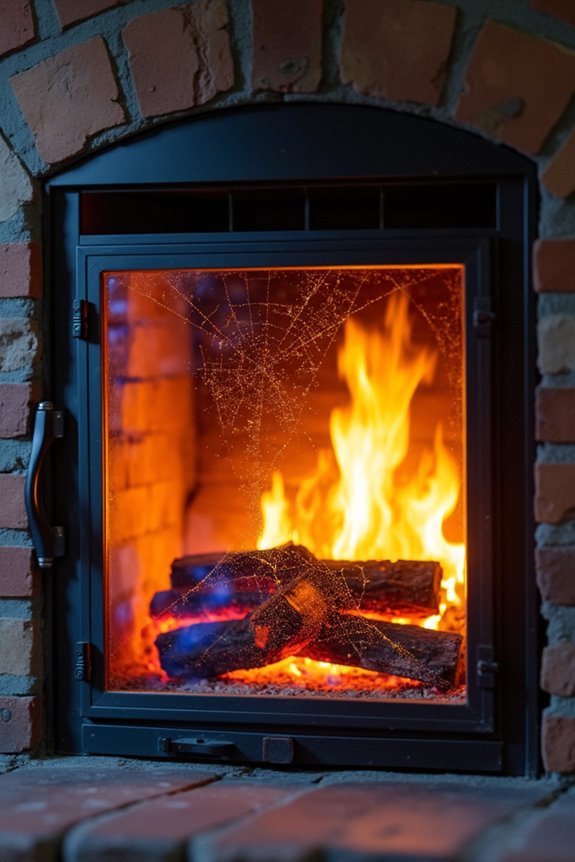
Now that you understand how thermal shock cracks glass, here’s the practical move that’ll save your fireplace doors: keep them open during strong fires.
When you crack those glass doors open, you’re doing something smart—you’re letting heat escape instead of building up dangerously inside. Think of it like opening a window on a hot day. A roaring fire with sealed doors traps intense heat that stresses your glass relentlessly. That concentrated temperature at the surface? It causes rapid expansion and breakage.
Opening glass doors during a hot fire slows heat transfer significantly. You’re basically giving your fireplace room to breathe. This simple action reduces the risk of that catastrophic shattering moment.
Tempered vs. Ceramic Glass: Which Survives High Heat?
You’ve got two main glass types to consider. Here’s the key difference: tempered glass breaks catastrophically when it hits about 500°F, while ceramic glass can withstand heat up to 1000°F. If you’re running a wood stove or fireplace that gets seriously hot, tempered glass won’t work—you’ll need ceramic glass to keep your door intact and your fire safely contained.
Ceramic Glass Heat Tolerance
it flexes with rapid temperature swings without cracking. Think of it like an athlete stretching before exercise—it bends, adapts, and stays strong. Tempered glass? It maxes out around 450 degrees and can shatter catastrophically when exceeded.
EPA-certified stoves use sealed ceramic glass to control your burn rate precisely. You’ll get safer, more efficient heating. Protect your ceramic glass by avoiding chemical cleaners and confirming proper installation. Your fireplace will benefit from this care.
Tempered Glass Limitations
Why does tempered glass fail so dramatically in high-heat fireplaces? Tempered glass has clear limitations that make it risky for wood stoves. Here’s the issue: tempered glass handles thermal shock up to about 500°F, but your stove routinely hits 1000°F or higher. That massive temperature difference causes sudden, catastrophic breakage. The internal stress built into tempered glass during cooling releases violently when overheated, shattering into countless sharp pieces. You don’t want that danger near your family.
Instead, consider ceramic glass. It tolerates around 1400°F and handles rapid temperature changes well. You’ll have confidence knowing your fireplace won’t break into fragments. Ceramic glass is the better choice for your needs.
Why Tempered Glass Fails in Wood Stoves and Fireplaces
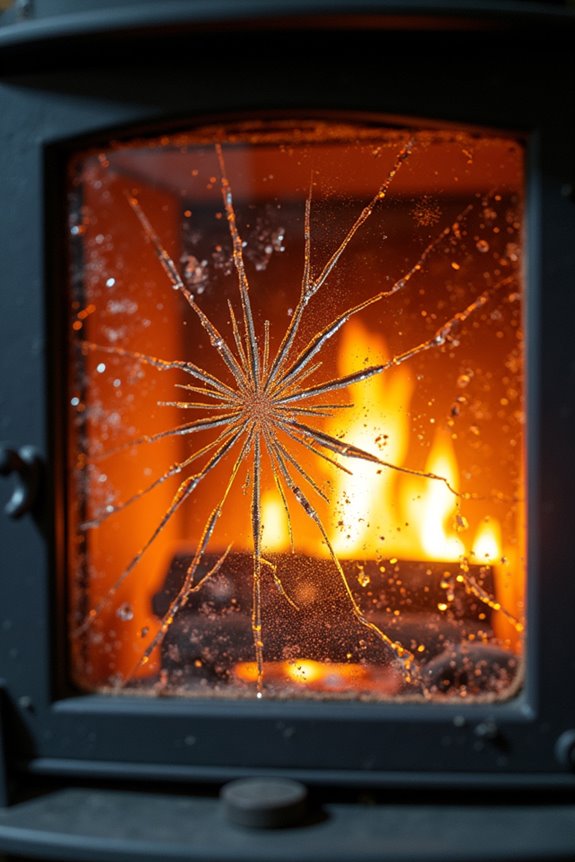
When your fireplace glass suddenly shatters into countless tiny pieces, tempered glass has failed against extreme heat. Here’s what’s happening: your stove’s temperature regularly climbs past 1000°F, which overwhelms the glass’s internal strength. Tempered glass cannot withstand that intensity.
When heat builds unevenly across the pane, thermal shock occurs. One spot gets scorching hot while another stays cooler, creating stress cracks. It’s like dunking hot glass in cold water—breakage happens fast.
You’ll notice tempered glass breaks into many small shards, not large chunks. That’s because the internal tension releases all at once. Roaring fires with closed doors accelerate this failure.
The solution? Choose ceramic or borosilicate glass instead. They’re built for extreme temperatures. Protect your fireplace and stay safe.
Scratches and Nicks That Grow Into Cracks
| Damage Type | What Happens | Heat Effect | Result |
|---|---|---|---|
| Small scratches | Act as weak points | Expansion pressure builds | Cracks spread fast |
| Micro-nicks | Concentrate thermal stress | Rapid temperature changes | Sudden breakage |
| Roughened edges | Trap stress zones | Heating cycles repeat | Glass fails |
| Surface abrasions | Widen under heat | Localized stress transfers | Fracture patterns form |
Prevent damage by inspecting your glass regularly for any signs of damage. Replace damaged glass promptly when you spot scratches or nicks. This straightforward action stops crack propagation before it starts. Address the problem early to protect your fireplace glass.
Improper Installation: When Metal Frames Trap Glass
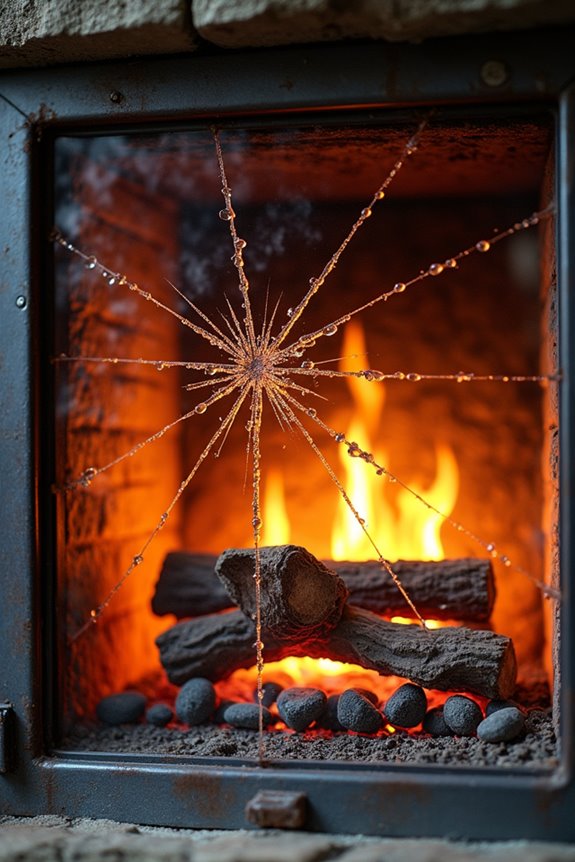
While scratches weaken your glass from the outside, improper installation creates problems from the inside out. When your fireplace glass isn’t installed correctly, the metal frame can clamp down too tightly, trapping the glass completely. This prevents natural expansion during heating cycles, causing glass breakage under stress.
Here’s what happens with poor installation:
- Tight frames restrict movement – Your glass can’t flex as temperatures rise, amplifying stress on the material
- Bad gasket fit causes uneven pressure – Incorrect sealing creates weak spots where cracks start easily
- Pinned glass concentrates stress – Misalignment during setup forces stress into specific areas, promoting rapid failure
The solution? Have professionals install your fireplace glass correctly from the start. They’ll verify that your frame allows adequate glass movement. You’ll prevent costly glass breakage and enjoy your fireplace safely for years to come.
Nickel Sulphide Inclusions and Spontaneous Breakage
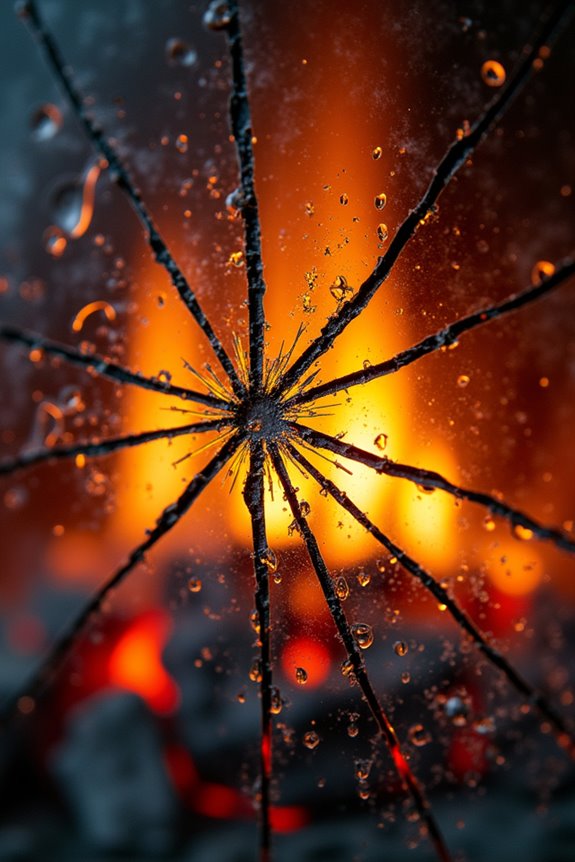
A hidden enemy might already be lurking inside your fireplace glass. You’re dealing with nickel sulphide inclusions—tiny particles that form during manufacturing. Here’s the concerning part: they can stay dormant for weeks or years before causing spontaneous breakage!
These inclusions contract and expand over time, eventually triggering a shattering event. You’ll recognize the damage by its distinctive butterfly or figure-of-eight pattern. The tricky truth? Current use temperature won’t cause this problem—the inclusions themselves will!
| Stage | What Happens | Timeline |
|---|---|---|
| Formation | Inclusions appear during manufacturing | During production |
| Dormancy | Particles remain inactive inside glass | Weeks to years |
| Expansion | Inclusions contract and expand | Over extended periods |
Heat soaking during manufacturing reduces this risk significantly by accelerating expansion before installation. You’re protected when manufacturers use this preventive step. Select quality fireplace glass!
Chemical Damage: Why Oven Cleaner Destroys Glass

What happens when you use oven cleaner on your fireplace glass:
- Alkalis strip protective coatings, leaving your glass defenseless against heat stress and micro-cracks
- Abrasive additives scratch the surface, creating weak spots where cracks start and spread rapidly
- Residual cleaner reacts with heat, causing uneven temperatures that trigger sudden breakage
Skip the oven cleaner entirely! Instead, use gentle glass-specific cleaners designed for high-heat applications. Your fireplace glass needs specialized care that keeps it safe and in good condition for years to come.
Loose Gaskets Let Heat Sneak Through: and Crack Your Glass
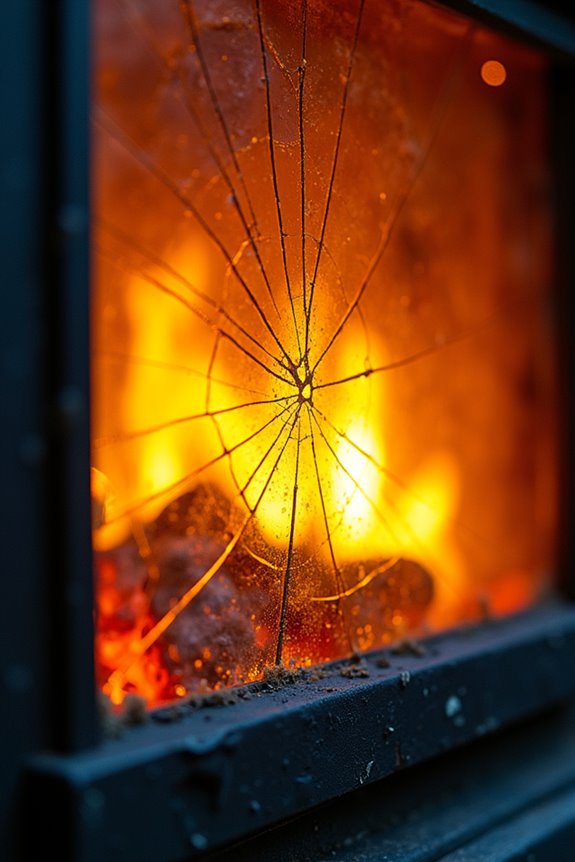
You’ve probably never thought about your fireplace door’s gasket, but here’s the thing—it’s doing serious work keeping heat where it belongs! When that rubber seal gets worn or loose, hot combustion gases leak through the gaps and create scorching hot spots on your glass that the rest of the door doesn’t experience. This uneven heat exposure causes different parts of your glass to expand at different rates, which stresses the pane beyond what it can handle and leads to those frustrating cracks you’re trying to prevent!
Gasket Deterioration and Heat Leakage
- Hot combustion gases leak around the glass, creating dangerously uneven heat spots that stress your glass unevenly
- Localized heat builds up at the edges, causing the center and sides to expand at different rates
- Flame contact increases, shocking your glass with sudden temperature changes that lead to cracking
You’re fundamentally creating a thermal battlefield on your glass surface! Regular inspection prevents this problem. Check your gasket’s compression fit around the door frame monthly. When you notice gaps, cracks, or crumbling material, replace it immediately with the correct size and material. This simple maintenance keeps heat distributed evenly and your glass safe. Don’t wait—act now!
Uneven Thermal Expansion Damage
Why does your fireplace glass crack even when you’re not using extreme heat?
Uneven thermal expansion happens when different parts of your glass heat at different rates. Loose gaskets let hot air sneak past the edges, creating temperature hot spots. Your glass center stays cooler while the edges burn up. This temperature difference stresses the glass unevenly!
Here’s what’s happening: the restricted edges can’t expand like the center wants to. You’re pulling the glass apart from the inside out. Think of it like stretching a rubber band too far—eventually, it snaps.
The fix? Inspect your gaskets regularly. Replace worn seals immediately. A properly sealed door keeps temperatures consistent across your entire pane. This simple maintenance stops uneven expansion before it cracks your glass. Your fireplace will thank you!
Why Coal Burning Speeds Up Glass Deterioration
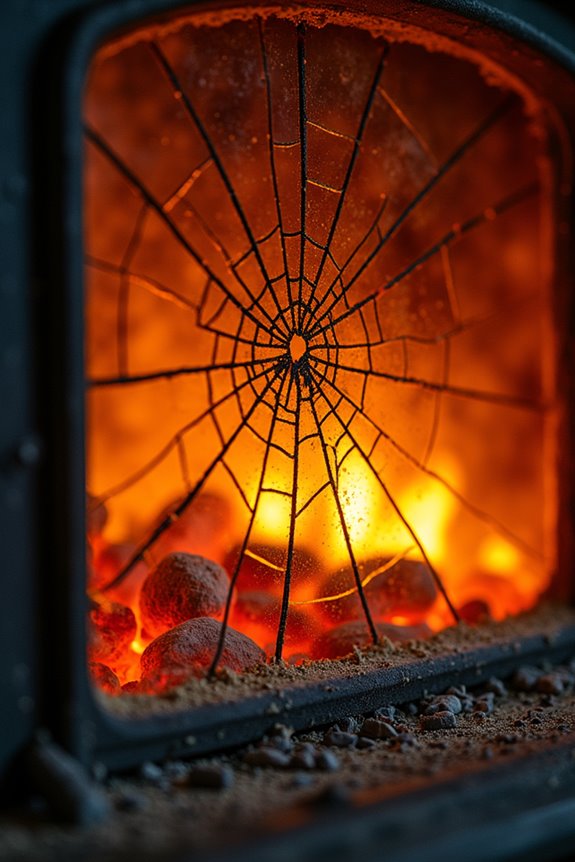
Coal fires can be tough on your fireplace glass, and here’s why. When you burn coal instead of wood, you’re creating conditions that stress your glass door differently and more intensely.
Here’s what happens:
- Higher temperatures – Coal burns hotter than wood, pushing your glass door closer to its breaking point and increasing microcrack risk
- Chemical damage – Soot and ash create surface scorching that weakens the glass seal and edges over time
- Thermal shock – Opening and closing doors during coal fires causes rapid temperature swings that crack glass faster
You’ll also notice that coal ash residues build up quickly. Aggressive cleaning attempts can scratch protective coatings, accelerating fatigue. The bottom line? If you want to keep your fireplace in good working order, consider wood-only fires to protect your glass door longer.
Why Slow Heat-Cycling Prevents Spontaneous Breaks
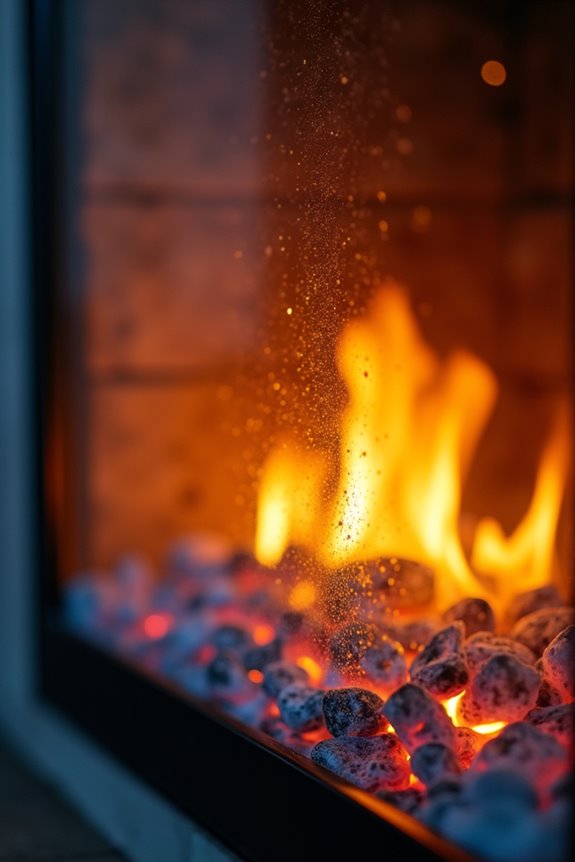
When you let your fireplace glass warm up gradually instead of blasting it with intense heat, you’re giving the material time to expand evenly—and that’s the key to preventing those scary spontaneous breaks! By raising the temperature slowly, you’ll avoid creating dangerous hot spots in the center while the edges stay cool, which is what causes the internal stress that leads to sudden fractures. Think of it like easing into a warm bath rather than jumping into a hot tub; your glass (like your body!) handles gentle changes way better than shocking temperature swings!
Gradual Temperature Rise Benefits
Gradual heating protects your fireplace glass from cracking. When you slowly raise the temperature instead of cranking up the heat all at once, you give your glass a better chance of withstanding the stress.
Gradual heat exposure works because it lets your glass expand evenly. Think of it like warming up before exercise—your glass needs time to adjust! Here’s what happens:
- Internal tensions redistribute slowly, preventing dangerous stress buildup
- Edge-center temperature differences shrink, reducing crack-triggering forces
- Glass strength stays intact because you’re avoiding thermal shock
Start your fireplace low, then increase heat gradually over 15-20 minutes. This simple technique is used by fireplace owners who understand the mechanics of glass protection. Your hearth will benefit from this approach.
Preventing Thermal Stress Accumulation
Why does your fireplace glass sometimes break without warning? The answer lies in thermal stress—and you can actually stop it!
You prevent thermal stress accumulation by heating your glass gradually. Don’t blast your fireplace to maximum heat immediately. Instead, start with a low flame and increase it slowly over several minutes. This gentle approach lets the entire pane adjust evenly to temperature changes.
Think of it like this: rapid heating creates tension between the hot center and cooler edges. Your glass can’t handle that conflict, so it cracks. But slow heat-cycling? That eliminates the internal battle.
You’ll also want to avoid sudden temperature drops. Don’t open cold windows near your fireplace during operation. These smart habits keep your glass safe and your fireplace looking beautiful for years!
Spotting Hairline Cracks Before Your Glass Fails
Before your fireplace glass suddenly shatters, it’s likely already sending you warning signs. You can catch problems early and protect your heat resistant fireplace glass investment.
Watch for these telltale indicators:
- Spider-web patterns – Fine lines spreading across the surface signal micro-damage from thermal stress
- Small nicks or scratches – Even tiny surface imperfections expand under repeated heating cycles
- Cloudiness or discoloration – Spots appearing on your glass may indicate internal stress developing
Here’s what you’ll do: Inspect your glass weekly during fireplace season. Look closely at corners and edges where cracks typically start. Avoid using abrasive cleaners that introduce new damage. Don’t ignore small issues—they’ll worsen quickly.
Catching hairline cracks early prevents catastrophic failure and keeps your fireplace safe and functional.
When to Replace Fireplace Glass: Signs of Damage
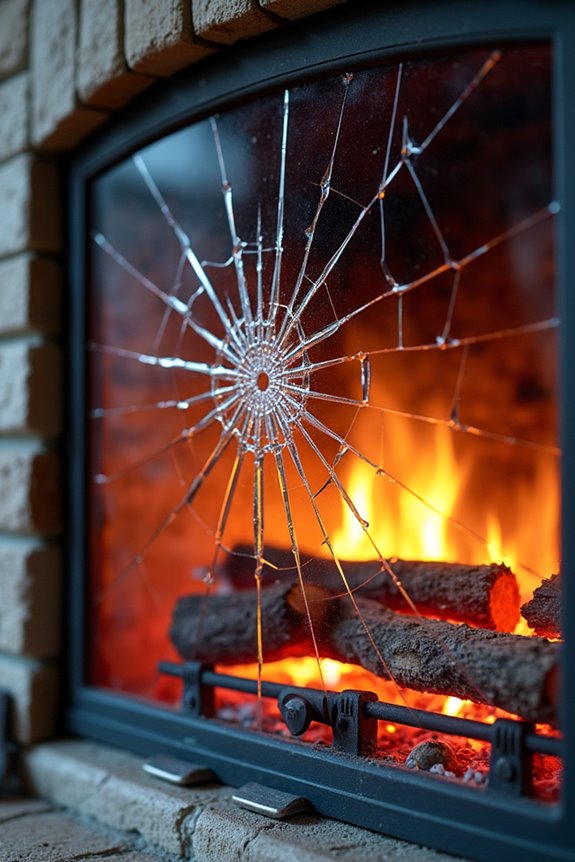
You’ll want to keep a close eye on your fireplace glass for visible cracks, chips, or discoloration that signal it’s time for a replacement. If you’ve noticed thermal stress marks or breakage after an intense burn, don’t wait—replace that glass now to prevent sudden failure the next time you light a fire! When your glass shows these warning signs, you’re protecting both your safety and your stove’s sealing power.
Visible Cracks And Damage
Glass cracks tell important stories about your fireplace’s health. Here’s what you should watch for:
- Surface scratches that grow into cracks under high heat due to thermal expansion and stress
- Shattered or spiderweb patterns, especially after hot fires, signaling over-temperature exposure
- Uniform hazing or discoloration across the glass indicating weakened integrity or thermal stress
Don’t ignore these signs! Prompt replacement with correct glass for your model prevents firebox exposure and keeps your fireplace safe. You’re protecting your home and family by acting quickly. Address any break immediately—your future self will thank you!
Heat-Related Deterioration Signs
Spotting those cracks is just the beginning—now it’s time to watch for the warning signs that mean your glass really needs replacing. Check if your glass is withstanding heat properly by looking for these red flags. See any deep scratches or chips? They’ll get worse under intense fire temperatures. Notice hairline cracks spreading across the surface? That’s your cue to act fast! Loss of seal around the edges? Temperature changes will make it worse. Your fireplace glass shouldn’t look cloudy or discolored from repeated heat exposure around 600°F. Don’t wait for sudden breakage—replace it now! Pay attention to what you observe. If something looks wrong, it probably is. You’re protecting your home and family by staying alert to these danger signs!
Closing Doors on a Roaring Fire Shatters Glass
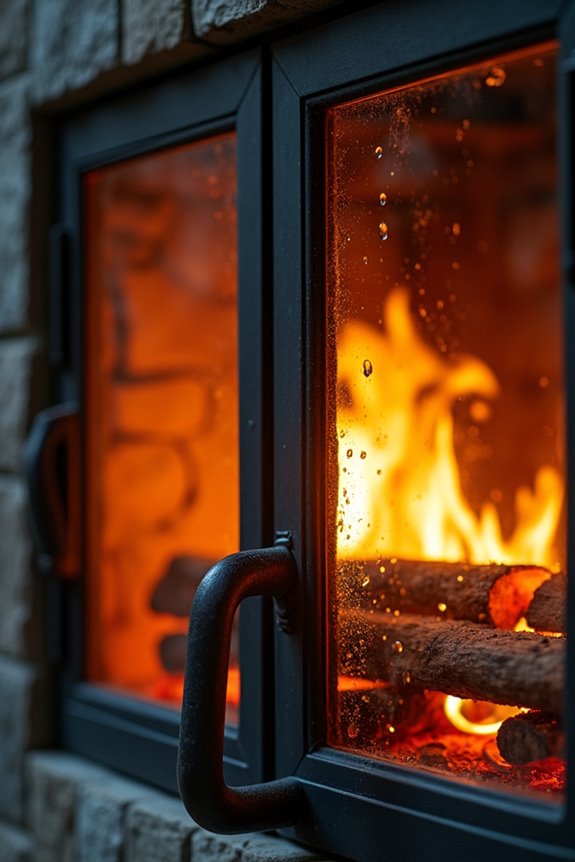
- Extreme heat concentration – Closed doors trap temperatures exceeding 1000°F, far beyond your glass’s design limits
- Rapid expansion and contraction – The sudden temperature swings create stress fractures that lead to shattering
- Thermal shock damage – Your tempered or ceramic glass can’t handle the violent heating and cooling cycles
The safest approach? Keep doors open while flames rage. Let air flow freely around your fire. Once those intense flames die down and temperatures drop, then close the doors. You’ll protect your investment and enjoy your fireplace safely. Proper fire management keeps everyone safe and your glass intact.
How to Choose Replacement Glass for Your Fireplace
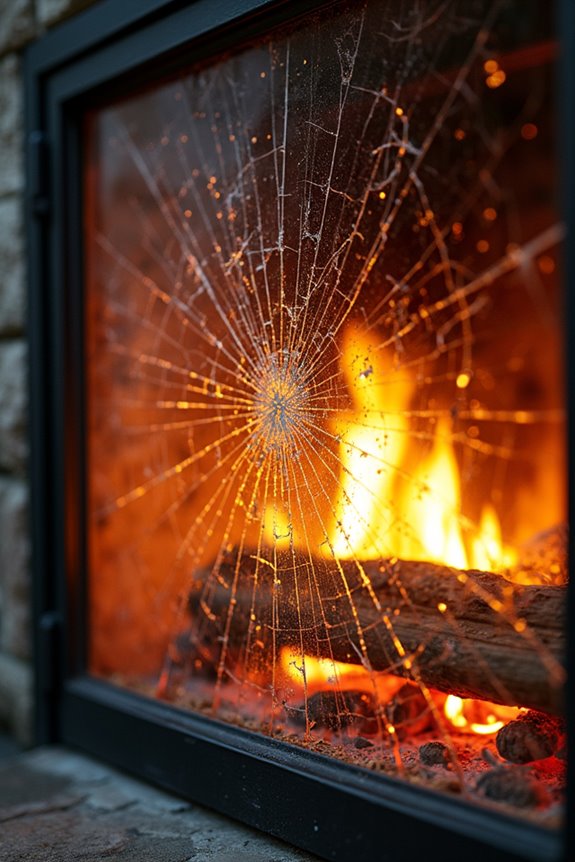
Does your fireplace have a sealed design? Then you’ll need ceramic glass, which handles extreme temperatures up to 1400°F effectively. It also resists cracking from sudden temperature changes.
Got a standard door? Tempered glass works fine, but it maxes out around 450–500°F.
Before you buy anything, check your stove’s manual or contact the manufacturer. Verify the correct thickness and temperature rating too. Getting this right prevents future headaches and keeps your fireplace safe and functional.