
You can spot load-bearing posts by checking three things: Do they line up with your roof framing above? Look for heavy brackets or bolts connecting them. Is there solid concrete underneath? These signs tell you your posts carry real weight!
Hollow columns can still be structural if they’ve got inner bracing.
Don’t mess with load-bearing posts without professional help—one mistake could damage your whole porch.
Understanding what happens when you remove the wrong column is important for your safety and your home’s structural integrity.
How to Spot a Load-Bearing Porch Column
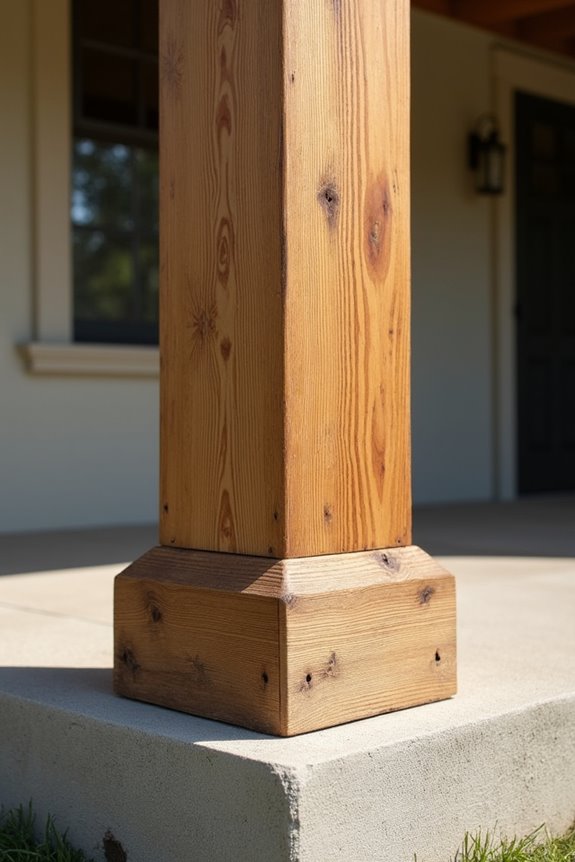
Start by checking alignment. Does your porch column line up directly with roof framing above? If yes, it’s probably carrying weight down to the foundation. That’s your first clue!
Next, inspect the connections. Look for brackets, bolts, or steel plates at the top and bottom. These fasteners signal a fixed load path carrying real weight.
Don’t forget the footing. A load-bearing porch column needs solid support below ground. Examine the base for concrete foundation evidence.
Finally, test gently. Carefully wobble the column—minimal movement means it’s structural. Significant shifting? Likely decorative.
5 Warning Signs a Column Is Failing
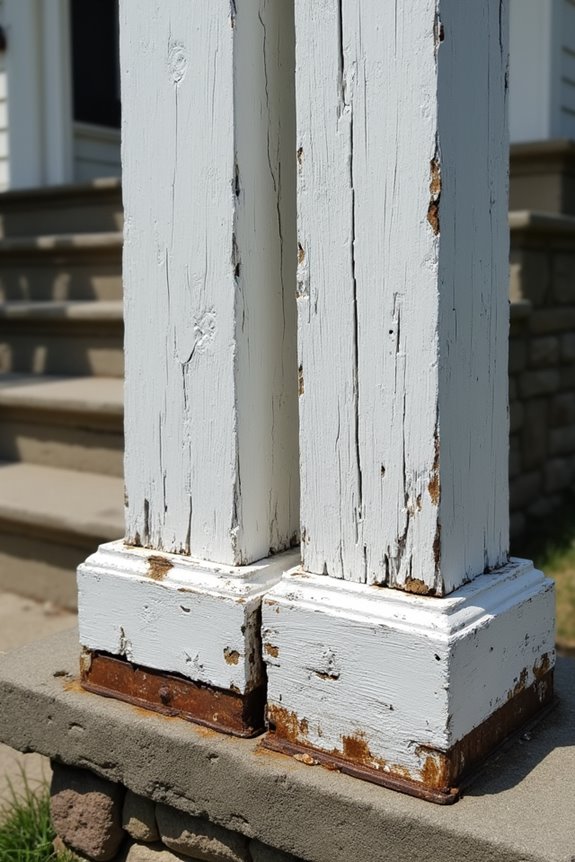
Look for visible cracks or leaning at the base or midspan—these signal load path failure. Soft, spongy wood or rot around the column’s base means trouble’s brewing. Push gently on your column; excessive movement indicates a weak foundation connection.
Check metal brackets and fasteners between your column and footings. Are they corroded or loose? That’s a red flag! Notice ceiling cracks or sagging near your porch? Your column might be struggling.
Don’t overlook doors or windows cracking nearby—they’re signaling problems! You’re protecting your home by staying vigilant. Address these warning signs right away, and you’ll keep your porch safe for years!
Temporary Support: Bracing Your Porch During Assessment
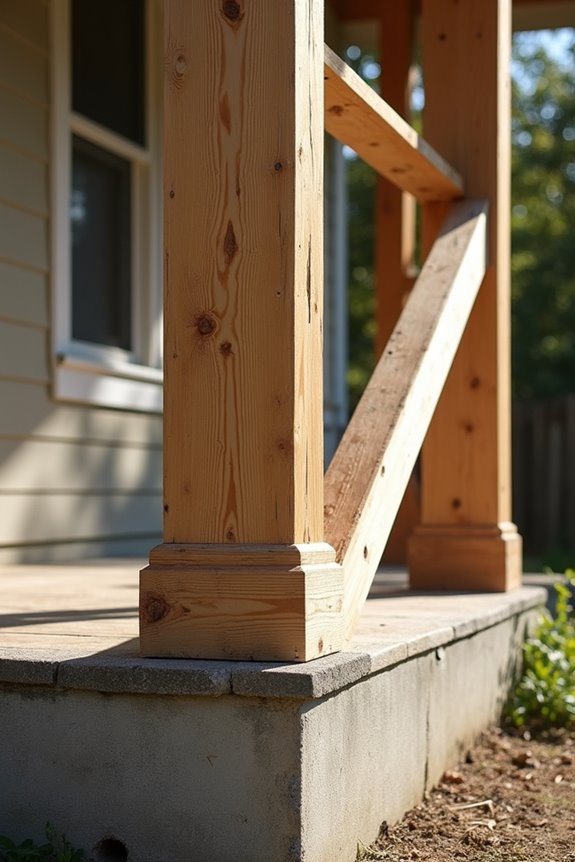
What’s the smartest move before you start poking around your porch columns? Install temporary supports first! You’ll brace the porch roof using adjustable screw jacks or sturdy braces positioned under the beam. This prevents collapse if you discover a compromised column. Place your supports against solid foundations, applying gradual pressure while monitoring for any shifting. Never force or pry on the columns themselves. Mark and document everything so you remember exactly where you positioned each support. This careful porch bracing protects your home and keeps you safe during assessment. Finally, have a licensed contractor or structural engineer inspect your temporary supports before removing or altering anything. They’ll confirm your load path integrity is solid.
Hollow Columns Still Bear Weight
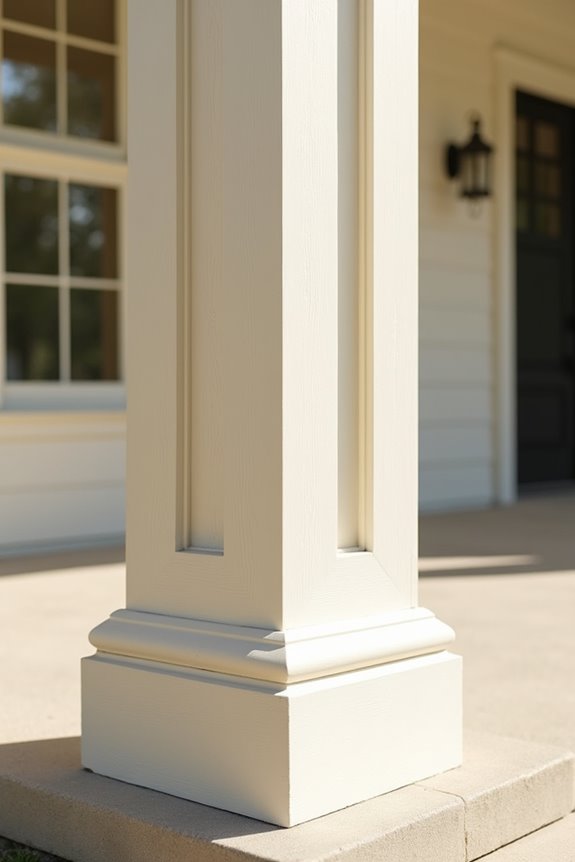
| Column Type | Material | Strength | Load-Bearing? |
|---|---|---|---|
| Hollow wood | Inner bracing | High | Yes |
| Fiberglass | Reinforced core | Very high | Yes |
| Polyurethane | Steel-filled | Excellent | Yes |
| Decorative only | Thin shell | Low | No |
The structural load path flows continuously from your roof through the column to the footing. Don’t assume hollow equals weak. Modern hollow columns balance lightweight design with serious strength. Misidentifying a hollow column as non-structural risks sagging roofs and cracks. Get a professional assessment before making changes.
What Goes Wrong When You Remove the Wrong Column
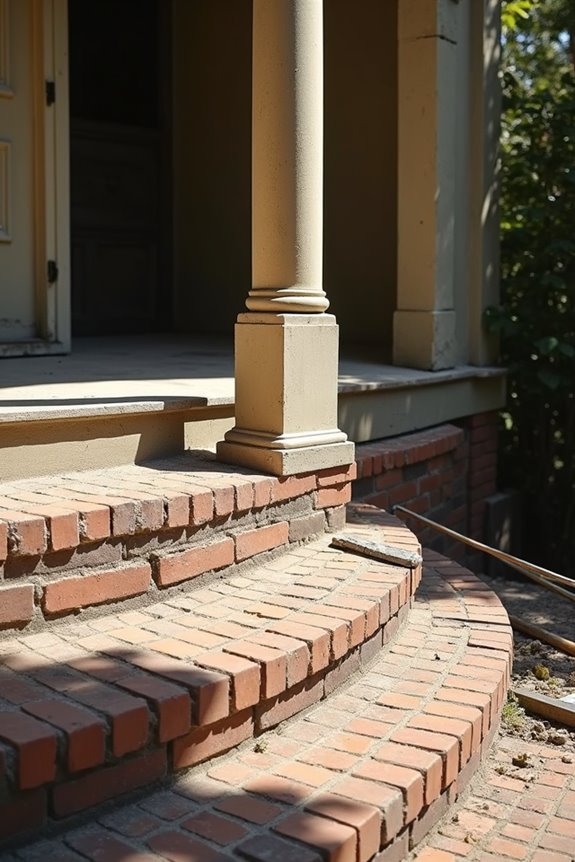
Now that you know hollow columns can absolutely carry weight, here’s the scary part: removing the wrong one can wreck your whole porch!
Here’s what happens when you mess up. If you remove a load-bearing post, your roof sags. Cracks appear in ceilings and siding as everything settles unevenly. You’ve accidentally destabilized your entire structural integrity!
Misidentifying a decorative column? That’s costly. You’ll need emergency repairs and complete porch framing redesign. Without proper temporary bracing during removal, dangerous shifts can occur suddenly—putting you and others at serious risk.
Even hollow porch posts carry weight through their internal cores and connections. Cut the wrong one, and you’re facing structural collapse.
Don’t guess. Get professional verification before touching any columns. Your porch’s safety depends on it!
Repair or Replace? How to Decide
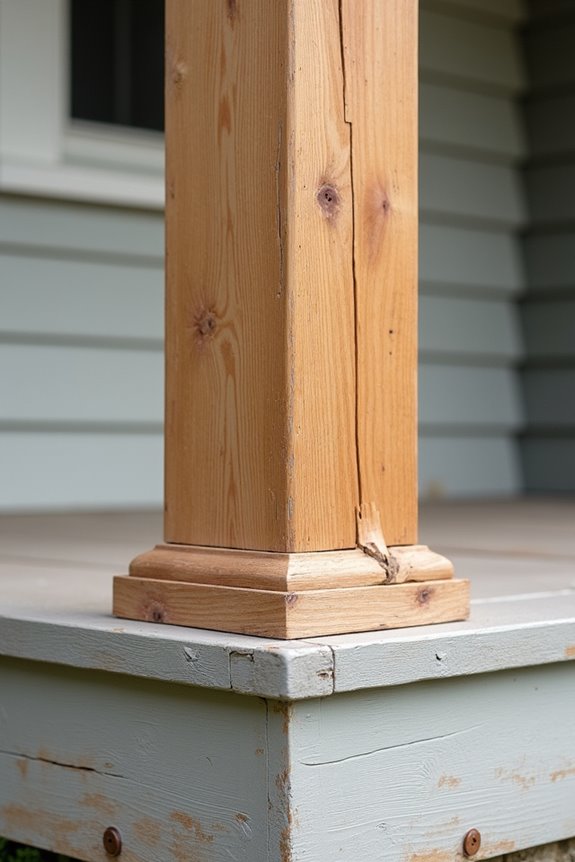
Once you’ve identified that your porch post is load-bearing, you’ll need to decide whether fixing it is worth your time and money or if replacement makes more sense. You’ve got three big things to think about: how bad the damage really is, how long repairs’ll take versus a full swap-out, and which materials will actually last through rain, snow, and years of holding up your roof. Let’s figure out which path keeps your porch safe and saves you headaches down the road.
Assessing Damage Severity
How can you tell if your porch post needs a quick repair or a complete replacement?
Look for movement first. Push on your porch posts while standing on the porch. Do they wobble or shift? If yes, they’re likely load-bearing, and you need professional help immediately!
Inspect the base carefully. Rot, splitting, or soft wood means replacement beats repair every time. Water damage spreads quickly and weakens structural integrity.
Check the roofline next. See sagging or significant dips? That’s your red flag for urgent attention. Ongoing movement beyond small shims indicates serious problems.
When in doubt, ask experts. Hollow or decorative posts that move require a licensed structural professional’s assessment. Don’t guess with your home’s safety! Getting the right diagnosis now prevents costly disasters later.
Repair Versus Replacement Timeline
After you’ve spotted the problem, the real question becomes: should you fix it or replace it?
Here’s the deal: repair works when your front porch columns still carry the load safely but need stabilization or rot treatment. You’re basically giving them a second life! However, replacement makes sense when base rot, deep splitting, or moisture damage runs through the column. If you’re unsure about your load-bearing assessment, don’t guess—call a structural engineer.
Think of it this way: minor damage? Repair it now and save money. Major damage? Replace it properly to avoid costly roof problems later. Modern engineered columns offer both safety and attractive character. You’ll have confidence knowing your porch won’t collapse!
Ready to protect your home’s foundation? Get a professional inspection today!
Material Selection and Durability
Modern rot-resistant materials offer practical benefits. Polyurethane posts with steel cores deliver load-bearing strength without ongoing problems. Your porch stays protected for decades.
| Material | Rot-Resistant | Load-Bearing | Maintenance |
|---|---|---|---|
| Wood | No | Yes | High |
| Polyurethane | Yes | Yes | Low |
| Composite | Partial | Sometimes | Medium |
| Fiberglass | Yes | Yes | Low |
You want posts that protect your home and match your style. Choosing durable materials means fewer repairs down the road. This is a practical homeownership decision. Your future self will benefit from making the upgrade today.
Why Polyurethane Outlasts Wood
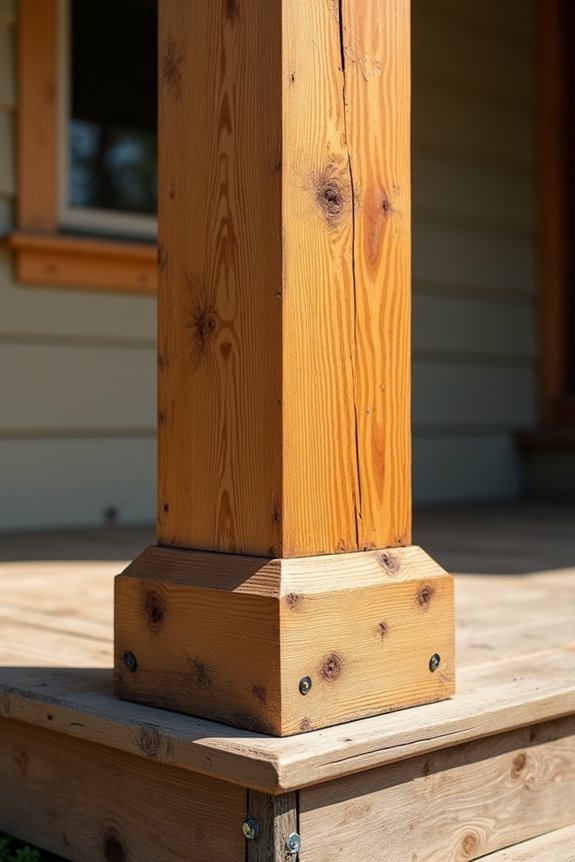
Why does polyurethane stand the test of time while wood crumbles? Your load-bearing porch posts face constant moisture and temperature swings. Wood simply can’t handle it—it rots, warps, and cracks over time. Polyurethane resists those challenges with proven performance. You get rot resistance that keeps your posts standing strong for decades. Unlike untreated wood, polyurethane won’t deteriorate from rain, humidity, or ground contact. It maintains its structural integrity while resisting moisture damage completely. Your load-bearing posts stay solid and reliable. Plus, factory-primed surfaces mean you’re protecting your investment from day one. You’ll spend less time maintaining and more time enjoying your porch. That’s the practical choice for any homeowner.
Installing a New Porch Column: What to Expect
Before you tackle a new porch column installation, you’ll need to assess your site and understand what’s really involved! Start by checking whether you’re dealing with a load-bearing column—one that actually holds up your roof—because this determines whether you’ll need temporary support braces and special fastening. You’re looking at preparation work like measuring alignment with your roof framing, gathering the right anchoring hardware, and possibly getting permits, but once you’ve got your plan solid, the actual fastening process becomes straightforward!
Preparation and Site Assessment
Verify both top and bottom connections carefully. Check those brackets and steel plates. Inspect your footing or concrete foundation for stability—it’s your base!
Next, measure your new porch columns and cut them to length on site. They need to match the load path from roof down to foundation. Get this right, and everything works together properly.
Don’t skip verifying existing structures either. Look for any movement or damage before you start. This preparation keeps you safe and confident. You’re building something that will last!
Installation Process and Fastening
How do you actually get that new column in place? You’ll start by temporarily supporting your roof or beam—this keeps everything safe while you work. Next, carefully remove the old column. Then comes the next step: positioning your new porch column and matching its load path from roof to footing.
Here’s where fastening hardware becomes important! You’ll use the provided installation hardware to secure everything properly. Make sure your column aligns perfectly with existing framing. If you’re using a polyurethane post, you can cut it to length right on-site with the right saw.
Finally, re-establish that important load path before final fastening. Those trim collars? They’re optional finishing touches that look polished and professional!
Do Your Porch Columns Need a Structural Assessment?
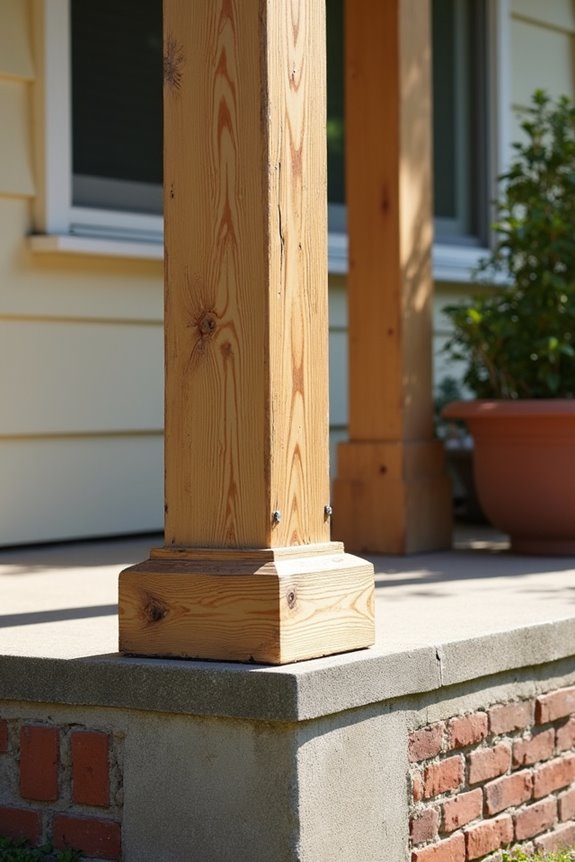
When should you get a professional evaluation of your porch posts? If you’ve noticed warning signs, it’s time to act. A structural assessment protects your home and family. Consider getting your porch columns evaluated if you spot:
- Visible movement or sagging – Your ceiling droops or walls shift
- Loose connections – Posts wiggle or don’t attach securely to the slab
- Rot or moisture damage – Wood appears soft, discolored, or crumbly
- Hollow-looking columns – They seem empty inside but might contain hidden steel support
Don’t assume hollow columns aren’t load-bearing – they often are! Check alignment with roof framing and examine top and bottom connections carefully. When in doubt, consult a licensed structural engineer before removing or altering anything. You’re making a responsible choice by protecting your investment.
Getting Ready to Replace Your Columns
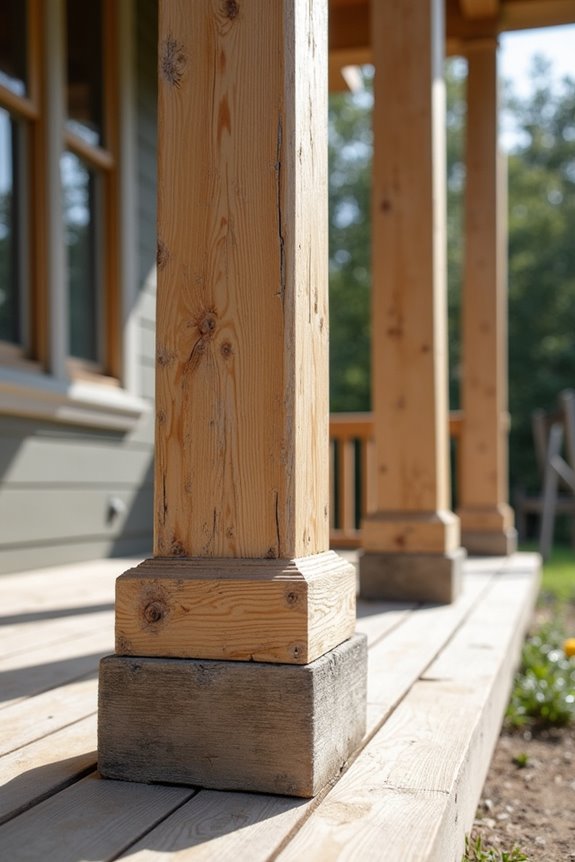
Before you grab your tools, you’ll need a professional assessment to confirm whether your columns actually bear weight and what size replacements you’ll need! Once you know what you’re working with, you can plan the right materials—like historically matching 6×6 wood posts—and figure out your installation strategy. Getting these details straight now saves you from expensive mistakes down the road!
Assessment Before Replacement
Why do your porch posts stand there—holding up the roof or just looking good?
Before you replace anything, you’ll want to assess what you’re actually working with. Here’s what matters:
- Check for movement—Gently push each post and measure any give (even 5–6 inches tells you something important!)
- Look for hidden connections—Inspect where posts meet the slab, footing, or concealed interior supports
- Document everything—Take photos and notes of current conditions and visible damage
- Hire professional eyes—A licensed structural engineer evaluates your load path and roof connections
Your porch posts might be load-bearing assessment champions or purely decorative. You won’t know without investigating! Establish temporary shoring before removal—this stabilizes everything and prevents disaster. Taking time now protects your home and saves headaches later.
Material and Installation Planning
Next, measure your porch space carefully. You’ll find Colonial posts in 114″ or 120″ lengths, or Victorian styles at 96″. Each comes factory primed and ready for cutting on-site.
Your installation planning becomes simple with the included hardware package. Skip the guesswork—grab the PDF installation guides available with every purchase. They’ll show you exactly how everything fits together with your balustrade system.
Add optional trim collars for a polished finish. You’re not just replacing posts; you’re improving your home’s durability and appearance!