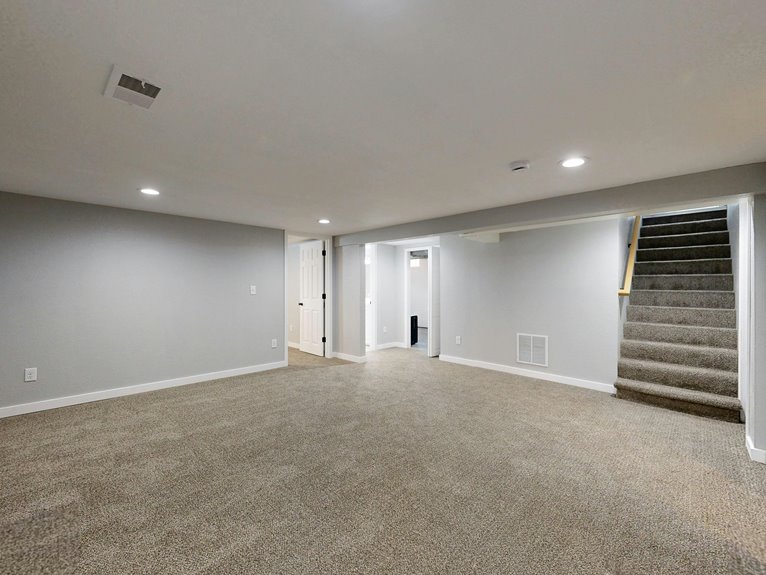
You can update your Georgia basement with five flooring options: Luxury Vinyl Plank offers waterproof comfort that mimics hardwood. Ceramic and porcelain tile resist moisture and last for decades. Engineered hardwood works when moisture control is properly managed. Waterproof laminate provides affordable durability. Avoid solid hardwood—it will fail in basement conditions. The key factor: moisture testing and proper vapor barriers determine success with any choice. Get your concrete slab dry first, and you’ll identify which option actually works best for your space.
Georgia Moisture: Why It Overrides Design Preferences in 2026
Georgia basements face moisture migration from three directions: leaks, ambient humidity, and vapor rising through slabs. Surface dryness tricks you into thinking you’re safe. You’re not. The EPA confirms it: mold prevention depends on controlling moisture.
Here’s your approach: Start with moisture testing to reveal hidden problems. Install a quality vapor barrier. Let materials acclimate for 48–72 hours before installation. Choose waterproof flooring designed for below-grade spaces. You’ll protect your investment and create a healthier home.
Luxury Vinyl Plank: Waterproof Comfort Over Concrete
LVP mimics beautiful hardwood grain, giving you that high-end look without the price tag. It’s durable, handling heavy foot traffic well. Ready to upgrade?
Here’s what you need: a dry, level concrete slab with a moisture barrier or underlayment. These simple additions protect your investment. You’ll appreciate how LVP combines comfort, durability, and style. Your basement benefits from more than bare concrete—give it this upgrade.
Ceramic and Porcelain Tile: The Durable, Upscale Alternative
If you’re drawn to the warmth of luxury vinyl but crave something even more resilient, ceramic and porcelain tile delivers.
These materials won’t rot or swell when basement moisture strikes. You’ll install your tile directly over a concrete slab with mortar, creating an upscale basement appearance that impresses. Proper subfloor leveling prevents cracks and grout problems, maintaining stability.
Why ceramic and porcelain tile works well for basements:
- Water resistance that protects your investment from below-grade challenges
- Durable flooring lasting decades without degradation
- Grout sealing that stops moisture seepage and mold growth
- Timeless aesthetics matching any basement design
Though tiles feel naturally cool, add plush area rugs for warmth. You’re joining homeowners who’ve chosen reliability and style together. Ready to upgrade your basement into something distinctive?
Engineered Hardwood and Waterproof Laminate: When Moisture Control Works
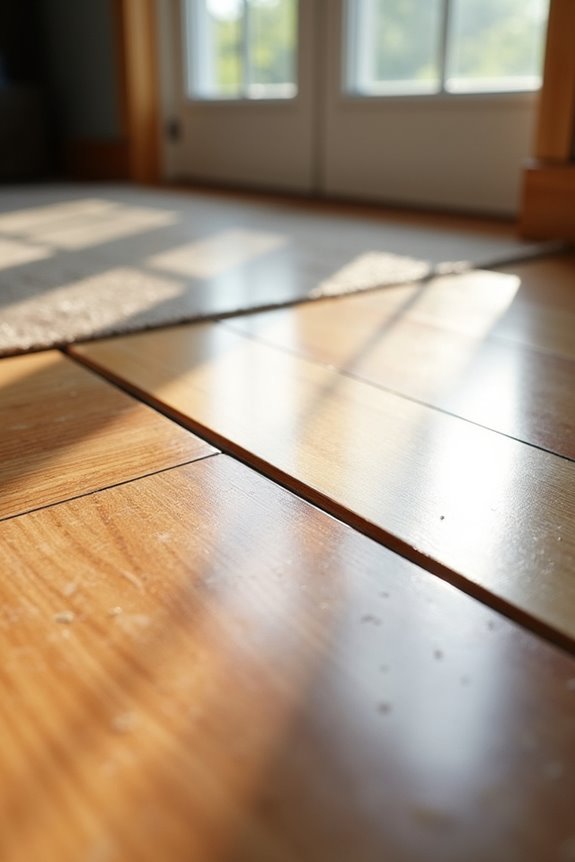
Ready to finish your basement? Hire professionals to install proper vapor barriers, seal seams, and create expansion gaps. A dry basement provides a comfortable area where your family can enjoy spending time together.
Flooring to Avoid and Critical Prep Steps Before Installation
While engineered hardwood and waterproof laminate offer solid protection for your basement, not every flooring option will survive the moisture challenge. You’ll want to avoid solid hardwood and traditional laminate—they’ll buckle and warp in Georgia’s damp basements. Instead, choose engineered flooring or vinyl plank flooring for better results.
Before installation, you need critical prep work:
- Perform moisture testing on your below-grade concrete to catch problems early.
- Install a vapor barrier with perm ratings ≤ 0.1 for maximum protection.
- Level your subfloor completely and repair all cracks thoroughly.
- Allow a proper acclimation period (48–72 hours) so materials adjust to your basement environment.
Don’t skip subfloor preparation or perimeter expansion gaps for floating floors. Moisture mitigation isn’t optional—it’s your foundation for success.