

Most office chair wheels are universal—about 95% of chairs use the standard 7/16-inch stem that fits across brands. But don’t celebrate yet! That remaining 5% includes IKEA models with different 10×20mm stems, which won’t fit standard replacements.
The key? Measure your current stem first before buying anything. You’ll avoid costly mistakes, wobbling chairs, and installation frustration. Grab a ruler and spend 60 seconds confirming your stem size—it’s the difference between a smooth swap and a headache. Understanding your specific measurements gets you the exact solution you need.
Most Office Chair Casters Are Universal: Here’s Why
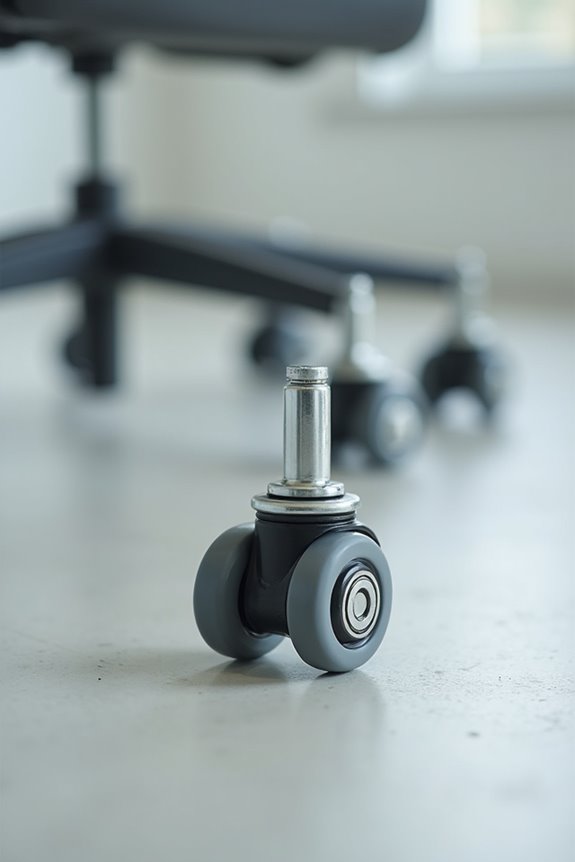
Why do most office chair wheels fit so easily into different chairs? The answer lies in universal stems—a standard design that works across nearly 95% of office chairs!
Universal stems are the reason most office chair wheels fit seamlessly across different chair models—a standardized design working in nearly 95% of chairs.
You’ll find that most chairs use the same stem size: 7/16 inch diameter by 7/8 inch length. This consistency means you can confidently swap wheels between different chairs without frustration. Think of it like standardized phone chargers—once manufacturers agreed on one size, everything just works together!
Stem compatibility is the key difference here. Because chairs share this universal mounting system, replacement is straightforward and affordable. You don’t need special tools or expert knowledge.
Ready to upgrade your chair’s wheels? The process is simple and direct.
When Casters Aren’t Universal: IKEA and Non-Standard Stems
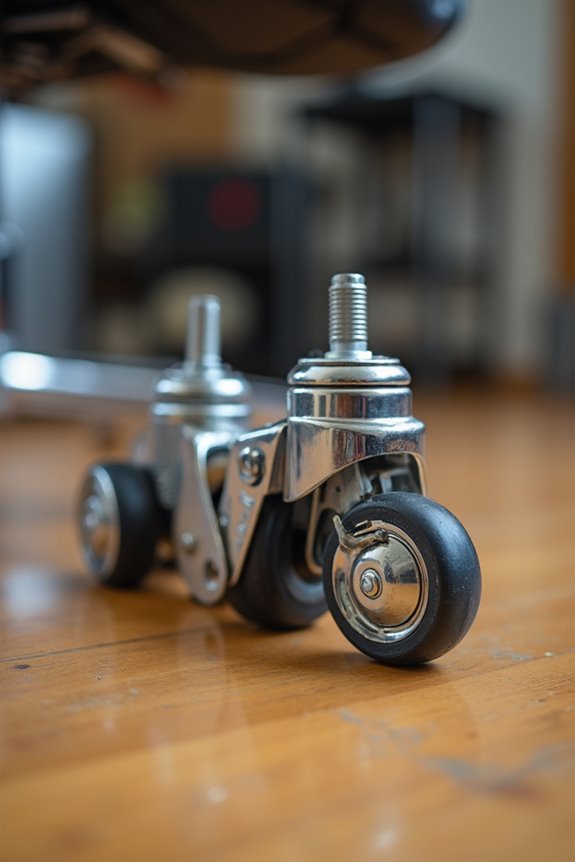
While most office chairs play by the universal rules, some manufacturers decided to break the mold—and IKEA’s one of them! Here’s the thing: about 5% of chairs use non-standard stems that won’t cooperate with universal caster wheels. IKEA chairs commonly feature 10×22 mm stems instead of the standard 7/16 x 7/8 inch specs. This mismatch creates real problems—your caster wheels won’t lock properly, causing wobble or complete attachment failure. Want to avoid frustration? Measure your stem size before buying replacement caster wheels. Check both diameter and length! Understanding your chair’s specific mounting type keeps you from buying incompatible parts. You’ll appreciate knowing this prevents wasted money and annoying installation headaches. Join savvy chair owners who always verify compatibility first!
How to Measure Your Stem Size in 60 Seconds
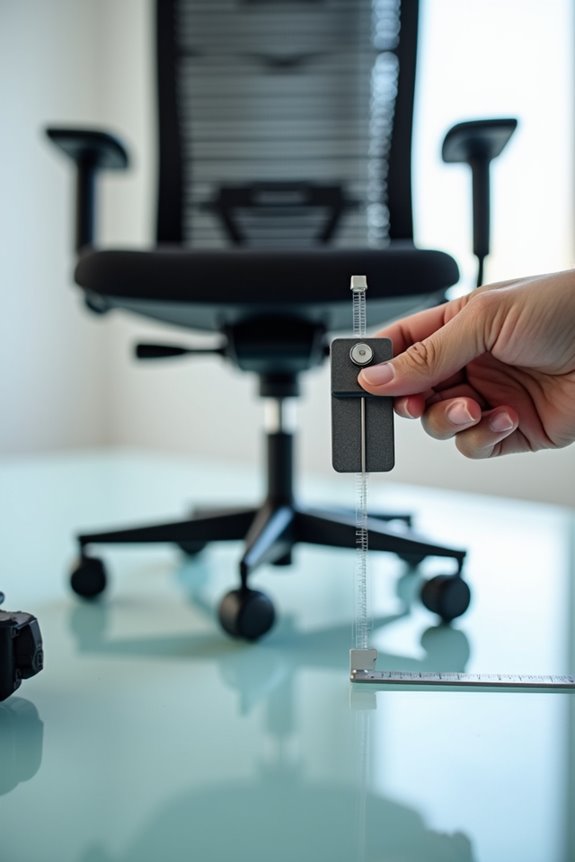
Ready to identify your caster size in under a minute?
Grab a caliper or ruler and remove one caster from your chair base. Measure two things: stem diameter and stem length. Record both measurements carefully.
| Common Stem Diameters | Length Range | Mount Type | Your Chair? |
|---|---|---|---|
| 5/16 inch | 7/8 inch | Stem-mounted | ☐ |
| 3/8 inch | 7/8 inch | Stem-mounted | ☐ |
| 7/16 inch | 7/8 inch | Stem-mounted | ☐ |
| Plate-style | Varies | Plate-mounted | ☐ |
Most chairs use the universal 7/16 x 7/8 inch stem size. If you confirm this match, you’re set. Complete the final step: verify your caster mounting type and floor requirements before buying replacements. You’re nearly finished.
What Your Measurements Tell You: Matching Stems to Sockets
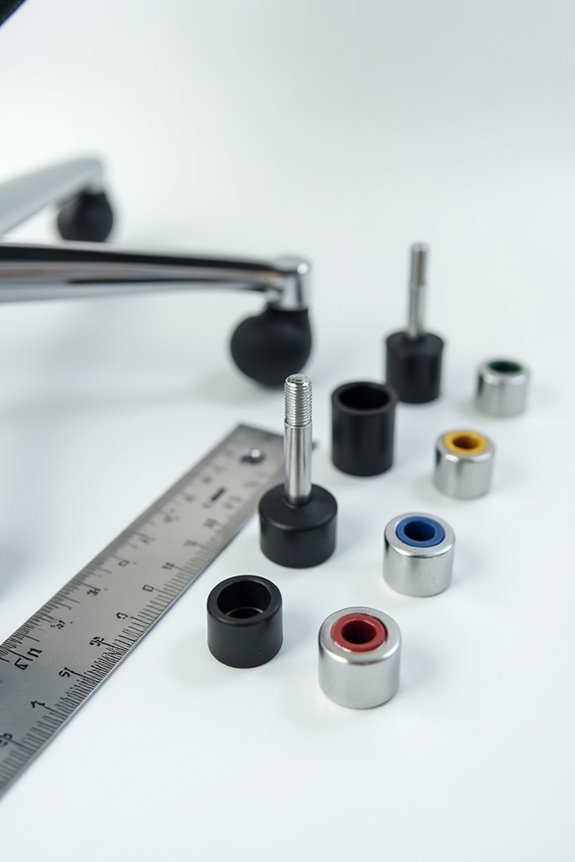
Once you’ve got your measurements, it’s time to play detective and match your stem size to your chair’s socket – and yes, getting this right matters! You’ll want to verify that your diameter measurement (say, 7/16 inch) and length (like 22 mm) line up with what your chair base needs, because even a tiny mismatch means your wheels won’t stay put. Before you hit “buy now,” do a quick compatibility check by comparing your numbers to the product specs, and you’ll roll forward with confidence!
Measuring Stem Diameter Accurately
How do you know if new caster wheels will actually fit your chair? You’ll measure your stem diameter—the metal rod’s thickness. Get this right, and you’re set!
Here’s your measuring plan:
- Remove one caster from your chair’s base carefully
- Use a caliper or ruler to measure the stem’s diameter precisely
- Check common sizes: 5/16, 3/8, or 7/16 inches
- Note your mounting type—socket, ring, or neck stem
Most chairs use that standard 7/16-inch diameter. Don’t guess! Measuring takes two minutes but saves you from ordering wrong wheels. Grab your measuring tool and get those exact numbers. Your chair replacement project starts here, and you’re making the smart choice by measuring first!
Matching Socket Specifications Correctly
Now that you’ve got your measurements, it’s time to use them! Your numbers help verify stem compatibility. Match your stem diameter, length, and type to your socket. This prevents wobbly wheels and frustration.
| Stem Diameter | Length | Socket Type | Fit Result |
|---|---|---|---|
| 7/16 inch | 7/8 inch | Concave | Perfect match |
| 7/16 inch | 5/8 inch | Concave | Too short |
| 3/8 inch | 7/8 inch | Concave | Won’t fit |
| 7/16 inch | 7/8 inch | Ring | Different mounting |
| Custom | Variable | Specialty | Rare fit |
Socket stems thread securely into your chair base when measurements align. Washers and bolts reinforce everything. You’re building stability. Check each dimension carefully. Your chair deserves wheels that stay put.
Verifying Compatibility Before Purchase
Compatibility verification starts with one simple task: measuring your current caster’s stem diameter. You’ll find most chairs use 7/16 inch stems, but yours might differ. Here’s your action plan:
- Remove one caster and measure the stem diameter (likely 5/16″, 3/8″, or 7/16″)
- Check the stem length—standard is 7/8 inch for most office chairs
- Identify your mounting type: stem-mounted or plate-mounted options
- Watch for exceptions like IKEA’s non-standard 10×20 mm stems
Don’t assume universal means everything. Taking five minutes now prevents ordering incompatible wheels later.
Grip Ring, Socket, and Neck Stems: Which Type Do You Have?

Before you can swap out your office chair wheels, you’ve got to identify which stem type’s already holding them in place!
Grip ring stems use a metal ring that snaps into a socket. You’ll see the ring gripping tightly around the wheel stem. Socket stems thread directly into your chair’s base, offering maximum stability. Look for the threaded connection point underneath your seat.
Neck stems have a distinctive narrow grip with a wider head, letting you swivel while keeping everything secure.
Each type installs differently, so knowing yours matters. Check your current wheels by flipping your chair over. Does a metal ring snap on? That’s grip ring. See threads? That’s socket. Spot a swiveling head? That’s neck.
Identifying your stem type now saves you frustration later.
Polyurethane vs. Plastic: Choosing the Right Wheel Material

Why Polyurethane Replacement Wheels Matter:
- Floor Protection – Polyurethane wheels guard hardwood and tile from scratches that hard plastics cause.
- Quiet Operation – You’ll experience smoother, quieter rolling that won’t disturb your workspace.
- Carpet Performance – They glide across carpet more effectively than stiff plastic alternatives.
- Long-Term Value – Protecting your floors reduces costly repairs over time.
Choose polyurethane wheels if floor protection is a priority for you. Your floors and your office mates will benefit from the upgrade.
What Goes Wrong When You Install Incompatible Casters

When you install incompatible casters, you’re setting yourself up for wobbling chairs and frustrated rolling! Your chair’s base might not accept non-standard stems (like IKEA’s 10 x 20 mm stems), leaving you unable to secure the wheels properly or forcing you to use workarounds that compromise stability. That’s why checking your stem size—the standard 7/16 x 7/8 inches for most office chairs—before buying replacement wheels saves you money and time, and prevents the headache of a wobbly workspace!
Poor Fit and Wobbling
Why do some chair wheels refuse to stay put? When you install incompatible casters, you’re setting yourself up for frustration! The problem stems from mismatched dimensions between your chair base and the caster stem. Here’s what happens:
- Stem diameter mismatches – Your stem-mounted caster won’t fit snugly if the diameter’s wrong
- Wobbling during use – Loose connections cause annoying movement and instability
- Unexpected detachment – Wheels slip out during swiveling when the caster stem can’t lock properly
- Uneven weight distribution – Mismatched wheels alter your chair’s height and balance
You’ll notice your chair feels tippy or rocks side to side. The solution? Match your caster specifications exactly before buying replacements. Don’t guess on stem sizes—measure twice, buy once!
Installation Failures and Damage
What’s the worst thing that can happen when you force the wrong caster stem into your chair base? You’ll bend or crack it permanently! When stem size mismatches occur—like forcing a 10×22 mm stem into a 7/16×7/8 inch socket—you’re asking for trouble. Installation failures happen fast. Forceful insertion damages your chair’s base, requiring expensive replacement. You might also snap the socket itself, leaving you unable to attach any caster properly. Don’t mix different stem types either; combining socket, ring, and neck stems creates uneven mounting that destabilizes your entire chair. The solution? Always check your stem size before installing! Match your caster specifications to your chair model exactly. Your wallet—and your safety—depend on it.
How to Install Universal Replacement Casters Without Tools

The installation process is straightforward. Universal casters use grip ring stems that push straight in—no tools required! Here’s how to do it:
- Turn your chair upside down for easy access to the base
- Align the stem with the socket opening carefully
- Push firmly straight in until you hear a satisfying snap
- Repeat for all five casters and you’re done!
Your standard 7/16 inch stem fits about 95% of chairs, so you’re likely compatible. Just confirm your chair base accepts this stem size before purchasing. You can handle this yourself, and your rolling days are back on track!
5 Compatibility Mistakes to Avoid

5 Compatibility Mistakes to Avoid
Just because casters look similar doesn’t mean they’ll work with your chair—and that’s where most people run into trouble!
Mistake #1: Wrong stem size. You’ll measure your current stem before shopping, right? Most chairs use 7/16 inch diameter stems, but IKEA chairs often need 10×20 mm instead. Mixing these up causes wobbling!
Mistake #2: Mismatched mounting type. Some casters use stems; others use plates. You can’t force a stem caster into a plate socket.
Mistake #3: Ignoring wheel size. Bigger wheels roll differently than smaller ones.
Mistake #4: Overlooking floor compatibility. Hardwood needs different wheels than carpet.
Mistake #5: Forgetting load capacity. Your chair’s weight matters!
Measure everything first.
Still Stuck? Troubleshooting Casters That Don’t Fit
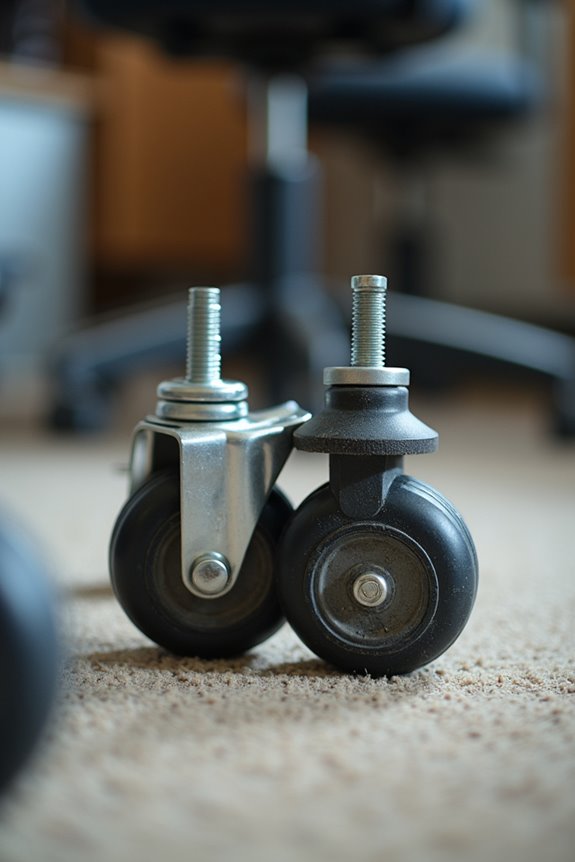
Why won’t your new casters click into place? You’re not alone! Let’s fix this together.
- Check your stem size – Measure both diameter and length; IKEA chairs often need 10×20 mm stems instead of standard sizes.
- Identify your mounting type – Is it a socket, ring, or neck connection? Wrong mounting type means no fit, period.
- Verify wheel size matches – Your base expects specific wheel dimensions; mismatches cause wobbling.
- Consider chair-specific replacements – Sometimes your chair needs unique casters designed just for it!
Start by measuring your stem carefully. Compare those numbers to your new casters. If they don’t match, grab chair-specific replacements or plate-mounted options instead. You’ll roll smoothly soon!