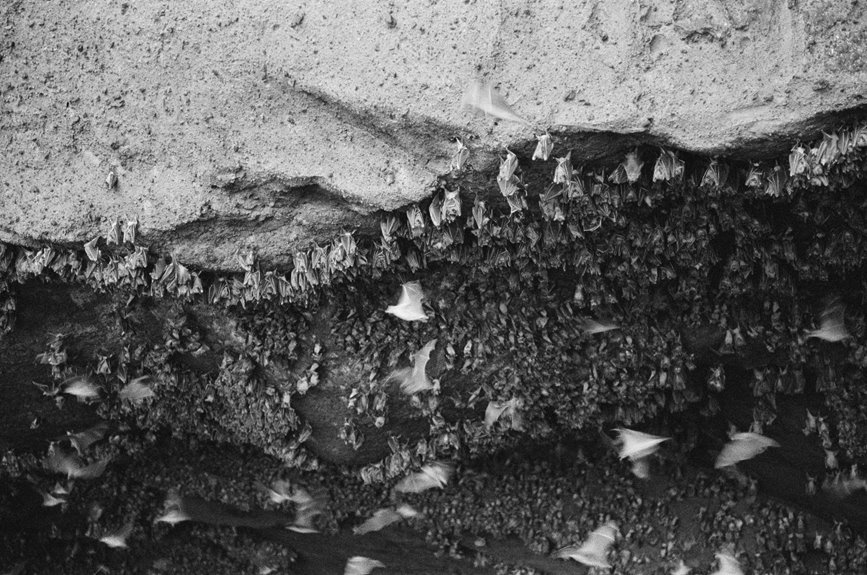
Bats don’t need basement doors—they’re sneaking in from your roof! Ridge vents, soffit gaps, and damaged chimney flashing create easy access routes. They slip through foundation cracks, window wells, and where your siding meets the foundation.
Pipes and ducts inside walls become highways downward. The trick? Seal from the top down, starting with your largest openings. Watch for dusk activity and fresh droppings near suspected entry points.
Want to stop them for good? The specifics on each vulnerability await below.
Bats Enter From Above: Why Basements Aren’t the Primary Target
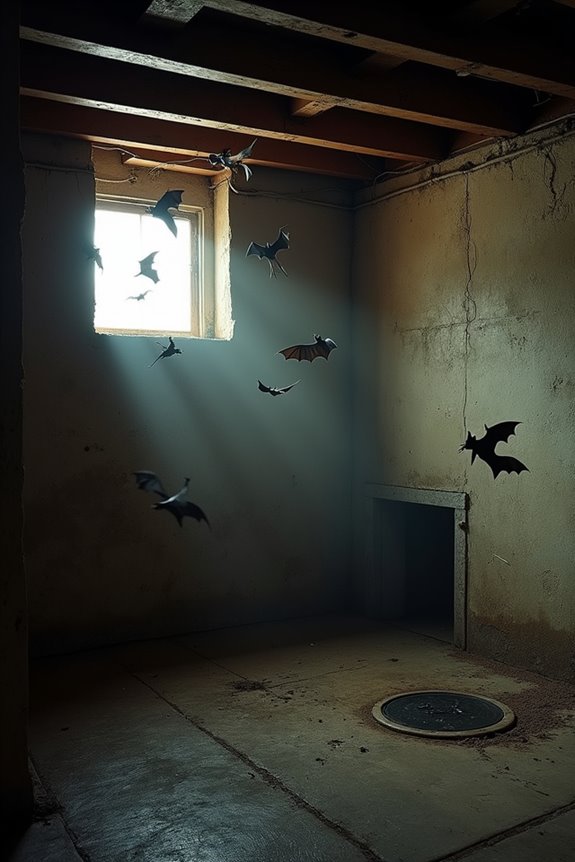
Think of it like this: they’re taking a downward journey through your home’s interior. Wall cavities, plumbing gaps, and electrical ducts create perfect highways for attic-to-basement transfer. You’ll notice signs like ceiling noises indicating downward movement or droppings near entry points connected to attic routes.
Understanding this pattern helps you protect your space! Focus on sealing those upper openings first. You’re stopping bats before they travel down, not battling them in your basement. That’s smart defense!
Ridge Vents, Soffits, and Fascia: Your Roof’s Weak Spots
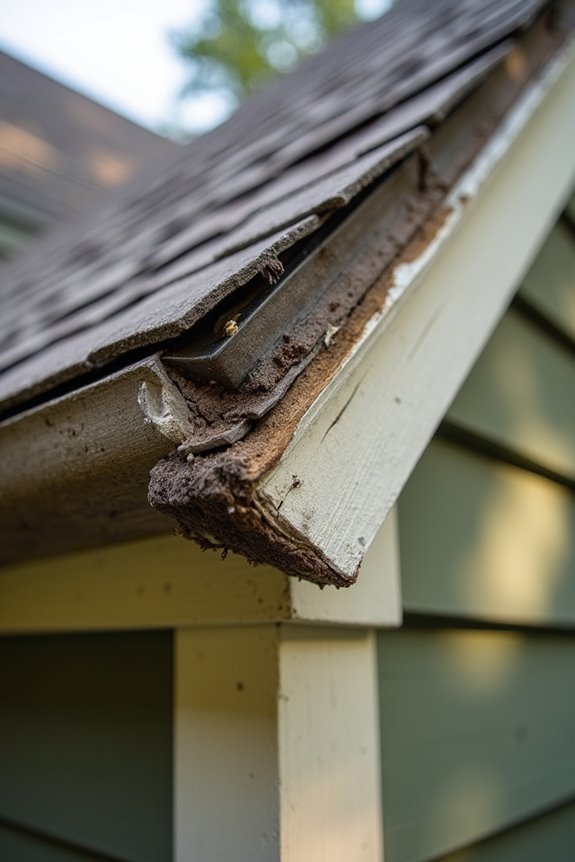
Where do most bats actually slip into your home? Your roof’s weak spots—ridge vents, soffits, and fascia boards—create perfect entry points!
These vulnerable areas act like open doors:
- Ridge vents develop gaps around edges, letting bats squeeze through effortlessly
- Cracked fascia boards provide easy access routes into your attic
- Loose soffits create openings bats discover while hunting warmth
- Missing vent screens leave nothing stopping determined intruders
You’re dealing with architectural vulnerabilities, not basement problems. Bats search for warm roosting spots, and your roof components leak heat like a beacon. Once inside your attic, they navigate down walls straight into your basement.
Test suspected entry points by placing cardboard over holes during daylight hours. You’ll spot active access locations quickly. Inspect these three areas regularly—it’s worth your attention!
Chimneys and Damaged Flashing: Common High-Entry Points
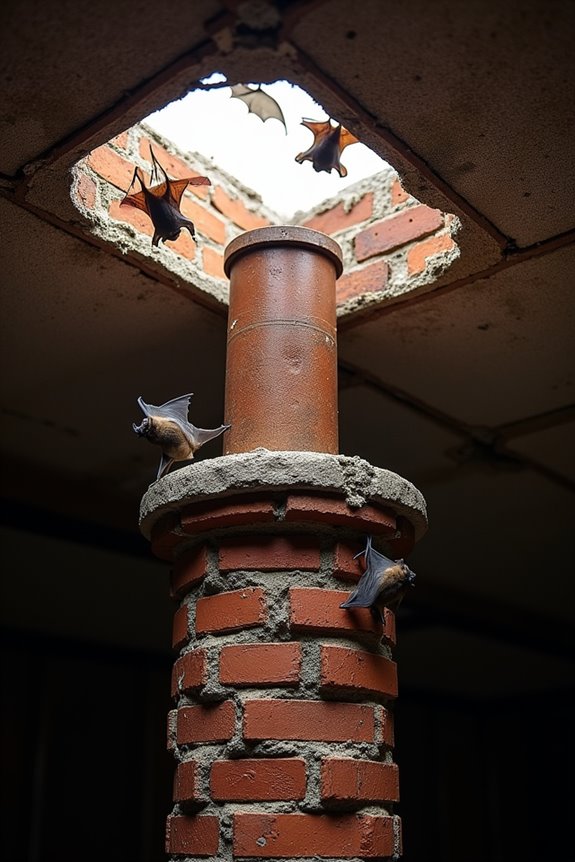
Your chimney and its flashing are common entry points for bats seeking shelter! Damaged flashing around the chimney or tiny gaps in the brickwork create openings smaller than your thumb, allowing bats to slip through and access your basement walls. Since bats are attracted to warmth, they naturally locate these spots by detecting heat escaping near your chimney—making it one of the easiest routes into your home.
Chimney Gap Vulnerability
How vulnerable is your chimney to bat invasions? Your chimney gaps are major entry points that you shouldn’t overlook. Bats exploit openings as small as 3/8 inch, squeezing through damaged flashing and tiny cracks with ease. These gaps provide direct basement access from your roof and attic spaces.
Here’s what makes your chimney risky:
- Tiny holes near brick framing allow bats to navigate inside
- Damaged flashing creates gaps between your chimney and roof
- High entry points lead directly to interior living areas
- Multiple access routes mean bats keep returning
You can protect your home by installing a chimney cap immediately. Then seal all exterior openings around the chimney. This combination blocks ongoing entry while you handle existing bats. Start inspecting today.
Flashing Deterioration and Gaps
Regularly inspect your flashing for rust, separation, or missing pieces. Seal deteriorated areas promptly. This simple action prevents basement intrusion and keeps your home bat-free.
Heat Loss Detection by Bats
Think of your chimney gaps and flashing damage as heat loss billboards for bats! They’re seeking warm roosting spots, and you’re practically advertising yours. Here’s what makes these entry points so attractive:
- Thermal signals: Bats detect warm air escaping through chimney gaps from attic spaces
- Consistent access routes: Heat loss around flashing creates predictable pathways downward
- Year-round attractions: Damaged flashing provides entry points bats exploit during migration seasons
- Cascading movement: Bats move from exterior walls through attic-to-wall gaps into basement areas
Inspecting your chimney’s base and roof-to-wall junctions today prevents bat problems from developing.
Where Pipes and Ducts Penetrate Walls
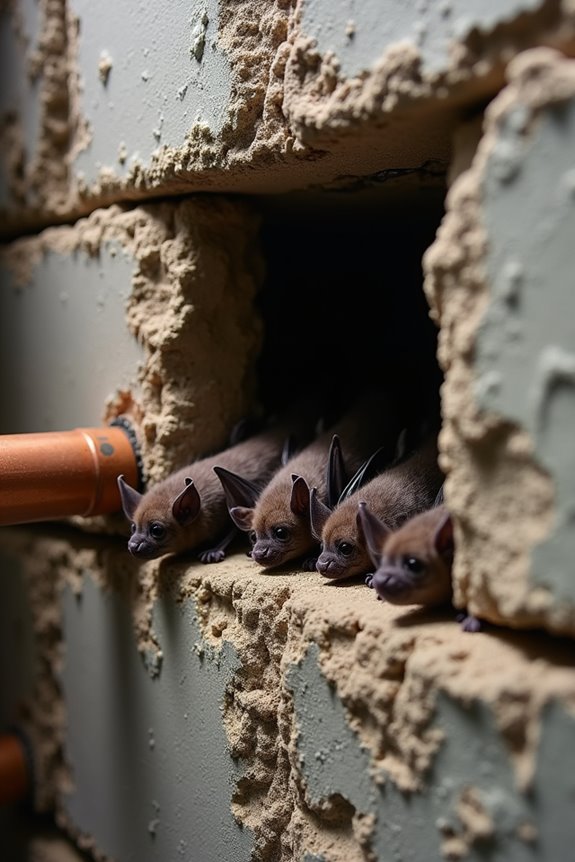
Because your basement’s plumbing, heating ducts, and electrical wiring need to connect to upper floors, they create tiny highways for bats to travel downward. These penetrations are your home’s weak spots.
Your basement’s plumbing, heating ducts, and electrical wiring create tiny highways for bats to travel downward—making these penetrations your home’s weak spots.
Here’s what happens: gaps around pipes and ducts provide perfect entry points for bats. You probably don’t realize how small these openings are—they’re often less than an inch. Bats squeeze through and take advantage of the warmth radiating from your heating system.
Your unfinished ceiling exposes these vulnerable areas clearly. Those visible gaps near pipes? That’s where bats enter and exit.
Test your penetrations today. Place cardboard over suspected holes during daylight hours. Check for bat movement around plumbing intersections and duct areas. This simple action reveals exactly where bats gain access, helping you seal those sneaky superhighways before they become problems.
Foundation Cracks and Gaps at the Basement Rim
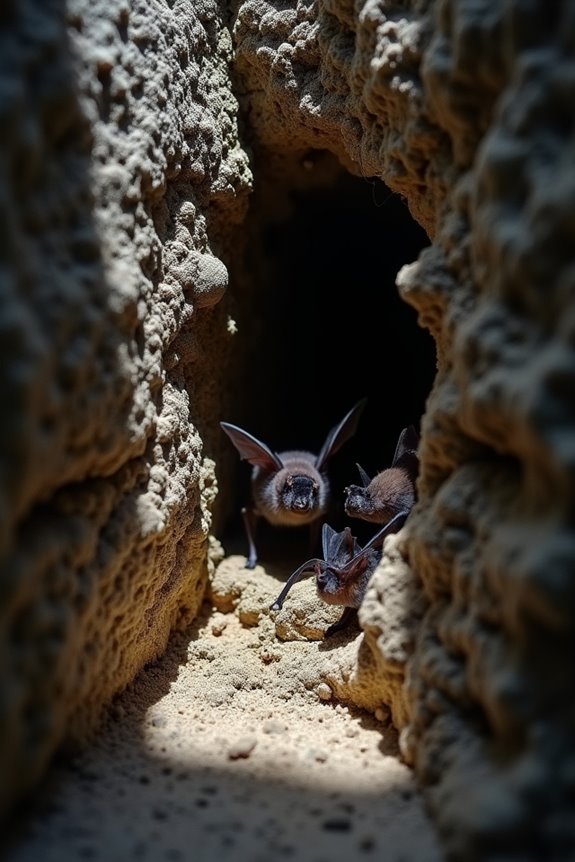
While pipes and ducts create interior highways for bats, the basement rim itself is their outdoor gateway. This critical area where your foundation meets the siding is a prime entry point for bat invasions!
What to look for:
- Cracks smaller than an inch wide that align with wall cavities
- Basement rim gaps where sealant has deteriorated over time
- Foundation cracks near door and window headers that let warmth escape
- Heat-loss openings where bats exploit temperature differences
You can identify these entry points by examining small, irregular gaps and degraded sealant around your foundation. The warmth radiating from these foundation cracks attracts bats looking for shelter. Sealing these basement rim gaps now protects your home and puts you among homeowners who have already addressed this problem.
Crawl Space Access: A Hidden Route to Basements
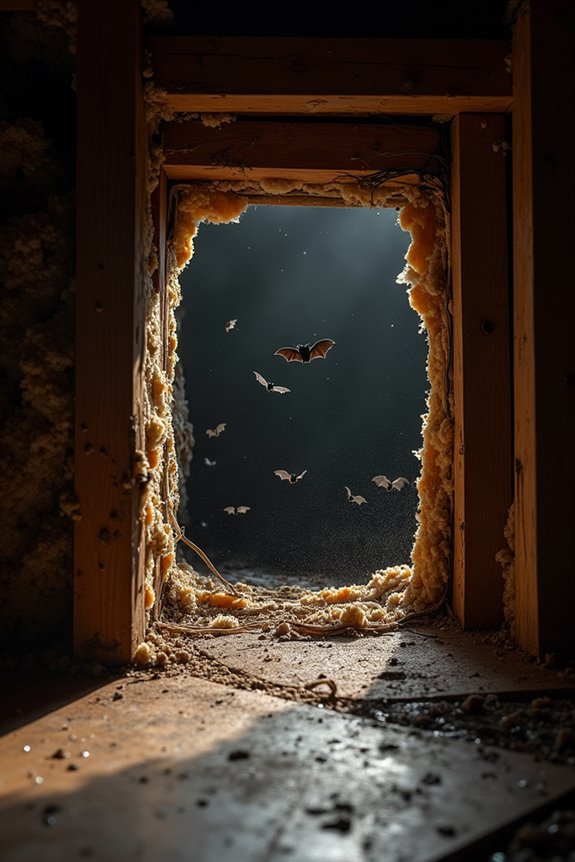
Inspect where your crawl space meets upper structures. Seal those gaps and vulnerable spots now. You’ll cut off this hidden pathway before bats establish residence in your home!
Window Wells and Basement Window Seals

Have you checked your basement windows lately? Your window wells and basement window seals are prime entry points for bats seeking warm roosting spots. These vulnerable areas create direct access routes that bats exploit to infiltrate your home!
Basement windows and seals are prime entry points for bats seeking warm roosting spots in your home.
Here’s what you’re up against:
- Missing or damaged seals allow bats to squeeze through and access interior walls
- Gaps smaller than an inch around window frames give determined bats easy passage
- Compromised window wells attract bats searching for warmth during dusk hours
- Heat loss areas around windows signal ideal roosting opportunities to wandering bats
You’ll notice bats circling your basement windows at sunset if entry points exist. Inspect your windows now for cracks, seal damage, and deteriorating frames. Sealing these gaps stops bats before they enter! Don’t wait—protect your basement by securing every vulnerable window seal and well opening.
Where Siding Meets Foundation: The Overlooked Gap
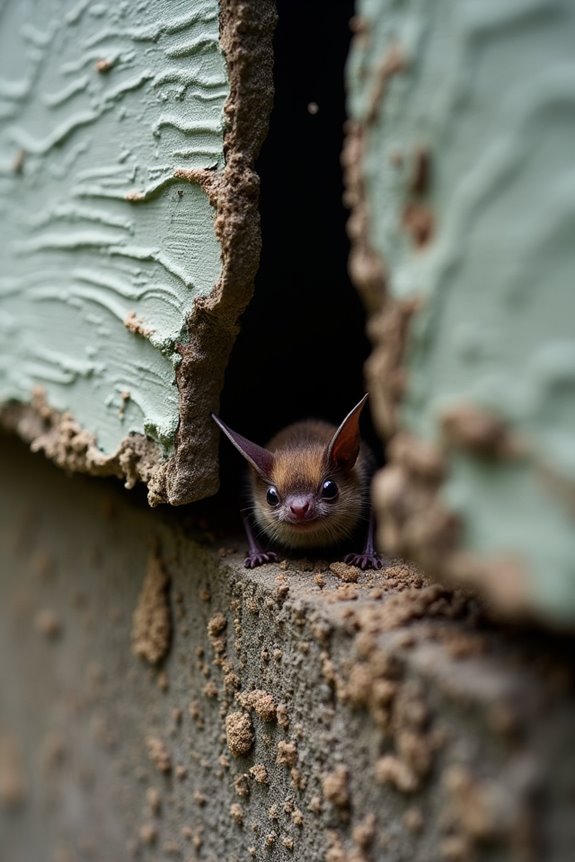
Your basement windows aren’t the only sneaky entry points bats use to invade your home. Here’s where many homeowners miss the problem: the siding-foundation gap. This hidden seam creates warm air leaks that bats absolutely love. They squeeze through gaps smaller than an inch, especially where siding meets your foundation behind trim and exterior materials.
Once inside your walls, bats find their way down to basement spaces. You won’t spot this vulnerability during casual inspections because it’s hidden from view! That’s why exterior inspections matter so much.
Ready to stop basement bat entry? Seal this joint with weather-resistant caulk or foam. Coordinate your bat-proofing efforts across all entry points for complete protection. Don’t let this overlooked gap become your biggest problem!
How to Identify Active Entry Points (Before You Seal)
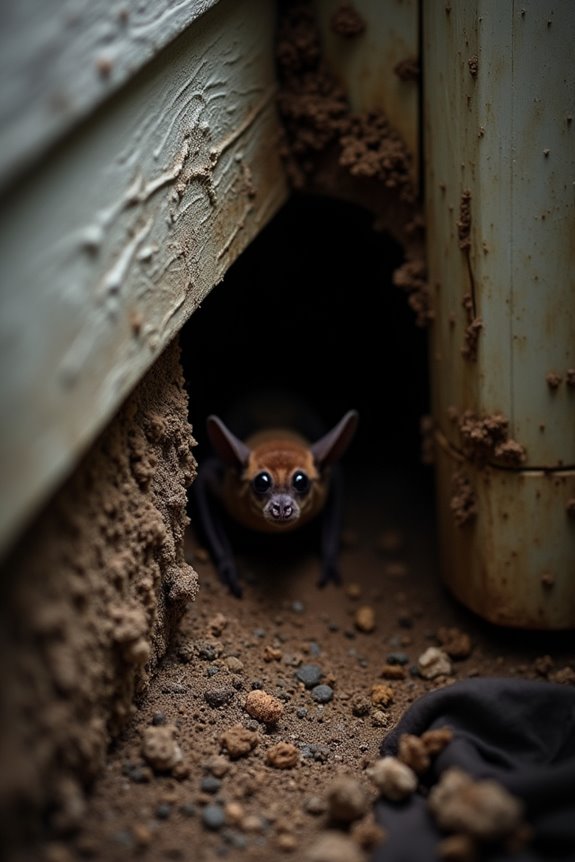
Before you seal up those gaps, you need to find out which entry points your bats are actually using. You can spot active holes through simple visual inspection—look for dark stains, droppings, or chewed edges around suspected openings. Try the cardboard test: place cardboard over a gap during the day, then check it at dusk to see if bats have moved it aside!
Visual Inspection Methods
How’d those bats actually get inside your basement anyway? You can spot their entry points with a simple visual inspection!
Look for these telltale signs:
- Fresh bat guano clustered near cracks or openings
- Dark staining around suspected opening gaps on walls or ceilings
- Soot or debris scattered near roof lines and vents
- Live bats entering or exiting at dusk near your foundation
Start your inspection during daylight hours. Grab a flashlight and examine your basement walls carefully. Check around pipes, utility lines, and foundation cracks. You’re hunting for small opening gaps—remember, bats squeeze through spaces smaller than an inch!
Pay special attention to areas with visible moisture or temperature changes. These spots attract bats like magnets. Document what you find with photos. Identifying these entry points now prevents costly damage later.
Cardboard Test Technique
Why does this matter? You’ll avoid sealing holes bats aren’t using while missing active ones. It’s detective work that saves you time and frustration!
This simple method keeps you from guessing. You’ll know exactly where bats are entering, so you can tackle the real problem spots. Smart investigating means better solutions!
Timing Your Observations
Dusk activity reveals where bats actually enter. Position yourself outside about 30 minutes before sunset to watch your basement entry points. You’ll spot them exiting near the roof line and exterior openings. Here’s what to monitor:
- Watch high openings where siding meets the roof
- Note twilight exits around vents and chimneys
- Track repeated patterns over several nights
- Document exact times when activity peaks
Bats follow the same routes nightly, so consistent observation timing works best. By pinpointing when and where bats leave, you’ll seal the right spots with confidence.
Sealing Bat Entry: Priorities and Methods
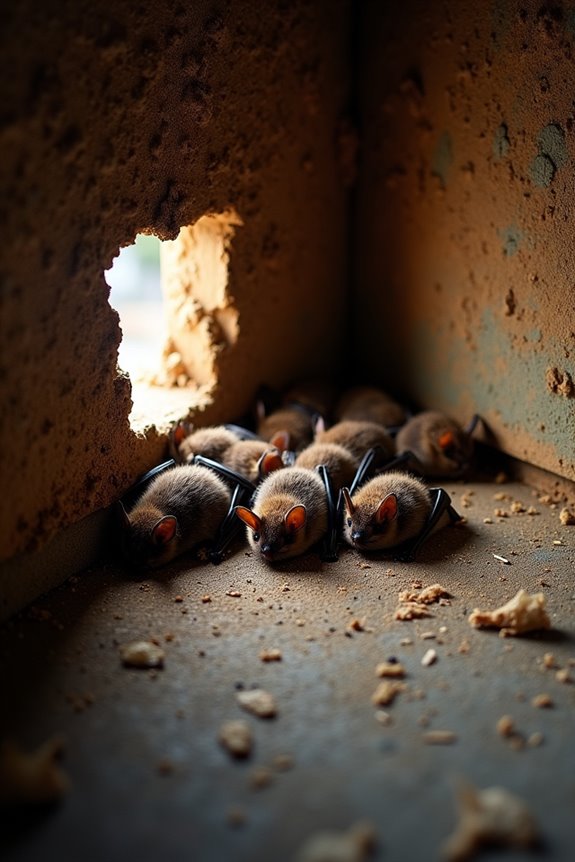
Start by prioritizing the biggest openings. Focus on attic vents, soffits, and gaps around pipes or chimneys first. These are your bats’ primary entry routes. Seal these openings with caulk or mesh screening to block access.
Next, address smaller gaps you might have overlooked. Check around ducts and plumbing chases carefully. Even inch-sized openings let bats squeeze through.
Here’s your action plan: use flexible caulk for tiny cracks and quarter-inch mesh for larger holes. Work systematically from top to bottom, sealing every suspected entry point. Thorough sealing now means a bat-free basement soon.