You’ll save money choosing curtains over blinds! Blinds demand expensive hardware, motorized systems, and specialty components that inflate costs fast.
Curtains? They use simple fabric panels and standard brackets—way cheaper to manufacture and install. You’ll skip pricey cordage systems, track replacements, and ongoing maintenance headaches.
Bulk fabric pricing drops your expenses even further. With curtains, you’re getting quality window coverage without the proprietary tech markups and hidden fees. Ready to see how much you can save?
Why Blind Hardware Drives Up Costs

Ever wonder why your blinds estimate costs way more than you expected?
Ever wonder why your blinds estimate costs way more than you expected? Understanding hardware expenses helps you make smarter window treatment choices for your budget.
Blind hardware adds up fast! You’re paying for brackets, headrails, and lifting systems that curtains don’t need. Those sturdy components support heavier slats and moving parts, making them pricier than simple curtain rods.
Add motorization, and costs climb higher. You’ll invest in specialized electronics and remote controls. No-drill options? They require premium hardware assemblies too.
Your window size matters. Larger windows demand extra brackets and track systems. Inside mounts, outside mounts, and custom widths all increase hardware costs significantly.
Specialty materials like wood or metal slats require more substantial hardware assemblies. These components work together, creating expenses you won’t find with basic curtains.
Understanding these hardware costs helps you make smarter window treatment choices for your budget.
Bulk Fabric Pricing vs. Specialty Blind Components
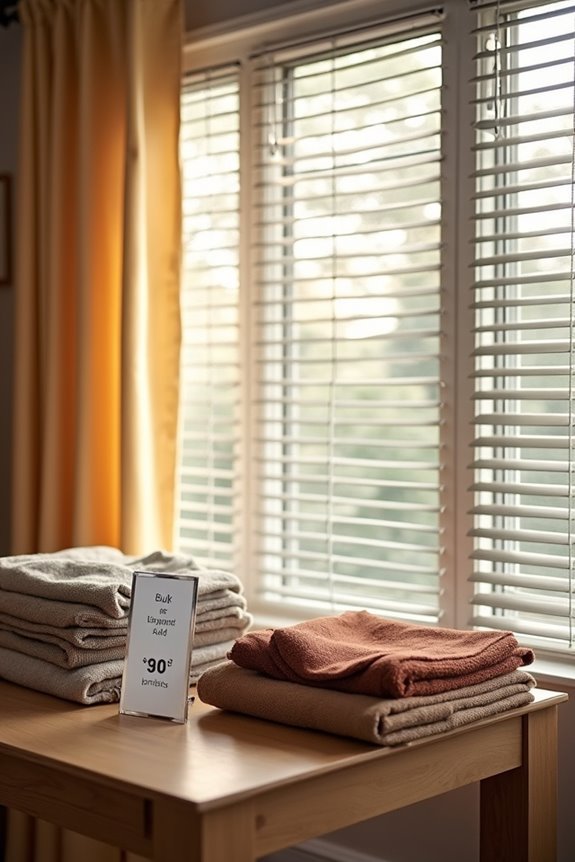
When you’re shopping for window treatments, you’ll notice that bulk fabric pricing works in curtains’ favor because manufacturers produce yards and yards of material at once, driving costs down substantially. Blinds, on the other hand, require you to pay extra for specialty components like motorization systems, no-drill brackets, and precision slat mechanisms that curtains simply don’t need. You’re largely choosing between straightforward fabric economics or paying a premium for all those intricate blind parts.
Fabric Economies Of Scale
Why do curtains cost less than blinds? The answer lies in how they’re made. Curtain fabrics are produced in massive quantities—think millions of yards annually—which drives down the per-yard price considerably.
You benefit from this bulk fabric advantage! Manufacturers capitalize on enormous mass production operations that blinds simply can’t match. Cotton blends, synthetics, and sheers roll off factory lines continuously, creating serious wholesale cost savings.
Here’s the real deal: when you buy curtains, you’re tapping into massive fabric industries that have perfected efficiency. Blinds require custom slat materials, precise cordage systems, and specialized hardware. That’s more expensive!
You get standard drapery panels and basic rods bought in bulk quantities. Your window gets covered affordably. Blind components? They demand individual attention and customization. Your budget notices the difference immediately!
Component Assembly Costs
The real advantage to curtain savings comes down to how they’re actually built. When you’re ordering multiple windows, you’ll access something blinds can’t match: bulk fabric pricing. Here’s why this works:
- Fabric costs drop significantly when you buy in volume
- Standard hardware (rods, tracks) scales affordably across many windows
- Installation costs stay low because assembly is straightforward
Blinds work differently. You’re paying per-window specialty costs—custom headrails, motorized systems, precise slat configurations. Each window demands individual attention. Meanwhile, curtain assembly uses interchangeable components you can standardize. Your installation costs shrink because crews work faster with repetitive, familiar processes. Ready to outfit your whole home? Curtains let you do it at reasonable cost.
Curtain Assembly Requires Less Mechanical Engineering

No-drill options make things even easier. You’ll save time and money avoiding complex mechanical engineering. Standard fabric panels hang straight, no fussy adjustments needed.
You’re joining countless homeowners who’ve discovered that simpler really does mean cheaper. Ready to ditch the complexity?
Standard Panel Design Cuts Manufacturing Steps

When you choose curtains, you’re picking a simpler design that doesn’t need all those tiny slats, cords, and complicated hardware that blinds require. Fabric panels roll off production lines faster because they skip the precise cutting and assembly steps, which means you save money right from the factory floor! You’ll find that this straightforward approach—just fabric, a rod, and some rings—keeps costs down and reduces your expenses.
Simplified Manufacturing Process
Here’s where curtains offer real value on your wallet.
You’ll find that standard panel design dramatically reduces production complexity compared to blinds. Manufacturers follow streamlined steps that cut fabrication time significantly:
- Simple rectangular panels require minimal cutting and assembly
- Basic sewing operations attach hems and headings efficiently
- Bulk production methods lower per-unit costs substantially
The manufacturing process for curtains eliminates many intricate steps that blinds demand. You’re not dealing with complicated slat alignments or precision spacing requirements. Instead, factories produce straightforward fabric panels quickly and affordably.
This simplified approach means faster fabrication time for your purchase. Fewer production stages translate directly to lower prices you’ll actually pay. When you choose standard curtain panels, you’re backing an efficient system that keeps costs down.
Reduced Production Complexity
The cost savings begin on the factory floor. Curtains skip the complicated steps that blinds require, which directly reduces your expenses. You’re looking at standard fabric panels cut in massive batches. No custom slat sizes. No cord mechanisms to tune. No complicated hardware setups.
| What Blinds Need | What Curtains Skip | Your Savings |
|---|---|---|
| Custom slat sizing | Standard lengths only | Time & labor |
| Tilt mechanisms | Simple fabric panels | Equipment costs |
| Multiple tooling changes | Bulk production runs | Setup expenses |
| Cordless options | Unified designs | Manufacturing complexity |
This bulk manufacturing approach eliminates endless tooling changes. You get production efficiency that blinds simply can’t match. Factories produce thousands of identical curtain panels daily. That streamlined process directly lowers your costs.
Lower Assembly Requirements
Assembly simplicity is where curtains really shine—and your wallet benefits big time!
When you choose curtains, you’re picking the easier manufacturing route. Here’s why that saves you money:
- Basic sewing steps replace complex mechanical systems
- Simple rod installation beats intricate cord routing
- Standard panels need no precision slat alignment
Your curtains don’t require specialized assembly lines or expensive equipment. Manufacturers just cut fabric, sew seams, and attach panels to a rod. That’s it! No tilting hardware. No complicated lifting mechanisms.
This straightforward assembly process means lower labor costs get passed directly to you. You’re not paying for technicians managing intricate cord systems or calibrating slat tolerances.
The result? Faster production times and reduced assembly expenses. You’re joining smart shoppers who recognize that simpler design equals real savings. Ready to update your windows affordably?
Metal Tracks and Cords Add Hidden Expenses to Blinds

Blinds demand ongoing attention more than curtains. That motorized system? It needs battery replacements. Cordless models require special servicing. You’re facing cumulative expenses that add up quickly.
Consider this: curtains hang and stay put. Blinds? They’re constantly working, wearing down those metal components. Your tracks misalign. Your cords fray. Suddenly, you’re calling repair specialists repeatedly.
Smart shoppers recognize this reality. Maintenance for blinds becomes a never-ending expense cycle. Curtains simply don’t create these financial headaches. You’ll save significantly by choosing the simpler solution.
Linings Deliver Warmth Without Specialty Mechanisms

When you add a thermal lining to your curtains, you’re getting serious insulation without paying extra for fancy motorized systems! Heavyweight fabrics like velvet or wool create a protective barrier that keeps heat in during winter and blocks it out in summer, all while your existing curtain rod does the work. You’ll save hundreds compared to upgrading to premium insulated blinds, and you’ll notice the difference in your energy bills right away.
Lining Adds Insulation Value
How much warmth are you losing right now through your windows?
Lined curtains work as an effective insulation layer for your windows. When you add quality lining to your curtains, you’re creating an extra barrier that traps warm air inside during winter. This simple addition delivers practical results.
Consider these benefits:
- Blackout and thermal linings block drafts more effectively than blinds alone
- Thicker fabrics like velvet or wool-backed options achieve higher R-values for genuine energy savings
- Synthetic linings resist moisture while maintaining insulation performance without complex mechanisms
You’re not just buying window treatments—you’re investing in comfort! Lined curtains keep warmth in sunlit rooms too, unlike blinds that offer limited thermal protection. Your energy bills will reflect the difference, and you’ll notice the improvement right away. That’s real value working for you every single day!
Cost-Effective Warmth Solution
Curtains with blackout lining trap air between fabric layers, creating a barrier against temperature swings. Your insulating drapery works year-round—keeping heat in during winter and blocking summer warmth. No special equipment needed!
Here’s the practical part: you can retrofit thermal lining to curtains you already own. That means upgrading your warmth without replacing everything. You’re getting a cost-effective upgrade that cuts heating and cooling costs.
Heavyweight fabrics paired with thermal lining outperform blinds for pure warmth. You’ll notice the difference immediately. Start small, test one room, then expand throughout your home. Your budget will benefit!
Avoiding Motorization Expenses
Curtains with thermal or blackout linings deliver the same warmth and light control without costly mechanical systems. You’ll skip expensive installation fees and future repair bills. Here’s what you gain:
- Passive insulation: Heavyweight fabrics trap heat in a natural way, reducing energy costs year-round
- Simple operation: Just pull the cord—no batteries, motors, or tech headaches
- Long-lasting value: Linings add durability without specialty maintenance
The cost difference is significant. You’re investing in quality curtains once, then enjoying reliable performance for years to come. Linings provide the insulation and privacy you need at a fraction of motorized blind prices. Many homeowners have chosen practical, effective solutions over expensive gadgets.
Large Windows Cost Less to Outfit With Curtains

| Window Size | Curtains | Blinds | Labor | Savings |
|---|---|---|---|---|
| 48″ wide | $80 | $200 | Low | $120+ |
| 60″ wide | $100 | $280 | Low | $180+ |
| 72″ wide | $120 | $350 | Low | $230+ |
| 84″ wide | $140 | $420 | Low | $280+ |
| 96″ wide | $160 | $500 | Low | $340+ |
Bulk fabric purchases provide better prices. Polyester blends perform well and cost less than premium blind materials. When you outfit multiple large windows, savings increase significantly. Many shoppers have found this to be an effective cost-saving solution.
Custom Designs Avoid Proprietary Technology Markups

- Freedom to choose any fabric from multiple vendors without locked-in brand requirements
- Installation savings using general-purpose rods instead of specialized systems
- Real cost savings that don’t require fancy automation fees
Branded blinds lock you into their ecosystem. You’re stuck paying their prices for everything. With custom curtains, you control the budget. You pick affordable fabrics. You use basic hardware. No subscription fees. No proprietary parts draining your wallet.
Custom curtains put you in control of your budget—pick affordable fabrics, use basic hardware, skip the proprietary markups.
Smart shoppers have discovered this approach. Custom designs deliver genuine cost savings without sacrificing style. Start exploring fabric options today—your budget will benefit.
Long-Term Maintenance Costs Favor Curtains

Blinds typically need replacing every ten years, but your curtains last much longer. You can dry-clean them professionally, extending their life significantly. That durability means fewer replacements and less money leaving your wallet!
Energy savings add another advantage. Heavy curtain fabrics actually insulate your home, reducing heating and cooling costs year-round. Blinds don’t provide this benefit. When you layer curtains with blinds, you’re creating a combination that reduces energy loss significantly.
Think about it—would you rather spend once on quality curtains or repeatedly replacing worn-out blinds? Invest in curtains today and join homeowners who’ve ditched the replacement cycle!
Professional Installation Labor Costs Less for Drapery
What makes drapery installation worthwhile:
- Blinds install fast (15-50 minutes), yet drapery professionals measure rod width, curtain length, and bracket spacing carefully for a proper fit
- No-drill blind options exist, but curtains lack these shortcuts, meaning you’ll pay more labor upfront
- Quality drapery installations reduce future adjustments, saving you money long-term
You’re paying more now because professionals customize everything precisely. This means fewer headaches later. When you choose quality drapery installation, you’re joining homeowners who value durability over quick fixes. That’s smart spending.